Latest News
My latest ramblings.
Enjoy! I definitely got important things to say


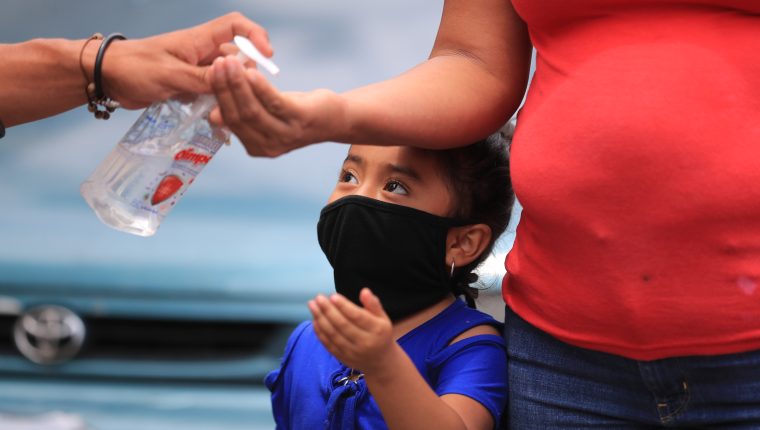
(Photo: Prensa Libre: Juan Diego González)
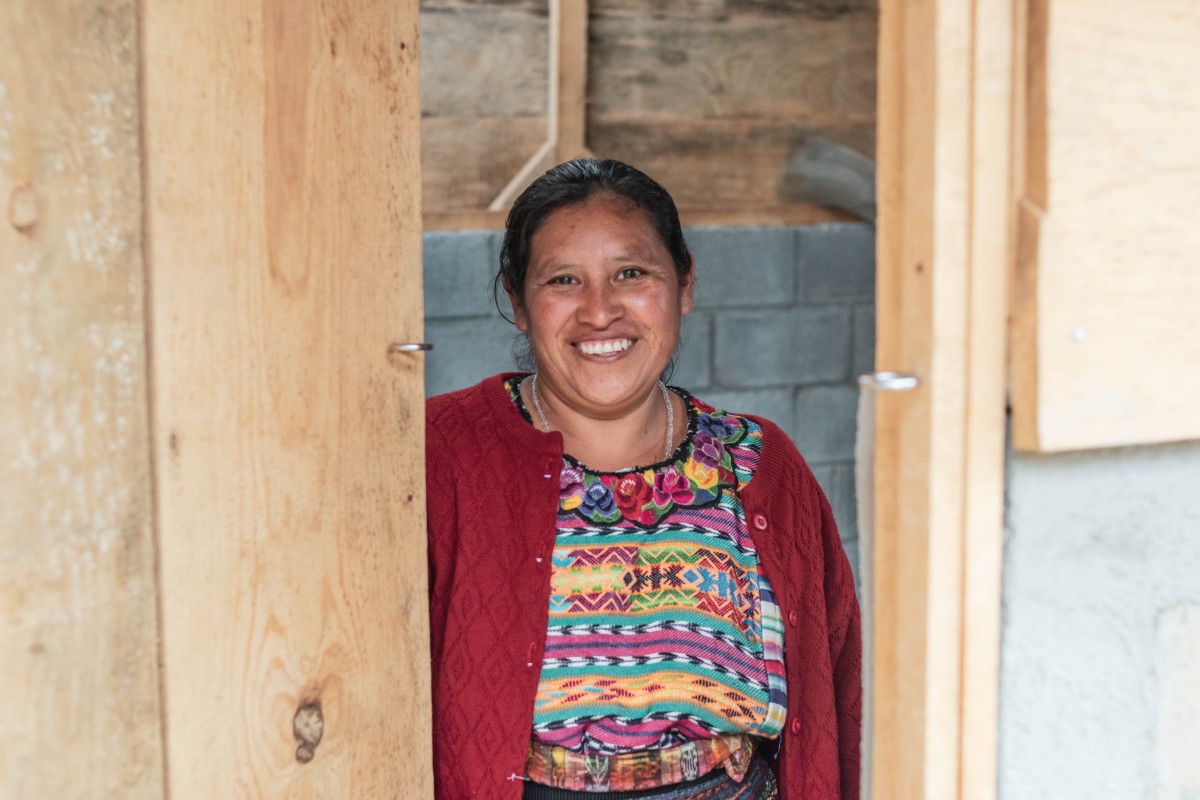
María Rosa Reyes Galicia.
Like many other families across the globe, Guatemalan families are currently facing difficult times due to the COVID-19 pandemic. Joaquín López, our Special Project Coordinator, explains the impact of the coronavirus in Guatemala and our response to it.
With the immediate threat of the COVID-19 pandemic, Guatemala has reported 69,651 confirmed cases, 50,692 recovered and 2,630 deaths at the time of writing. The number of cases is relatively low in relation to other Central American countries considering that the population of Guatemala averages about 15 million[1]. Nevertheless, according to the Pan American Health Organization (PAHO), in the upcoming weeks there could be an increase in infections and deaths in all of Latin America. This will depend greatly on the regulations that each country adopts[2].
Although Guatemala has a weak health system with low coverage[3], in the last several weeks the government of Guatemala has adopted specific measures to deal with the pandemic. There has been a quarantine order in place since March 16th, the closure of borders by sea, land or air, establishment of a curfew, restriction of travel between departments (geographic areas similar to states), suspension of public transportation, and closure of shopping centres – with the exception of economic activities revolving around essential products. These measures, along with opening temporary hospitals at distinct points nationally, aim to reduce the spread of the virus that still has no cure and creates huge uncertainty for the future.
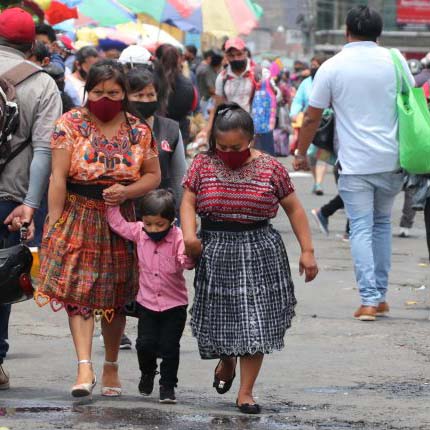
(Photo: Prensa Libre)
Suspending work and advising people to stay at home – in a context where most employment (70%) is informal, over three in five people (61.6%) live in poverty, almost one in four (23%) live in extreme poverty[4], and half (50%) of children suffer from chronic malnutrition[5] – has impacted families in many ways[6].
Those families living in poverty will fall into extreme poverty. Countless families will find their livelihoods interrupted and will not be able to cover the cost of basic services. The food security of many will be put at risk, and in vulnerable climate zones the effects of the drought will make farming to live impossible[7].
Currently, the government is providing assistance to 200,000 families[8] with food and cash vouchers over three months, which could benefit 1.2 million people. Nevertheless, this coverage is low considering that 3.4 million live in extreme poverty. Additionally, a large part of this vulnerable population lives in remote rural areas where they will not be able to maintain their livelihood or have access to government support.
From this context emerges Habitat for Humanity Guatemala’s intention of collaborating with families and communities in vulnerable regions. Through a network of both national and international donors, Habitat is in the process of raising funds to support those most in need, in three phases.
The first will be a response effort, working with our network of community leaders and volunteers in rural areas to identify families in need. This phase will include providing basic items that will cover their food deficit for a month. It will also include the distribution of hygiene kits to prevent the spread of the virus and guarantee health and hygiene in homes for several months. Such kits, include:
This process will be implemented along with public campaigns and promotion to avoid the contagion and encourage health in the home, using visual and audiovisual materials in local languages.
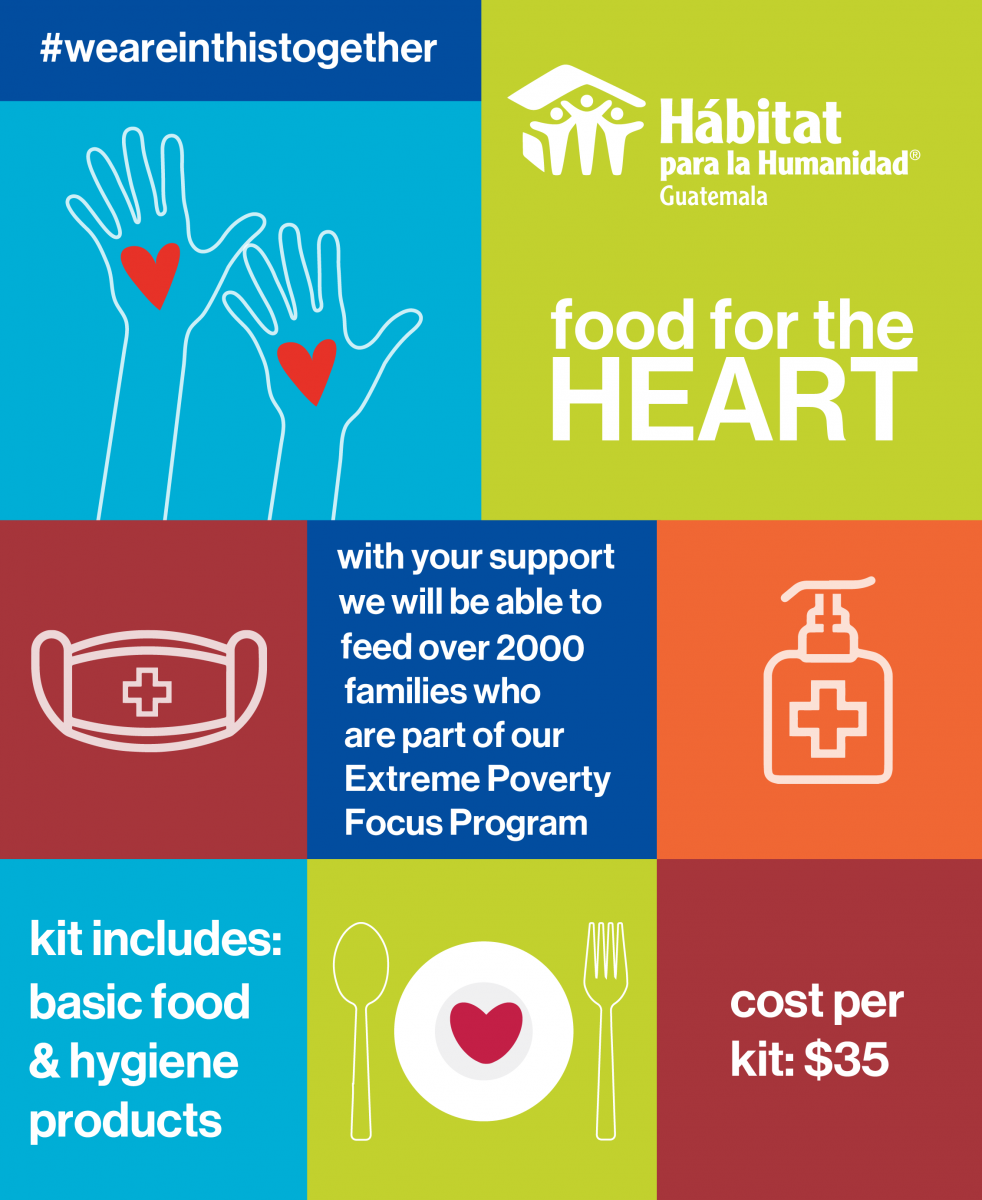
On May the 26th and 27th, the families from San Lucas Tolimán, Sololá were benefited with the first 100 food and sanitary kits.
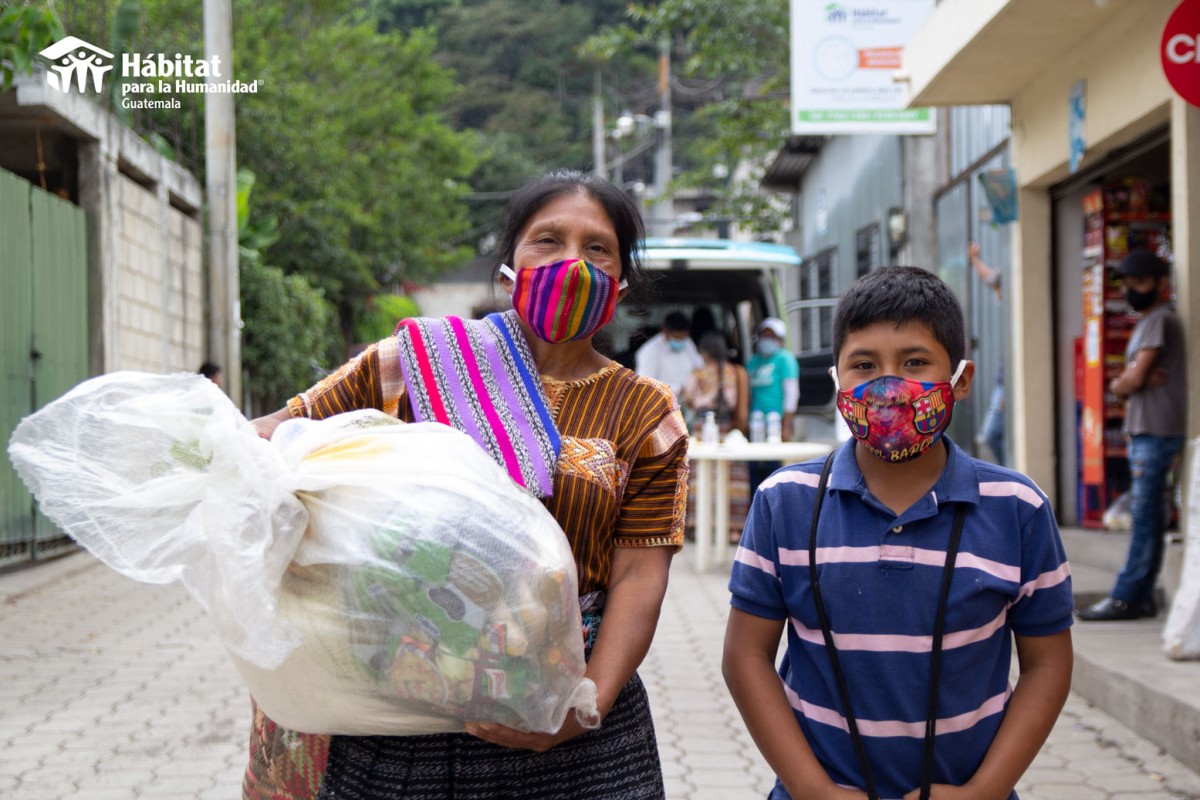
On June the 10th, another 100 Food & Hygiene kits were delivered to the families of El Progreso!
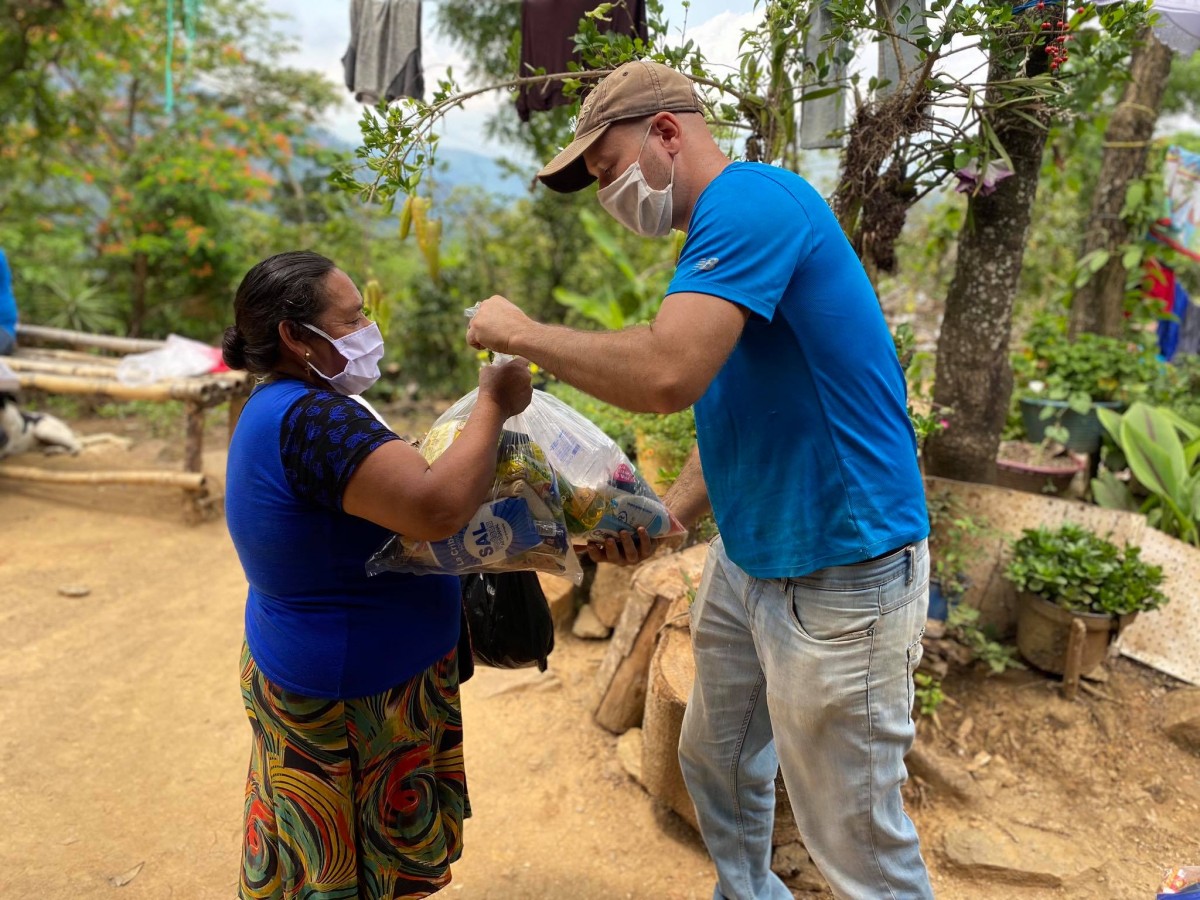
The second phase will be focused on recovery efforts, strengthening the livelihood of many by, for example, poultry farming – guaranteeing access to protein (meat and eggs). This phase also includes home improvements in order to guarantee access to water, adequate sanitation systems, and improvements in the physical structures of the home.
The third phase is mitigation, and will be implemented long-term. It will promote the social construction of resilience through regular trainings, and the development of workshops for community leaders and families. In this process, sustainable permanent productive projects will be implemented, such as family gardens.
We aim to reach more than 2,000 families in remote rural areas who are not being supported by other programmes. However, the journey to achieve this still requires both fundraising, and the hope that normal activities can resume. This will be subject to the number of those infected in the country diminishing. What happens with the rate of infection in the following weeks will be decisive in assisting families who are suffering most in quarantine.
[2] AFP. (2020). OPS prevé un aumento de infectados y de fallecidos por COVID-19 en Latinoamérica a fines de abril y principios de mayo.
[3] USAID – United States Agency International Development. (2015). Guatemala. Análisis del Sistema de Salud.
[4] OPHI – Oxford Poverty and Human Development Initiative. Global MPI Country Briefing 2019: Guatemala (Latin America and the Caribbean.)
[5] PNUD – Programa de las Naciones Unidas para el Desarrollo (2017). Humanitarian Needs Overview Guatemala.
[6] Monzón, M. (2020). El covid-19 y la Guatemala desigual. Publicado en Prensa Libre (31/03/2020)
[7] Recuperado de https://www.prensalibre.com/guatemala/comunitario/lo-mas-duro-de-la-crisis-alimentaria-esta-por-llegar-al-corredor-seco/
[8] Recuperado de https://dca.gob.gt/noticias-guatemala-diario-centro-america/hospital-temporal-de-quetzaltenango-estara-listo-la-proxima-semana/
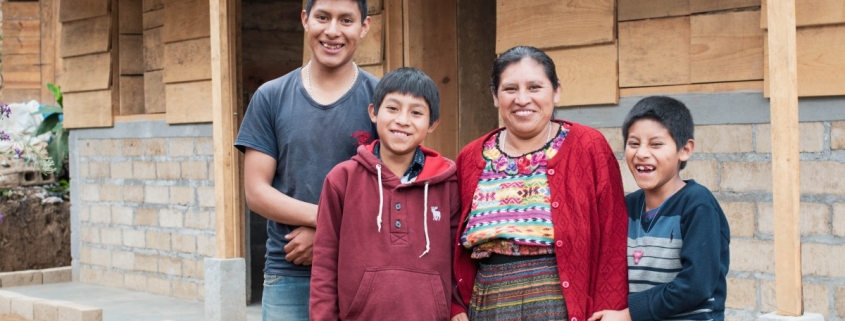
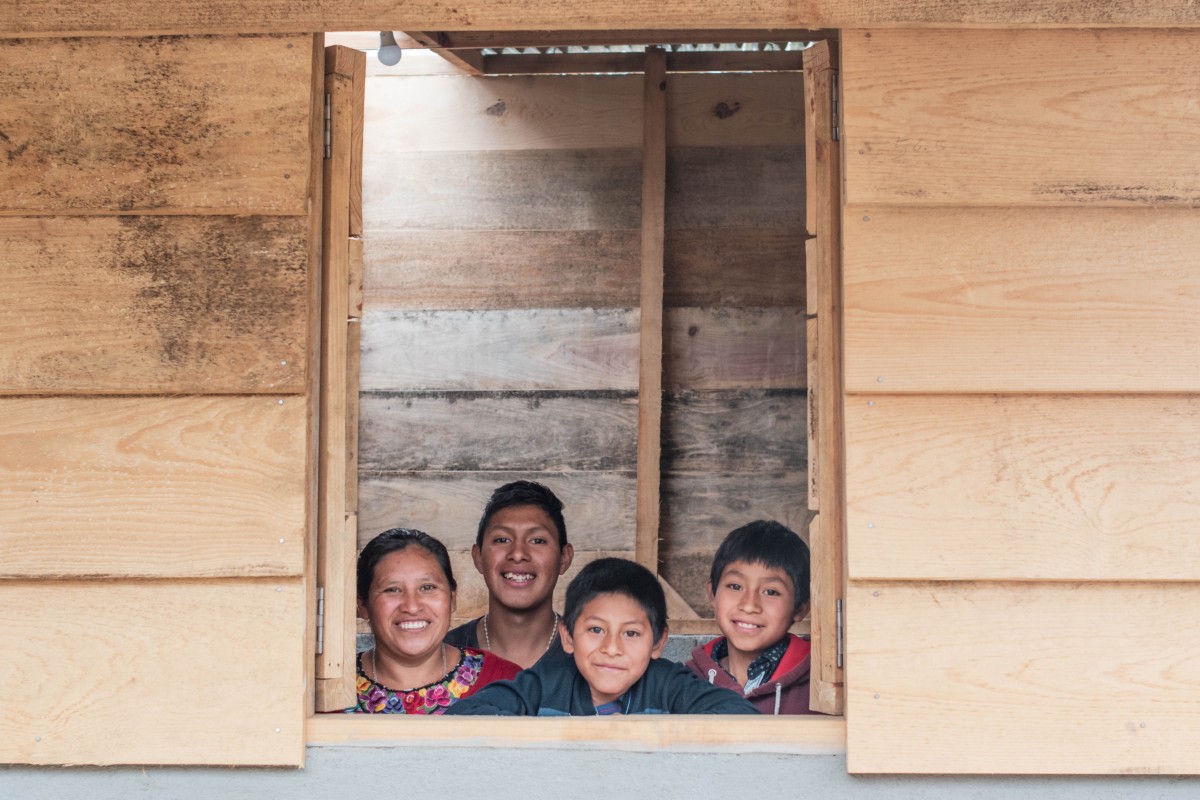
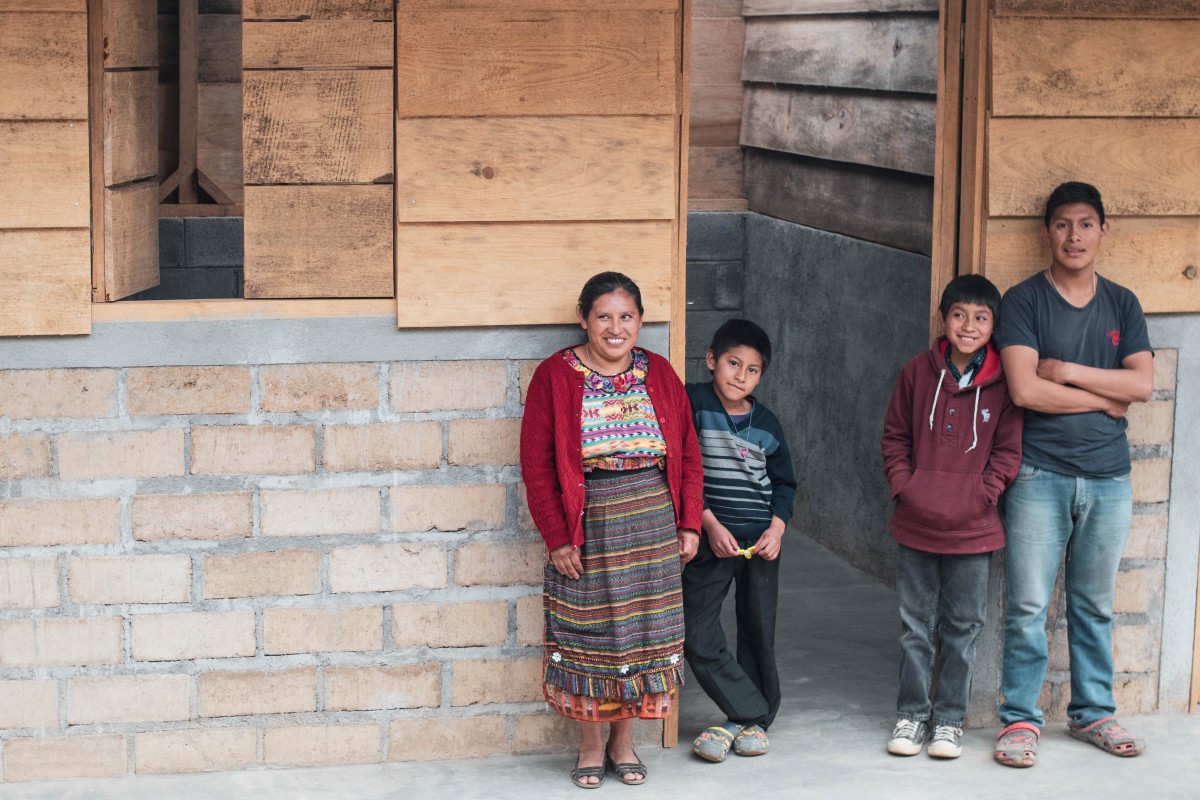
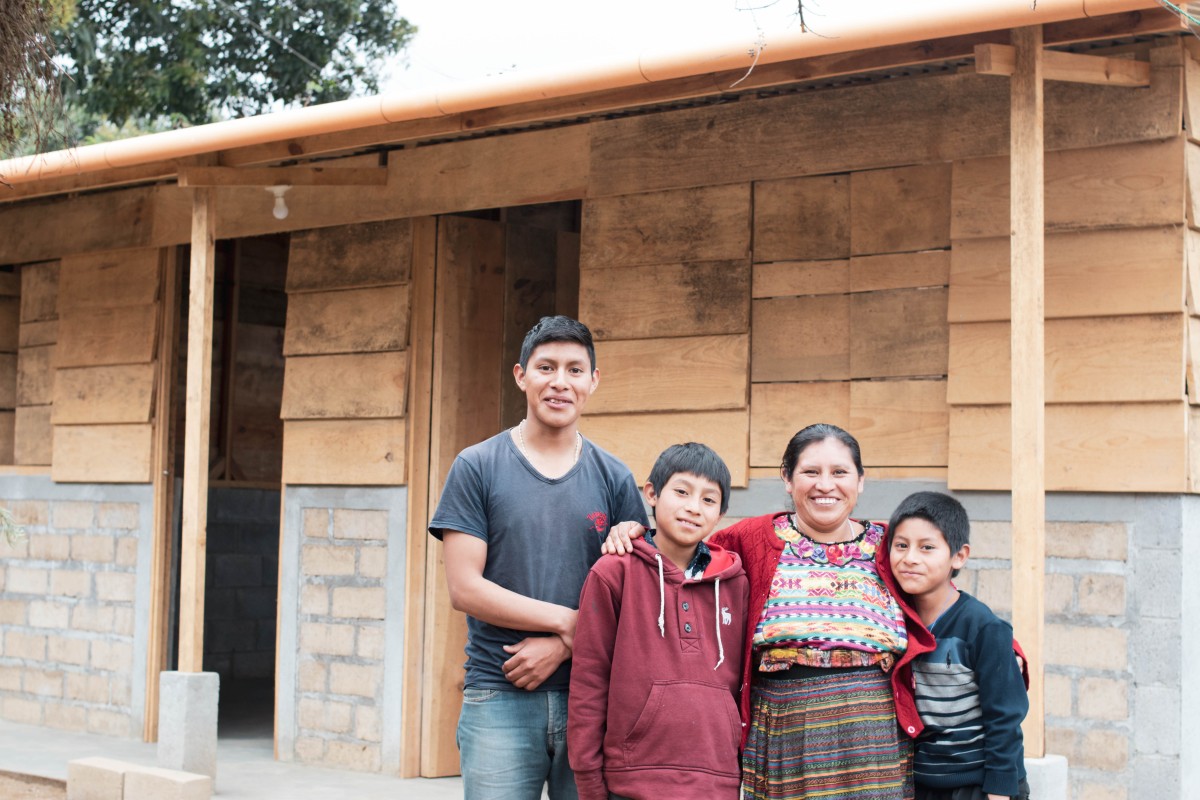
Florencia and her 5 children, Rosaura (16), Milsia (13), Ismael (11), Aroldo (8), and Josué (17), are the proud owners of a new Hybrid House, in the municipality of Las Canoas Altas, San Andrés Semetabaj, Sololá. Milsia is a single mother who works as a cleaning lady in different houses. The youngest children are going to school and the oldest work in different field activities.
Florencia and her family are part of our new Hybrid House Program, which is a two room home built with a mix of traditional materials: adobe blocks, cement blocks, and wood.
Quick facts about the new Hybrid Home:
1. At just $3,300 USD, it costs less than half the price of a standard HFHG home.
2. The home is partially subsidized, acknowledging that the population we are serving does not have access to an income that would allow them to pay a mortgage. The family contributes sweat equity, creating the adobe blocks as well as participating in the construction of their new home.
3. The structure can be built in a time frame of approximately a two weeks.
4. This is a new effort to support the sector of the population that is living in the poorest conditions.
5. To date, the pilot program has consisted of a total of four houses.
As previously explained, this solution is partially subsidized which means that beneficiary families are asked to contribute towards the cost of materials, provide unskilled labor such as preparing the adobe blocks, among other tasks.
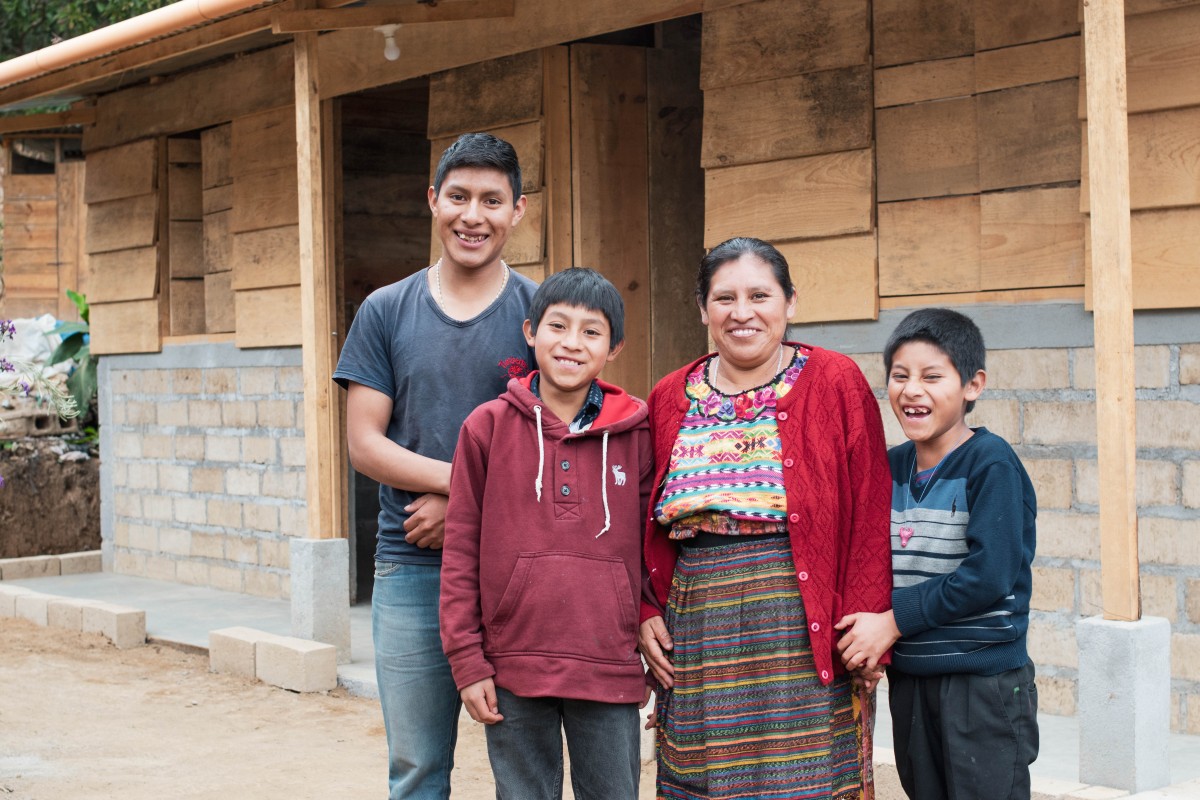
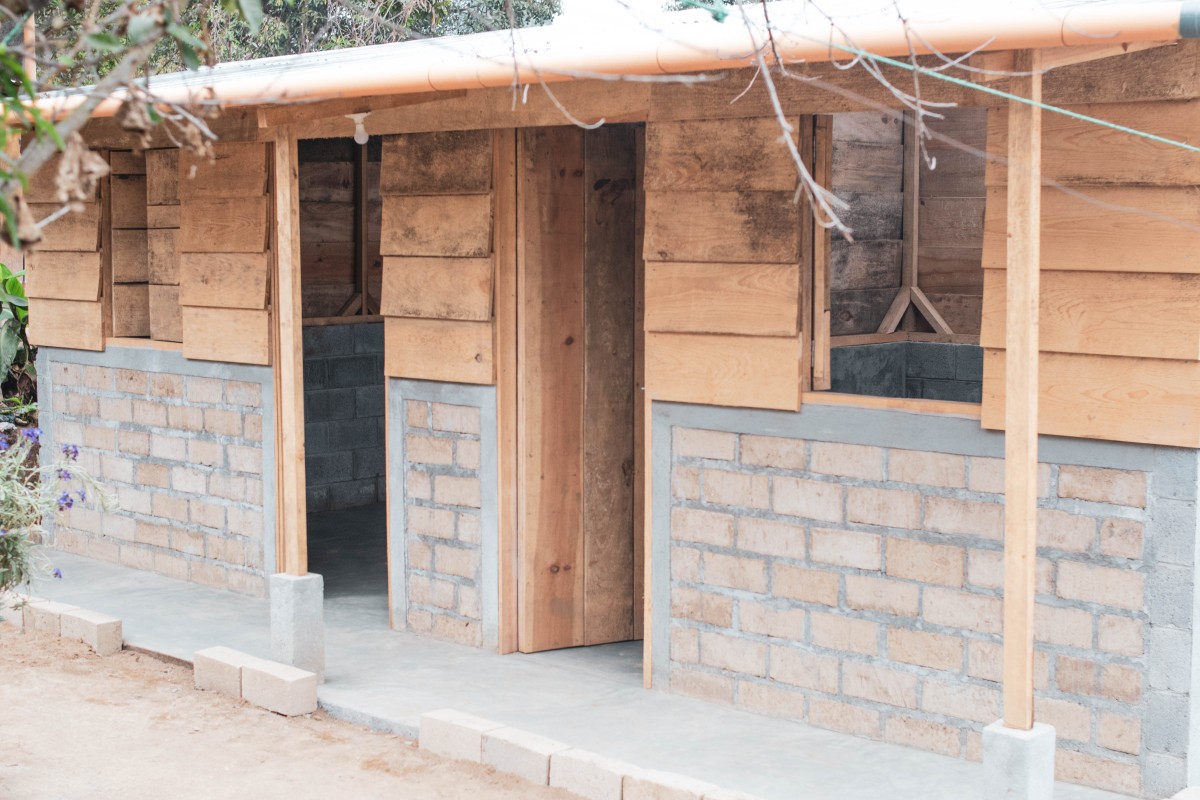
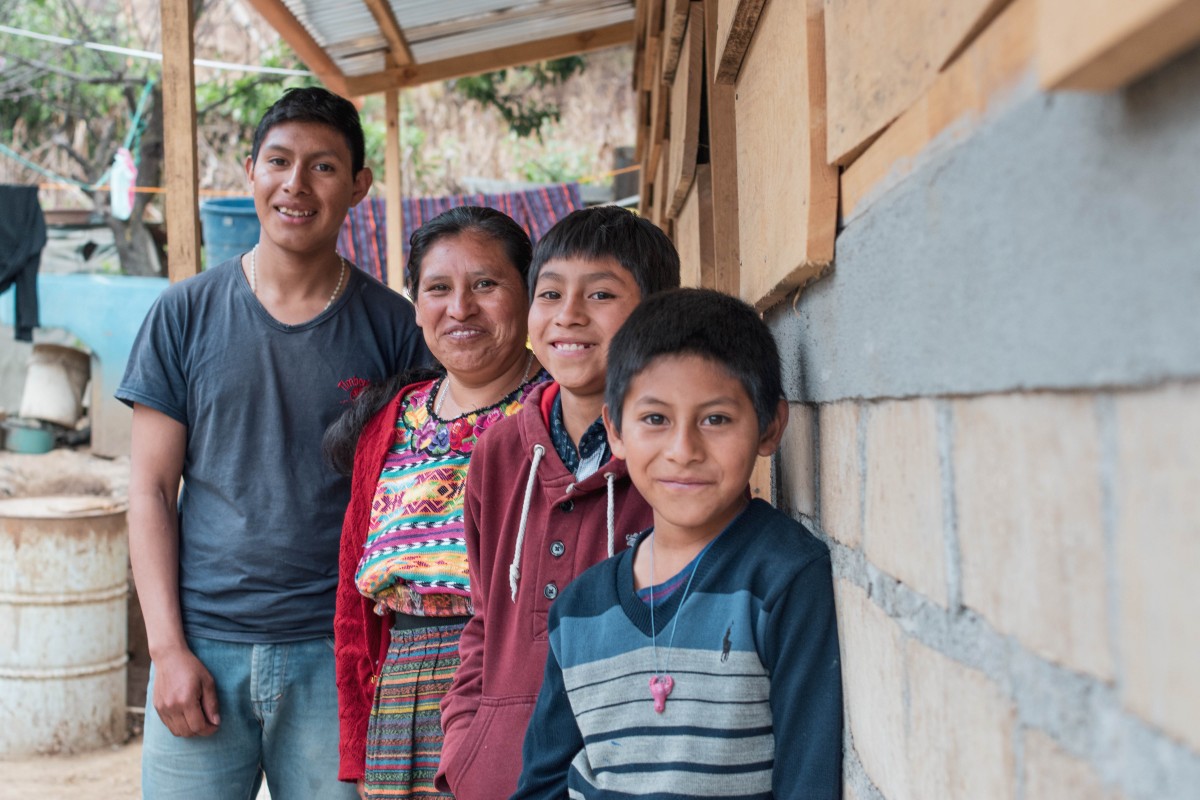
Before partnering with Habitat Guatemala, Florencia mentioned that her and her family used to live in a house built out of metal roof sheets, sharing just one room for all of them. Another room was used for the kitchen. “The old house was different, because it was built with metal sheets, we felt very cold during winter and very hot during summer, it had a lot of holes where the wind got in,” shares Florencia.
One day she received a visit from Habitat staff, Florencia showed them her house and the way they were living. The staff explained to Florencia about the program and that she was selected as one of the beneficiaries. “I was surprised because it all happened really fast. In a couple of months, we were already building our new home with my children! The adobe blocks were hard to make at the beginning but then we got used to it. All my children were a part of the construction process, and it was fun.” – Florencia.
When asked how they feel with their new home, Florencia smiles and answers, “We feel happy, happy to have our home now! I am very grateful to everyone who supported us. I do not know what else to say to except to express my gratitude and happiness. We are now able to live at peace with my children, without worrying about feeling cold anymore.” In the future, this family is planning to add flowers and trees around the house, to make it look even prettier!
Florencia finishes by sharing a message to the donors and volunteers, “May you all receive our gratitude, Thanks to God and to all of you who supported us. As a single mother it has been a hard road, I felt alone. And you coming to support me, makes me feel I am not alone anymore. Thank you!
El COVID-19 nos ha obligado a quedarnos en casa, no se puede concurrir a lugares públicos, centros educativos y centros de trabajo, entre otras. La mejor forma de prevenir el coronavirus es lavarse las manos regularmente con agua y practicar el distanciamiento social.
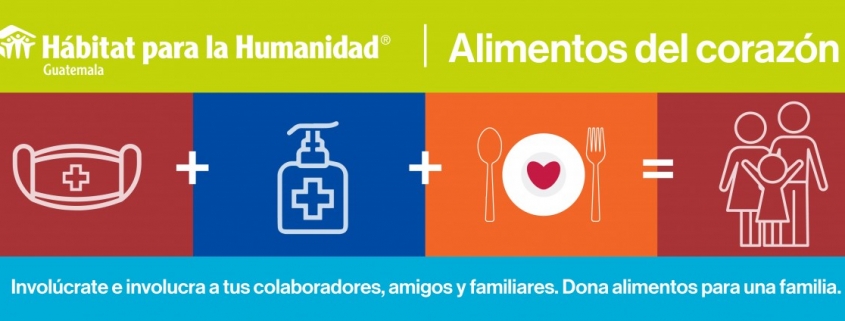
En Hábitat para la Humanidad Guatemala seguimos trabajando para apoyar a las familias más vulnerables ante esta crisis, en respuesta a ello, se creó Alimentos del Corazón en donde motivamos a las empresas, personas individuales, amigos o familias, a que se unan a recaudar víveres y kits de salud para familias, para nosotros ser el vehículo para transportar y entregar los alimentos en las distintas comunidades de nuestro país.
¿Qué estamos recolectando?
Nuestros Kits Alimentos del Corazón contienen: 8.5 libra de harina de maíz, 5 libras de frijol, 5 libras de azúcar, 2 libras de atol, 5 libras de arroz, 5 libras de pasta, una botella de aceite, 1 libra de sal, 6 sopas de sobre, 6 mascarillas reutilizables, 2 botes de gel antibacterial.
Con estos productos estaremos llevando alimentos a más de 3 mil familias que se encuentran en dificultades o en situación de pobreza.
Es momento de unirnos y ser ese país solidario que cuida la salud, la vida y la seguridad de las personas con las que trabajamos en las comunidades, además, concienticemos a las familias sobre la importancia del lavado de manos y el uso correcto de las mascarillas.
Si deseas realizar una donación te puedes comunicar con:
Glenda Castro al correo gcastro@habitatguate.org y al teléfono: 4186-4363, o ingresa a https://www.habitatguate.org/donaciones-habitat/
¡Comparte salud, comparte vida!
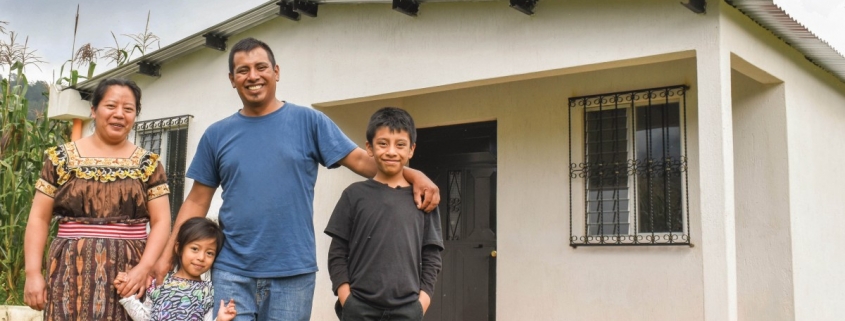
Cambiamos nuestra imagen y queremos reiterar el compromiso que tenemos con el país, las personas, las familias y con las comunidades para mejorar su calidad de vida.
Una nueva imagen que refuerza lo que somos y lo que hacemos. Somos una organización que vela para que todas las personas habiten en una vivienda digna, con más de 40 años de experiencia mejorando la calidad de vida de las familias, por medio de la construcción y mejoramiento de viviendas, así como programas de atención a la extrema pobreza, hemos atendido a más de 110 mil familias que se han beneficiado y asociado a Hábitat Guatemala.
Con este cambio resaltamos nuestra lucha por llegar a más del millón de personas beneficiadas con nuestros productos y servicios, asimismo queremos acentuar las características que hemos desarrollado durante nuestra trayectoria.
Como organización nos queda mucho por hacer, pero con el apoyo de voluntarios, empresas, donantes, proveedores, beneficiarios y colaboradores seguiremos sirviendo al país. Esperamos seguir brindando el apoyo a cada uno de los guatemaltecos y nos seguiremos esforzando para ser mejores cada día.
Empoderamos con vivienda.
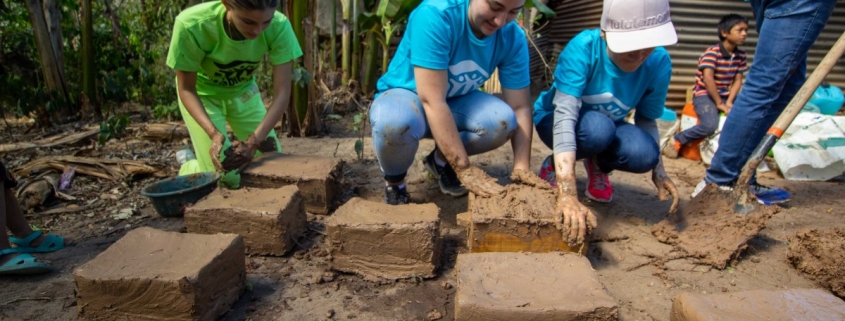
En Hábitat Guatemala, promovemos las actividades de voluntariado como una forma de participación ciudadana ya que incidimos de manera directa en el progreso de nuestro país. Trabajamos bajo el principio de ayuda mutua, en donde las familias beneficiadas y nuestros voluntarios se involucran en el proceso de construcción de viviendas, estufas y letrinas.
Participar en voluntariado acelera el proceso de entrega de cualquier producto para las familias, reduce costos y es una manera de reducir el déficit habitacional.
A nivel empresarial la experiencia de sumarse es muy gratificante ya que es una buena forma de hacer team-building y una gran oportunidad para implementar proyectos de Responsabilidad Social Empresarial.
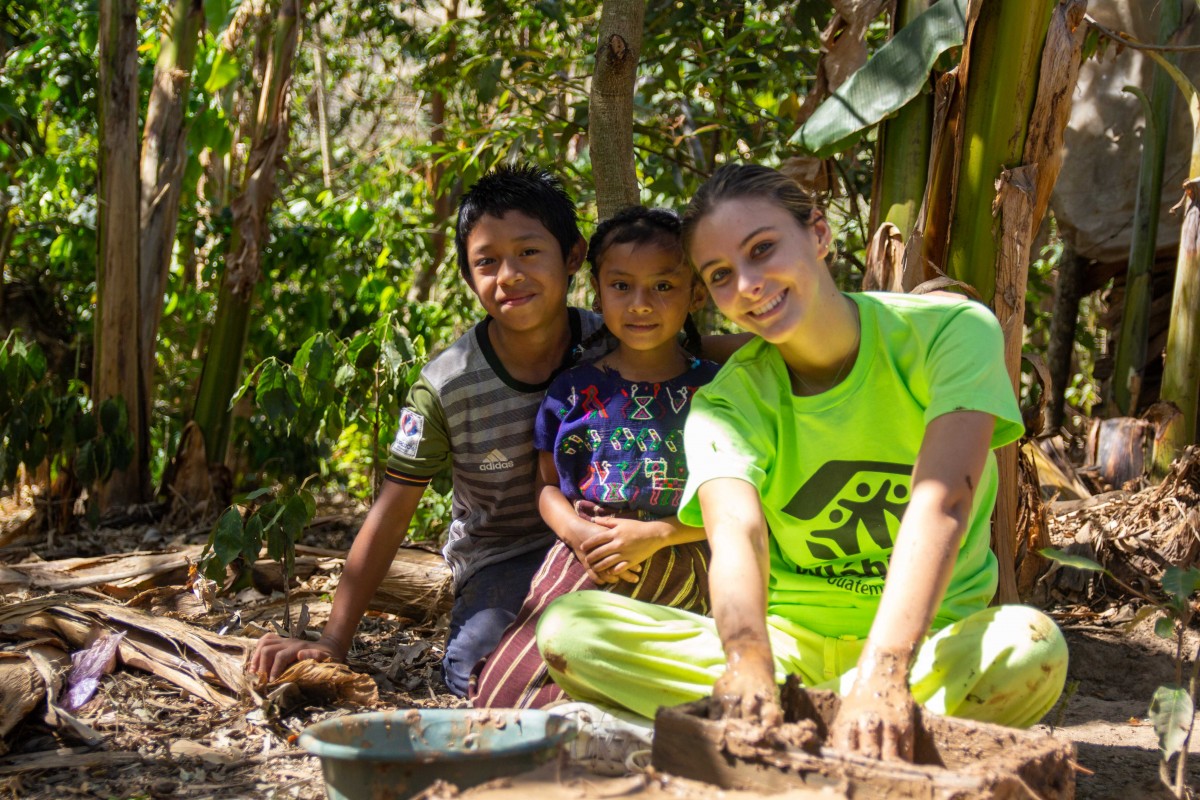
Hacer voluntariado con Hábitat, significa tener la inspiración de apoyar con el corazón y llenar de felicidad cada uno de los hogares, porque el voluntariado se transforma en servicio a la comunidad generando sentimiento de solidaridad a los guatemaltecos que se encuentran en condiciones vulnerables.
Asimismo, el voluntariado crea conciencia social no solamente para quien participa sino para las personas que le rodean. Agradecemos a todos los jóvenes que dedican su tiempo a la acción solidaria, su espíritu de equipo y su gran labor como voluntarios, esto refuerza el compromiso que tenemos con la juventud de nuestro país.
A través del voluntariado transformamos comunidades que se encuentran vulnerables, y el trabajo que se hace trae una visión positiva y de esperanza para cada una de las familias.
Tu tiempo y tu voz ayudan a generar autosuficiencia en las familias que necesitan un lugar digno para vivir.
¡Cada mano que ayuda hace la diferencia!
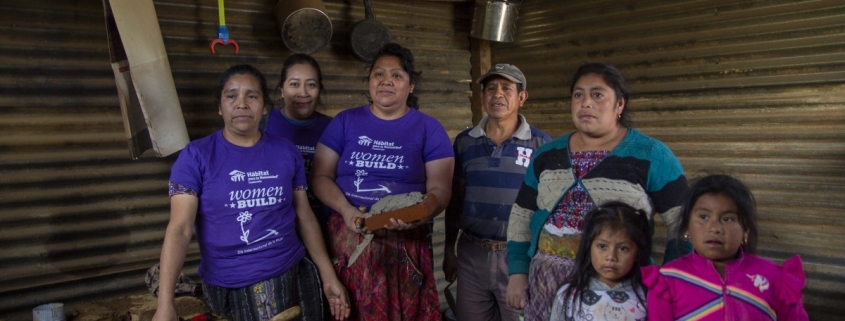
Con el fin de seguir apoyando a familias en extrema pobreza, en la aldea El Rejón, Sumpango, se construyeron 10 estufas mejoradas con la ayuda de mujeres voluntarias.
Doña Emerlinda Sequen, nos cuenta que desde pequeña ha cocinado a fuego abierto lo que le ha causado quemaduras e irritación en los ojos, esto debido al humo, también indica que el gasto de leña es muy alto y en ocasiones no le es posible comprarla; sin embargo, gracias al apoyo de la lideresa de la comunidad se enteró sobre el Kit Saludable de Hábitat, por lo que no dudó en inscribirse para solicitar una estufa.
Hoy, 10 mujeres cuentan con una estufa mejorada, que no solo las beneficia económicamente ya que ahorra leña, sino que lo más importante es que cuida la salud de ellas y sus familias.
“Me siento muy feliz y le doy gracias a Dios por esta gran oportunidad que Hábitat me dio” Emerlinda Sequen.
atención al cliente
QUETZALTENANGO
18 avenida 5-13 zona 3.
7736-8264 / 7763-7524 / 4740-6832
atención al cliente
GUATEMALA (REGIÓN GUATE-CENTRO)
3 Av. 8-26, Zona 10. Guatemala
23392223
atencionfamilias@habitatguate.org
© 2020 Habitat para la Humanidad ® Guatemala. | Desarrollado por iGuate.com