Latest News
My latest ramblings.
Enjoy! I definitely got important things to say


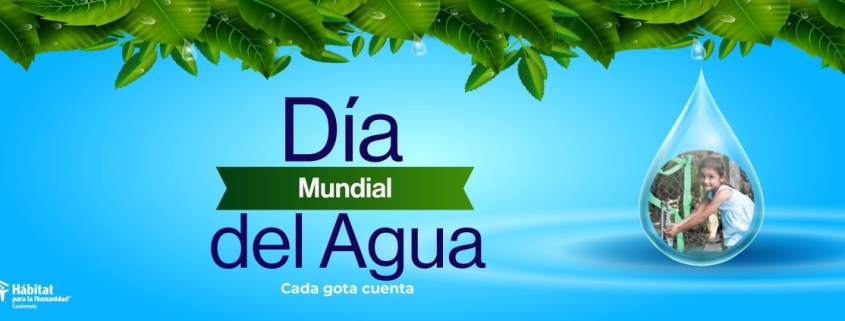
El 22 de marzo de cada año conmemoramos el Día Mundial del Agua. Una fecha de importancia que nos invita a reflexionar más sobre el valor que tiene el agua para cada uno de nosotros y para la vida misma.
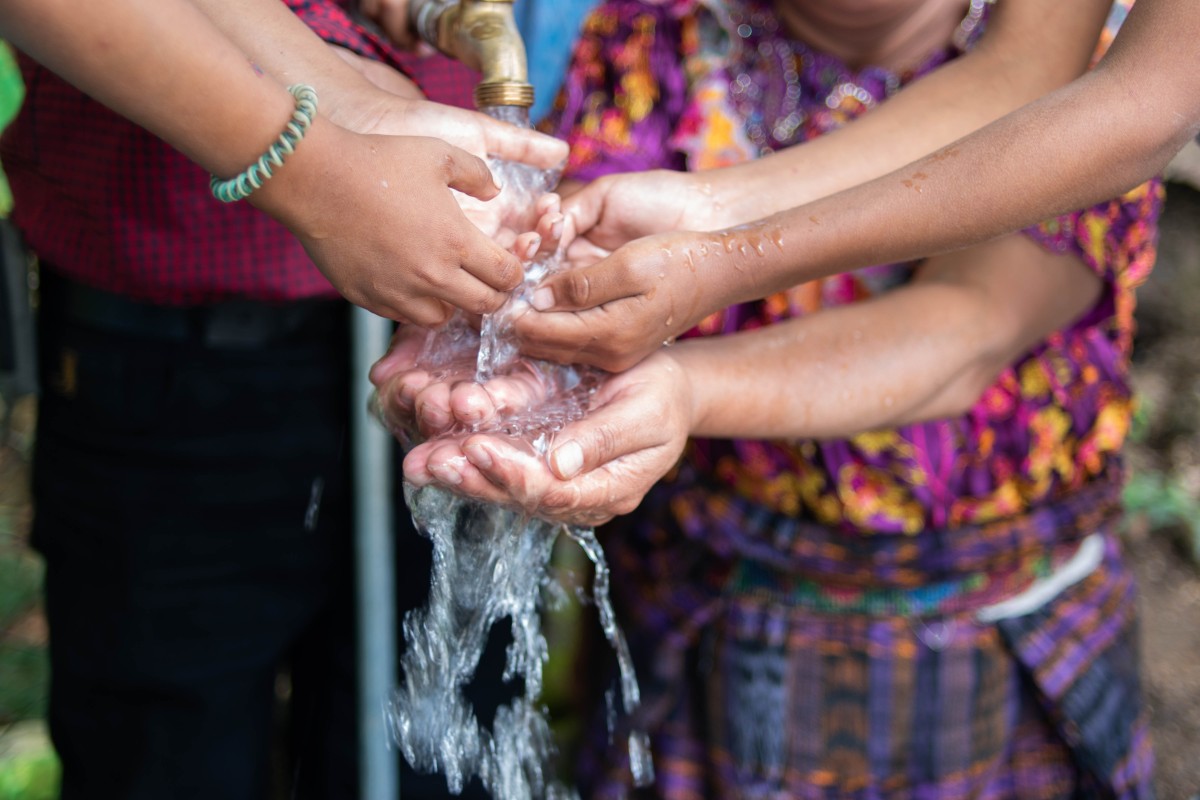
Para muchos, bajar a la cocina por un vaso de agua o realizar tareas diarias como bañarse, lavarse las manos o cepillarse los dientes no implica un desafío ni un peligro para la salud. Quizá por ello, es por lo que muchos de nosotros estamos incluso acostumbrados a desperdiciar agua sin reflexionar sobre las millones de personas que día a día batallan para conseguir el vital líquido y para quienes cada gota cuenta.
A nivel mundial, la escasez y falta de agua segura es alarmante. Se estima que al menos 2,000 millones de personas utilizan fuentes de agua contaminadas por heces u otro tipo de microbio como fuentes principales de agua para consumo humano (OMS, 2022). Igualmente, 4 mil millones de personas (dos tercios de la población mundial) experimentan escasez de agua por lo menos 1 mes al año (UNICEF, s.f.).
Esta vulnerabilidad de agua existente (contaminación y escasez) traen consecuencias graves dentro de las cuales se puede destacar:
En Guatemala, la situación es igual de preocupante. Pese a la riqueza de recursos hídricos en el país con nuestros 7 lagos, 19 lagunas costeras, 49 lagunas, 109 lagunetas, 7 embalses y 3 lagunas temporales, se estima que más de un 90% de las fuentes de agua del país se encuentran contaminadas (Peace Brigades International, s.f.). A la vez, 3 millones y medio de guatemaltecos no tienen acceso a agua potable (World Scarcity Clock, 2023) y la falta de servicios sanitarios adecuados y de fácil acceso en las viviendas afecta al 44% de los hogares en el país (INCAE, 2016). Cabe mencionar, que Guatemala también está en el puesto número 16 de los países a nivel mundial más vulnerables al cambio climático, lo cual llegará a amplificar la magnitud del impacto de la escasez y la contaminación de las fuentes de agua en el país. Afectando a millones de guatemaltecos en sus condiciones de vida y, principalmente, en la salud.
Ante esta situación, año con año Hábitat para la Humanidad Guatemala (HPHG) continúa trabajando arduamente con comités locales de voluntarios, comunidades y organizaciones nacionales e internacionales, para lograr llegar a las familias más necesitadas de Guatemala. De esta forma, HPHG ha apoyado a comunidades enteras con soluciones de agua, higiene y saneamiento que van desde filtros purificadores de agua, pilas, cosechadores de agua de lluvia y estaciones sanitarias.
Desde 2010, HPHG ha logrado entregar 4,385 letrinas; 10,157 filtros purificadores de agua; 1,084 pilas, 3 sistemas de agua comunitarios y 225 cosechadores de agua de lluvia. Contribuyendo así, a llevar agua limpia y segura a muchas comunidades a lo largo y ancho de Guatemala. Al mismo tiempo, HPHG está creando una plataforma para contribuir con la promoción y el avance de las metas e indicadores de los Objetivos de Desarrollo Sostenible (ODS) tales como el Objetivo 6: agua limpia y saneamiento.
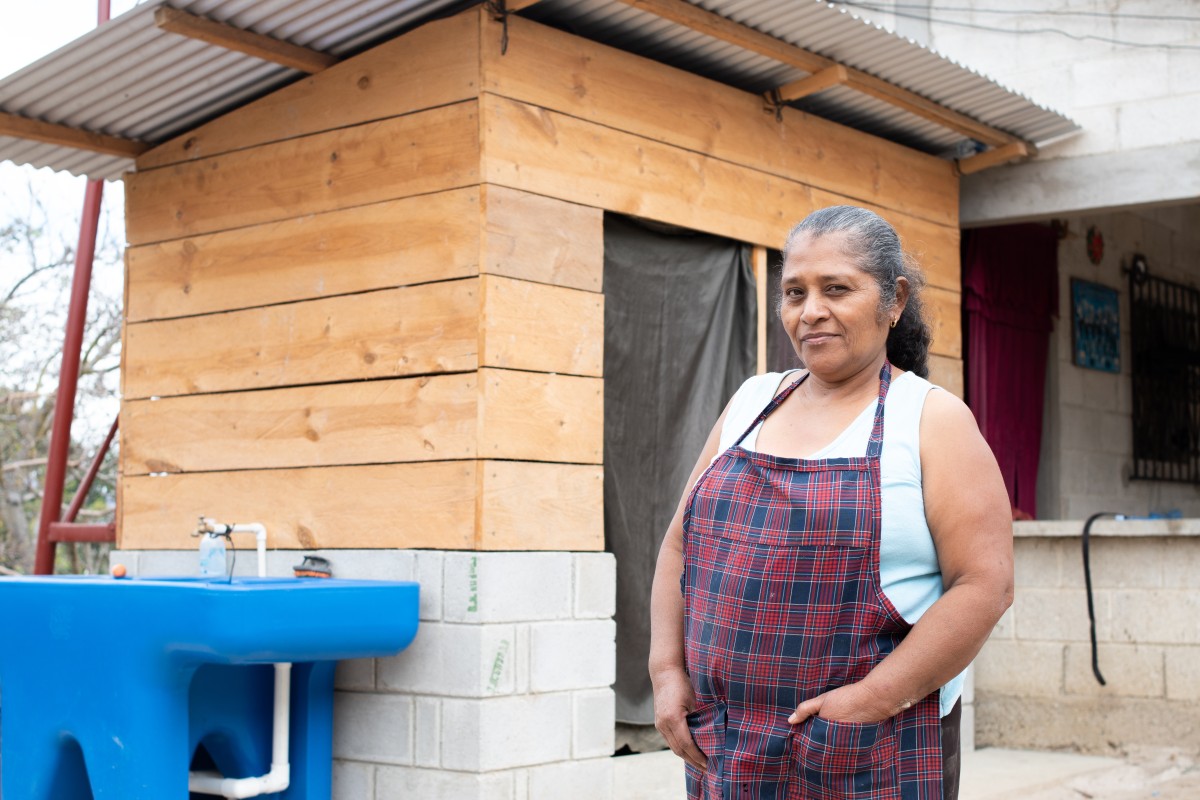
A través del apoyo de Hábitat y su red de colaboradores, hoy son más las familias guatemaltecas que no tienen que preocuparse porque sus hijos se enfermen por ingerir agua contaminada, que no tienen que recorrer distancias de hasta 1 hora varias veces al día para recolectar agua y son más las familias que pueden acceder a un servicio sanitario seguro y de calidad. Además, contar con sistemas de recolección apoya a las familias con agua en cantidad, pero contar con sistemas de purificación también apoya a obtener agua de calidad y apta para consumo humano. Todo ello también significa un apoyo en la economía del hogar, además que mitiga la morbilidad de enfermedades gastrointestinales.
El uso del agua es responsabilidad de todos, ya que no basta solo con obtenerla y purificarla, si no también es de importancia que nos ocupemos de darle un tratamiento primario a las aguas servidas para minimizar el impacto ambiental. HPHG en los últimos años, ha estado trabajando para implementar sumideros de agua en las pilas, biodigestores y letrinas de pozo ventilado que ayudan a proteger las aguas subterráneas de grasas, jabones, excrementos humanos y otros contaminantes. El agua subterránea representa el 99% del agua dulce líquida del planeta (ONU, 2022), por lo que su cuidado es de suma importancia para minimizar el impacto de la escasez, la contaminación y para ampliar el acceso a agua segura de toda la población.
El propósito de HPHG es continuar este año apoyando a más familias guatemaltecas e informando a la sociedad sobre la gran necesidad que aún prevalece para muchas comunidades el poder obtener agua segura. Todos nosotros podemos apoyar esta gran causa a través de la donación, el voluntariado o simplemente difundiendo la labor de hábitat para poder acercarnos a más comunidades.
Escrito por:
Daniela Ramirez, coordinadora de desarrollo de recursos internacionales.
ACNUR. (09 de septiembre de 2021). ACNUR: Conflictos por el agua obligan a huir a miles de personas del norte de Camerún. Obtenido de https://www.acnur.org/latam/noticias/videos/2021/9/613ac4cf4/conflictos-por-el-agua-obligan-a-huir-a-miles-de-personas-del-norte-de.html
INCAE. (2016). Estado De la Vivienda En Centroamérica . Costa Rica: INCAE.
OMS. (21 de marzo de 2022). Agua para consumo humano. Obtenido de https://www.who.int/es/news-room/fact-sheets/detail/drinking-water
ONU. (21 de Marzo de 2022). Naciones Unidas: Noticias ONU. Obtenido de https://news.un.org/es/story/2022/03/1505842
Peace Brigades International. (s.f.). Peace Brigades International: Guatemala. Obtenido de https://pbi-guatemala.org/es/multimedia/art%C3%ADculos/la-escasez-de-agua-en-guatemala-entrevista-gerardo-pa%C3%ADz-ecologista-del#:~:text=%C2%BFCu%C3%A1les%20son%20las%20causas%20de%20la%20escasez
%20de,que%20tienen%20un%20efecto%20directo%20sobre%20el%20
UNICEF. (16 de mayo de 2022). UNICEF. Obtenido de https://www.unicef.org/es/historias/agua-hambre-cosas-que-necesitas-saber#:~:text=Los%20ni%C3%B1os%20malnutridos%20son%20tambi%C3
%A9n%20m%C3%A1s%20vulnerables%20a,50%25%20de%20la%20desnutrici%C3%
B3n%20mundial.%20UNICEF%2FUNI361793%2FSobecki%20VII%20Photo
UNICEF: for every child. (2021). Water Security for All: reimagining WASH. New York, USA: United Nations Children’s Fund.
Water Scarcity Clock. (2021). Water Scarcity Clock. Obtenido de https://worldwater.io/
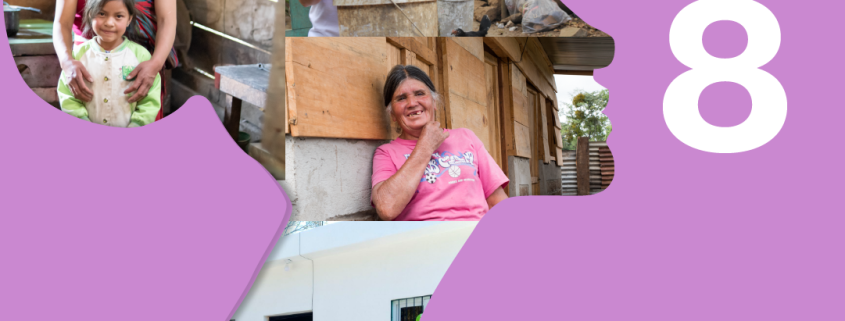
Internationally, March 8 of each year represents an important date for each and every woman in society, International Women’s Day. However, more than a day of celebration, congratulations or giving flowers or chocolates, March 8 is a day to commemorate, remember and act in the search for true gender equality. As women, we need the congratulations we receive on this special day to become real actions that promote that all women achieve a dignified life, free of violence and with access to the same opportunities as men.
Hearing congratulations for being a woman in a country like Guatemala, which is ranked 113th out of 146 countries worldwide and last in the region in terms of gender equality, is something that needs to be improved. In Guatemala, we need to make being a woman a synonym of pride and dignity and not a limiting factor in our integral development due to inequality.
Guatemala stands out as one of the countries with the lowest economic participation of women (117th place) and the lowest female political participation (119th place) (World Economic Forum, 2022). In addition, UN (2017) notes that the wage gap between Guatemalan women and men is 32%. That is, in Guatemala for every Q100 a man earns, a woman earns Q68, working an average of 13 hours a day, while men work 11. A situation that mainly affects migrant, indigenous, rural women and young women. Only 37% of Guatemalan women participate in the formal labor market (in contrast to 85% of men); only 27% run their own business and only 28% have access to financial markets (in contrast to 66% of men (USAID, 2023).
So, as women we ask ourselves, is it really something to congratulate being a woman in Guatemala, and can we transform these congratulations into sustainable and impactful actions for women?
At Habitat for Humanity Guatemala (HFHG), we faithfully believe that support for women should be reflected in actions. Therefore, we seek and carry out projects that aim to provide the female empowerment that is needed not only for the benefit of women but also as a boost for the integral development of society as a whole.
Currently, women represent 53% of the beneficiaries of HPHG programs (HPHG, 2020). Such as the Revolving Fund for Humanity program, which provides financial support for the construction of housing solutions. As well as in projects focused on entrepreneurship and income improvement, such as the poultry farms in Morales, Izabal, implemented in 2020 and 2021, which allowed them to have a livelihood for self-consumption and sale.
Likewise, HFHG through the regional Habitat for Humanity and FICEM project called: «100 Thousand Floors to Play On» seeks to replace dirt floors with concrete floors from 2023 to 2025, mainly supporting Guatemalan families where women are the head of household and with children under 6 years of age, older adults, and/or people with disabilities.
Through support in the construction, training and delivery of housing solutions such as wood-saving stoves, latrines, water purification filters and rainwater harvesters, we promote Guatemalan women’s access to dignified, healthy and safe water, hygiene and sanitation solutions. With wood-saving stoves, smoke inhalation is reduced due to the practice of cooking over an open fire, which affects the health mainly of women and young children who spend the most time in the kitchen (HFHG, 2023). This reduces respiratory illnesses by up to 81%. Water filters and rainwater harvesters improve regular access to safe drinking water for human consumption and have a positive impact on the reduction of time spent collecting water, which is usually done by women in the household and to which, in some cases, they dedicate up to 4 or 5 hours a day, allowing them to have time to devote to other tasks such as starting their own business or studying. Finally, through adequate latrines, the lack of safe water and sanitation facilities, the practice of open defecation and one of the main causes of school dropout mainly in women when girls begin menstruation are combated (Adukia, 2016).
That is why, instead of congratulating them on this important date, today HFHG tells Guatemalan women that we will continue with our commitment to develop innovative, sustainable and high impact housing projects that allow all women to empower themselves and have access to a more dignified life. We know that an important step in the quest for Guatemala’s integral development is promoting and acting to improve the current development of Guatemalan women, since we cannot advance as a country when 51% of our population continues to live in conditions of inequality and insecurity.
Written by: Daniela Ramirez, International Resource Development Coordinator.
References:
Adukia, A. (2016). Sanitation and Education. Chicago: University of Chicago.
Hábitat para la Humanidad Guatemala. (2020). Memoria de labores: 2019. Guatemala.
Habitat para la Humanidad Guatemala. (2023). Hábitat para la Humanidad Guatemala. Obtenido de https://www.habitatguate.org/about-us/products/
ICEFI. (2021). Mujeres De Guatemala: Un análisis de sus condiciones económicas y sociales. Guatemala: ICEFI.
Naciones Unidas en Guatemala. (8 de marzo de 2017). Comunicado de prensa: Las mujeres guatemaltecas, hacia un planeta 50-50. Guatemala, Guatemala.
USAID. (enero de 2023). Women in Guatemala. Obtenido de https://www.usaid.gov/sites/default/files/2023-03/Fact%20Sheet%20-%20Women%2001.2023.pdf
World Economic Forum. (Julio de 2022). Global Gender Report: 2022 . Genova, Suiza.
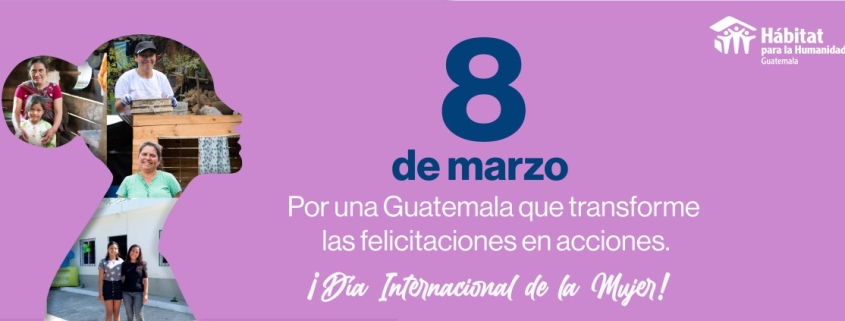
A nivel internacional, el 8 de marzo de cada año representa una fecha de importancia para todas y cada una de las mujeres de la sociedad, el Día Internacional de la Mujer. No obstante, más que un día de celebración, felicitaciones o de regalar flores o chocolates, el 8 de marzo es un día para conmemorar, recordar y accionar en la búsqueda de una verdadera igualdad de género. Como mujeres, necesitamos que las felicitaciones que recibamos en este día tan especial logren convertirse en acciones reales que promuevan a que todas las mujeres logremos tener una vida digna, libre de violencia y con el acceso a las mismas oportunidades que los hombres.
Escuchar felicitaciones por ser mujer en un país como Guatemala que se encuentra en el puesto 113 de 146 países a nivel mundial y en el último puesto a nivel regional en igualdad entre géneros, es algo que hay que mejorar. Necesitamos que, en Guatemala, ser mujer sea sinónimo de orgullo y dignidad y no que sea una limitante en nuestro desarrollo integral debido a la desigualdad.
Guatemala resalta como uno de los países con menos participación económica de la mujer (puesto 117) y menos participación política femenina (puesto 119) (World Economic Forum, 2022). Además, ONU (2017) señala que la brecha salarial entre mujeres y hombres guatemaltecos es de un 32%. Es decir, que en Guatemala por cada Q100 que gana un hombre, una mujer gana Q68, trabajando un promedio de 13 horas diarias, mientras los hombres trabajan 11. Situación que afecta principalmente a mujeres migrantes, indígenas, mujeres rurales y jóvenes. Apenas un 37% de las mujeres guatemaltecas participa en el mercado laboral formal (en contraste con el 85% de los hombres); solo un 27% dirigen un negocio propio y apenas un 28% tiene acceso a mercados financieros (en contraste con un 66% de hombres (USAID, 2023).
Entonces, como mujer nos preguntamos ¿realmente es algo para felicitar ser mujer en Guatemala?, ¿podemos transformar esas felicitaciones en acciones sostenibles y de impacto para la mujer?
En Hábitat para la Humanidad Guatemala (HPHG) creemos fielmente que el apoyo hacia las mujeres se debe reflejar con acciones. Por ello, buscamos y realizamos proyectos que tienen como objetivo brindar ese empoderamiento femenino que se necesita no solo para beneficio de las mujeres sino como impulso para el desarrollo integral de toda la sociedad.
Actualmente, las mujeres representan el 53% de las beneficiadas por medio de los programas de HPHG (HPHG, 2020). Como en el programa Fondo Rotativo para la Humanidad, por medio del que se brinda apoyo financiero para la construcción de soluciones habitacionales. Así como en proyectos con enfoque en el emprendimiento y mejora de ingresos como las granjas avícolas en Morales, Izabal implementadas en 2020 y 2021 que les permitieron tener un medio de vida para autoconsumo y venta.
Igualmente, HPHG a través del proyecto regional de Hábitat para la Humanidad y FICEM denominado: “100 mil pisos para jugar” busca reemplazar pisos de tierra por pisos de concreto del 2023 al 2025, apoyando principalmente a los hogares guatemaltecos donde las mujeres sean la cabeza del hogar y con menores de 6 años, adultos mayores, y/o personas con alguna discapacidad.
A su vez, a través del apoyo en la construcción, capacitación y entrega de soluciones habitacionales como: estufas ahorradoras de leña, letrinas, filtros purificadores de agua y cosechadores de agua de lluvia, se promueve el acceso de la mujer guatemalteca a soluciones de agua, higiene y saneamiento dignas, saludables y seguras. Con las estufas ahorradoras de leña, se disminuye la inhalación de humo debido a la práctica de cocinar a fuego abierto que afecta en la salud principalmente de mujeres y niños pequeños quienes son los que pasan mayor tiempo en la cocina (HFHG, 2023). Disminuyendo hasta en un 81% los padecimientos de enfermedades respiratorias. Por medio de los filtros de agua y cosechadores de agua de lluvia se mejora el acceso regular a agua potable segura para consumo humano y se genera un impacto positivo en la disminución del tiempo destinado a recolección de agua que por lo general realizan las mujeres del hogar y al cual, en algunos casos, dedican hasta 4 o 5 horas diarias, permitiéndoles tener tiempo para dedicarse a otras tareas como comenzar un emprendimiento propio o estudiar. Por último, por medio de letrinas adecuadas, se combate la falta de instalaciones de agua y saneamiento seguras, la práctica de defecación al aire libre y una de las principales causas de abandono escolar principalmente en las mujeres cuando las niñas comienzan la menstruación (Adukia, 2016).
Es por todo ello que, en vez de felicitarlas en esta fecha tan importante, HPHG les dice hoy a las mujeres guatemaltecas que continuaremos con nuestro compromiso de desarrollar proyectos habitacionales innovadores, sostenibles y de alto impacto que permitan a todas las mujeres empoderarse y tener acceso a una vida más digna. Sabemos que un paso importante en la búsqueda del desarrollo integral de Guatemala se encuentra promoviendo y accionando para mejorar el desarrollo actual de la mujer guatemalteca, ya que no podemos avanzar como país cuando el 51% de nuestra población continúa viviendo en condiciones de desigualdad e inseguridad.
Escrito por:
Daniela Ramirez, coordinadora de desarrollo de recursos internacionales.
Adukia, A. (2016). Sanitation and Education. Chicago: University of Chicago.
Hábitat para la Humanidad Guatemala. (2020). Memoria de labores: 2019. Guatemala.
Habitat para la Humanidad Guatemala. (2023). Hábitat para la Humanidad Guatemala. Obtenido de https://www.habitatguate.org/about-us/products/
ICEFI. (2021). Mujeres De Guatemala: Un análisis de sus condiciones económicas y sociales. Guatemala: ICEFI.
Naciones Unidas en Guatemala. (8 de marzo de 2017). Comunicado de prensa: Las mujeres guatemaltecas, hacia un planeta 50-50. Guatemala, Guatemala.
USAID. (enero de 2023). Women in Guatemala. Obtenido de https://www.usaid.gov/sites/default/files/2023-03/Fact%20Sheet%20-%20Women%2001.2023.pdf
World Economic Forum. (Julio de 2022). Global Gender Report: 2022 . Genova, Suiza.
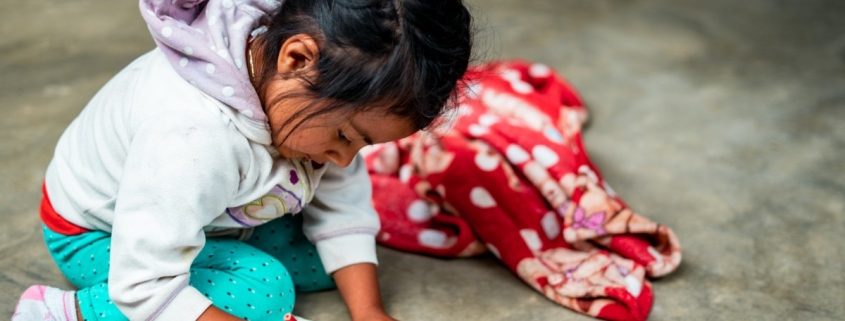
Guatemala. 28 de febrero, 2023. Con el objetivo de transformar la salud y calidad de vida de las familias más vulnerables, Hábitat para la Humanidad Guatemala anuncia la sustitución de 2.500 pisos de tierra por concreto. Este esfuerzo de la ONG forma parte de la iniciativa regional 100 mil pisos para jugar de Hábitat para la Humanidad y la Federación Interamericana del Cemento (FICEM), la cual promueve una vivienda segura e higiénica para los niños y niñas reemplazando los pisos de tierra por concreto, beneficiando la salud de la población más vulnerable.
Según el Instituto Nacional de Estadística -INE-, XII Censo Nacional de Población y VII de Vivienda – 2018, en Guatemala más de 840 mil viviendas poseen piso de tierra. Muchos de estos hogares son rurales, con ingresos bajos, con viviendas construidas a base de materiales de mala calidad, mayoritariamente sin acceso a una fuente de agua para consumo y en algunos casos no tienen registro de la propiedad o del terreno.
Sin duda, los pisos de tierra y las viviendas inadecuadas son un indicador primario de pobreza y pueden poner en riesgo la salud de quienes habitan en ellas. Los pisos de tierra se caracterizan por ser focos de infección en los hogares, ya que albergan parásitos, bacterias e insectos que causan diarreas, enfermedades respiratorias, anemia, inmunodeficiencia, malnutrición, enfermedad de Chagas, entre otros; siendo los niños la población más vulnerable al estar en constante contacto con la tierra al gatear, jugar y caminar.
La sustitución de un piso de tierra por uno de concreto genera beneficios directos en la salud de las familias, así lo confirma un estudio del Banco Mundial y la Universidad de California sobre un programa de sustitución de pisos de tierra en México, en el cual se analizaron datos de la mejora en la salud de familias. En los niños se registró una reducción en un 70% en las infecciones parasitarias, 49% en diarreas y 81% en anemias, además de incrementar el desarrollo cognitivo desde un 36%. Por su parte, en los adultos se evidenció un aumento del 59% en la satisfacción de la vivienda, menor depresión en un 52% y menor estrés en un 45%.
¿Cuál es la propuesta? Hábitat para la Humanidad Guatemala designará fondos internos para apoyar a la construcción de pisos de concreto. Esto significa que, solo en el año 2023, se destinarán alrededor de Q3 millones para ayudar aproximadamente a 2,500 familias a nivel nacional. Y desde el 2023 a 2025, se brindarán alrededor de Q10 millones, tiempo de duración de la iniciativa.
“Reconocemos que la construcción de pisos de concreto es una meta ambiciosa y que solo se logrará con la ayuda de todos ustedes, al trabajar en alianza con el gobierno, sector público y privado, academia y medios de comunicación”, mencionó Delorean Randich, director nacional de Hábitat para la Humanidad Guatemala.
¿Por qué 100 mil pisos para jugar? La salud de los niños se encuentra altamente influenciada por el lugar en donde viven, por lo que el riesgo de enfermedad y desnutrición durante la infancia temprana es alto para aquellos niños de hogares de bajos ingresos que tienden a habitar en viviendas vulnerables; principalmente sin acceso a agua potable, sin saneamiento adecuado y con presencia generalizada de pisos de tierra.
Es por ello, que esta iniciativa ha tomado el nombre de 100 mil pisos para jugar, con el objetivo de transformar la vida de miles de familias, beneficiando principalmente a los niños, siendo la población más vulnerable al estar en contacto directo con la tierra ya que juegan, caminan y gatean sobre esta superficie.
“En nuestra región el 6% de los hogares tienen una vivienda cuyo material predominante del piso es la tierra, afectando alrededor de 10 millones de hogares, poniendo en riesgo su salud, el desarrollo cognitivo infantil y limitando la posibilidad de salir del círculo de la pobreza. Solamente en Guatemala hay más de 840.000 hogares con pisos de tierra, ubicándolo como uno de los países con mayor porcentaje después de Perú, México y Colombia. Es por esto que FICEM lideró la implementación del programa piloto de PISOS S3 en Guatemala, en alianza con el Instituto del Cemento y del Concreto de Guatemala, Cementos Progreso, Hábitat para la Humanidad Guatemala y la Red Global de Empresarios Indígenas. Este proyecto piloto benefició y transformó la vida de 32 hogares, impactando a 150 personas pertenecientes a comunidades indígenas del municipio de San Juan Sacatepéquez del departamento de Guatemala, con la construcción de 1.080 m2 de pisos en concreto. Para la industria del cemento y concreto, apoyar el desarrollo de los países, contribuir al fin de la pobreza y a una sociedad más justa y equitativa es una prioridad, por esto estamos comprometidos con la construcción de un futuro sostenible y resiliente”, aseguró Maria José Garcia, directora ejecutiva de FICEM.
¿Por qué los pisos de concreto son una solución? Minimizan los riesgos que afectan la salud de las familias, mejoran la calidad de vida y propician la igualdad, el equilibrio e inclusión social. Otros beneficios:
-Mejoran el entorno físico y las condiciones de limpieza de la vivienda.
-Son durables, seguros y resistentes.
-Dan mayor protección ante inundaciones.
-Son económicos y amigables con el medio ambiente.
La iniciativa contribuye al logro de los Objetivos de Desarrollo Sostenible relacionados con el fin de la pobreza (ODS 1), la salud y bienestar (ODS 3) y ciudades y comunidades sostenibles (ODS 11).
“Los pisos de concreto son saludables, seguros y sostenibles.”
_______________________________________________________________________________________________
Hábitat para la Humanidad Guatemala tiene más de 43 años facilitando el acceso a la vivienda digna en todo el país. Empodera a cada persona, promueve la participación social y el desarrollo comunitario.
Contacto:
Diana Reyes, Coordinadora de Comunicaciones
Hábitat para la Humanidad Guatemala
47406428 DReyes@habitatguate.org
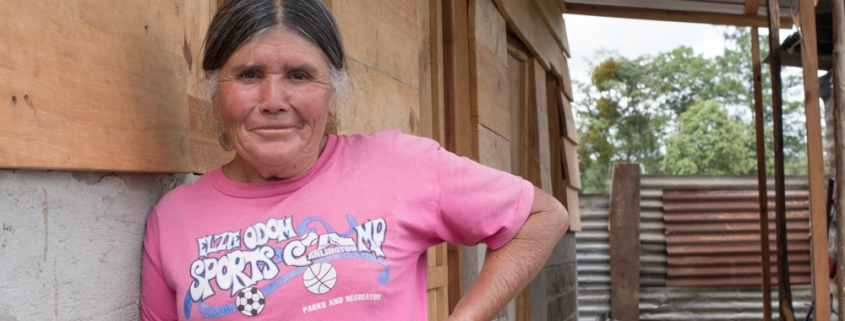
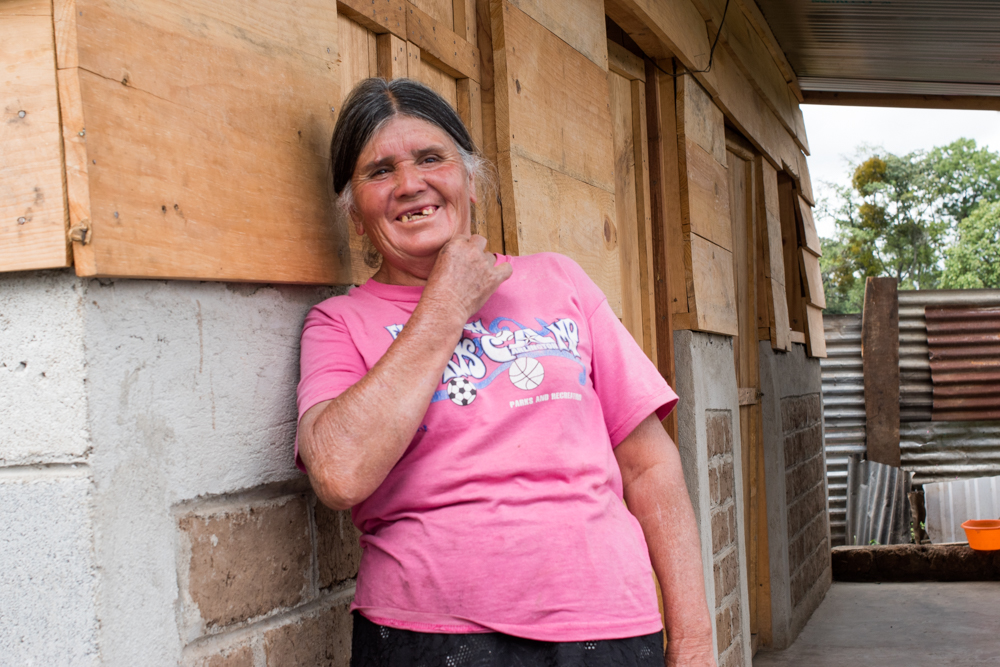
Like many Guatemalan families, for Blanca and her two sons, Edgar and Jorge, the dream of owning a safe space to call home was far from being fulfilled.
They have lived in Santa Cruz, El Quiché for a many years. Blanca works in the fields, while Edgar and Jorge work as mason’s helpers.
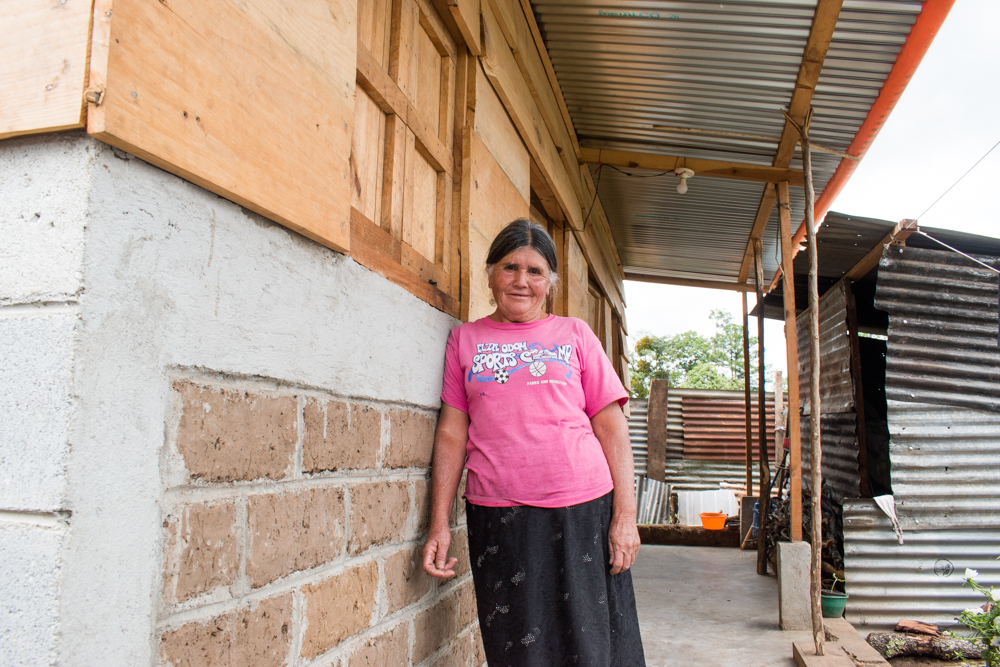
Their old house was built with corrugated metal sheets and dirt floor, which caused them several problems, especially during rainy season, as the water would leak into the house and get everything wet, in addition to affecting their health.
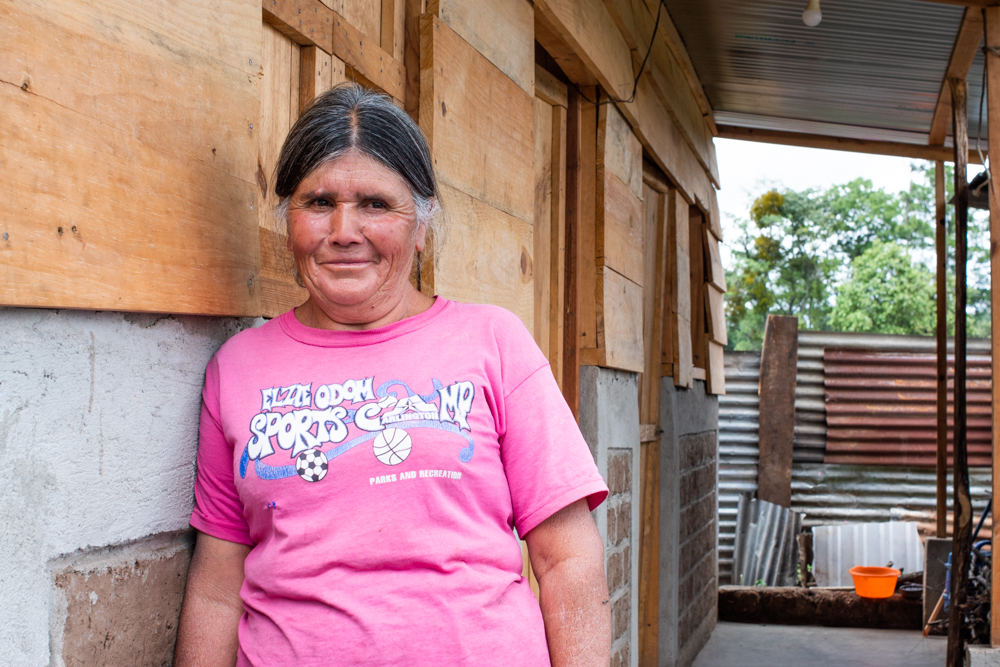
Thanks to the support of Bryan/College Station HFH, in coordination with Habitat Guatemala, the Rosales family is now living in their new Hybrid Home. Blanca and her sons are excited to finally have a safe place from their own, free of rainwater and dirt. “It’s something as simple as having a door. We didn’t have one, we only had a curtain. Now, we have our own doors, and it makes me very happy and grateful,” – says Blanca.
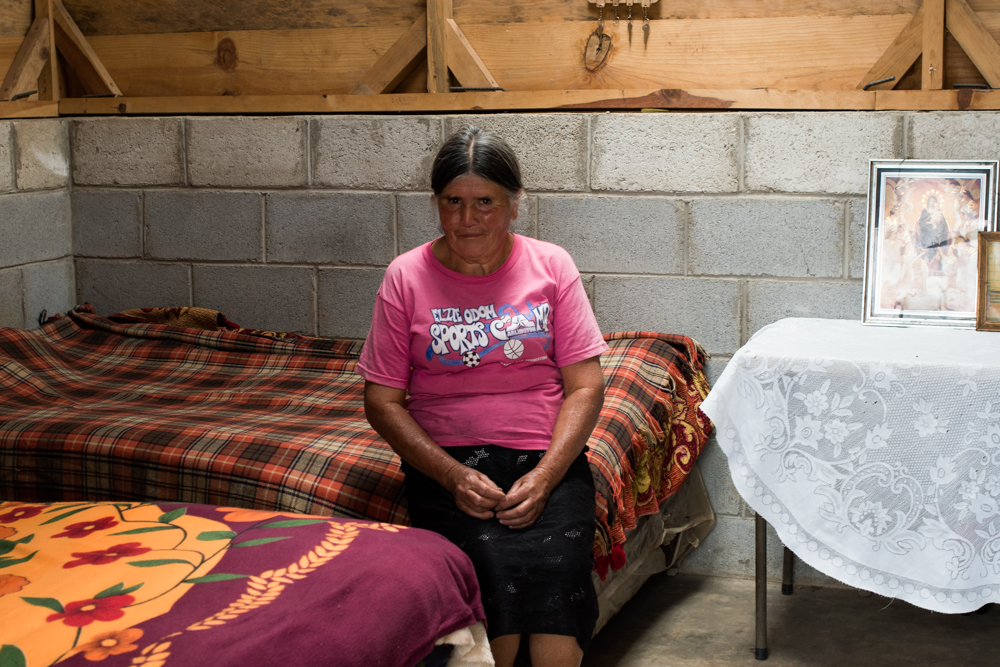
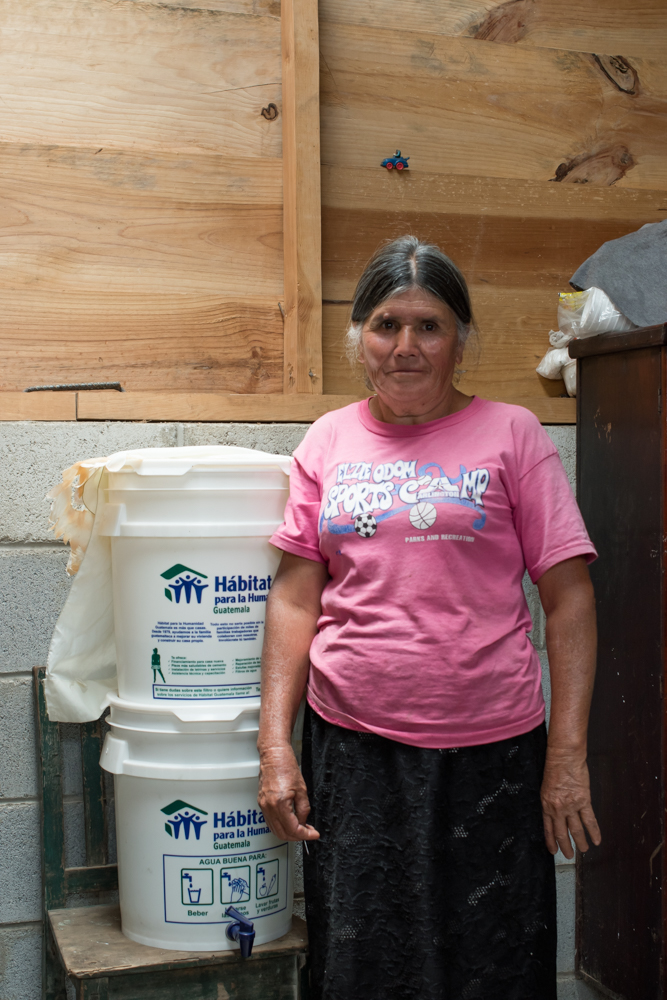
In addition to their new Hybrid Home, the family also received a Healthy Home Kit that includes a smokeless stove, a water filter, a pila (water station) and a sanitary latrine to provide them with basic services and improve their living conditions.
Blanca shares a message for the donors: “Every day, I thank God, and I pray that He sends many blessings to you and everyone who supported us to build our home. Thank you!”
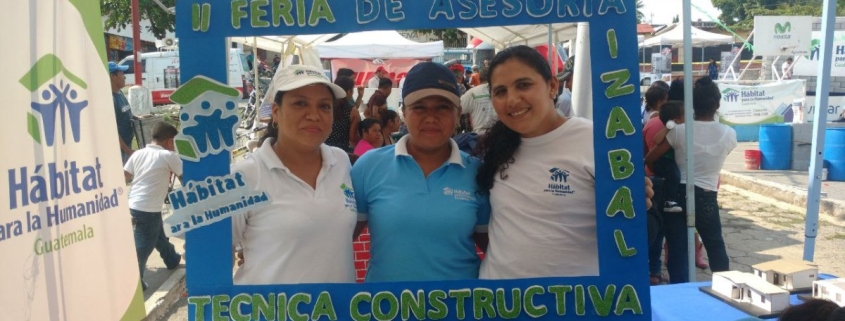
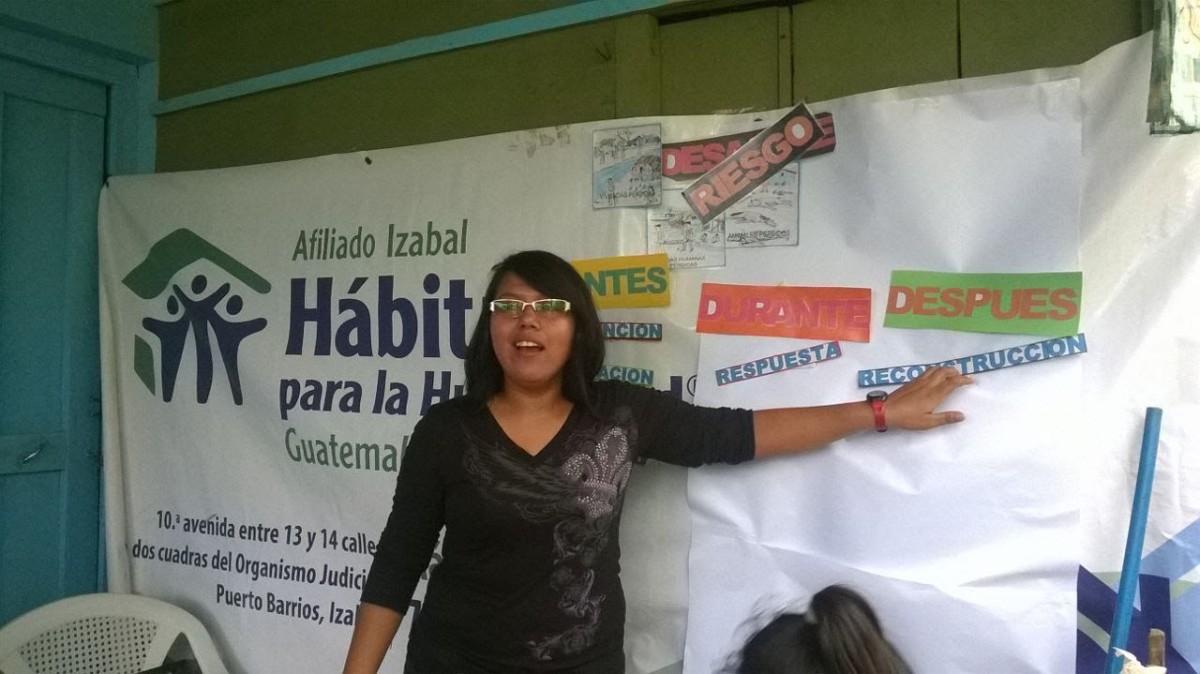
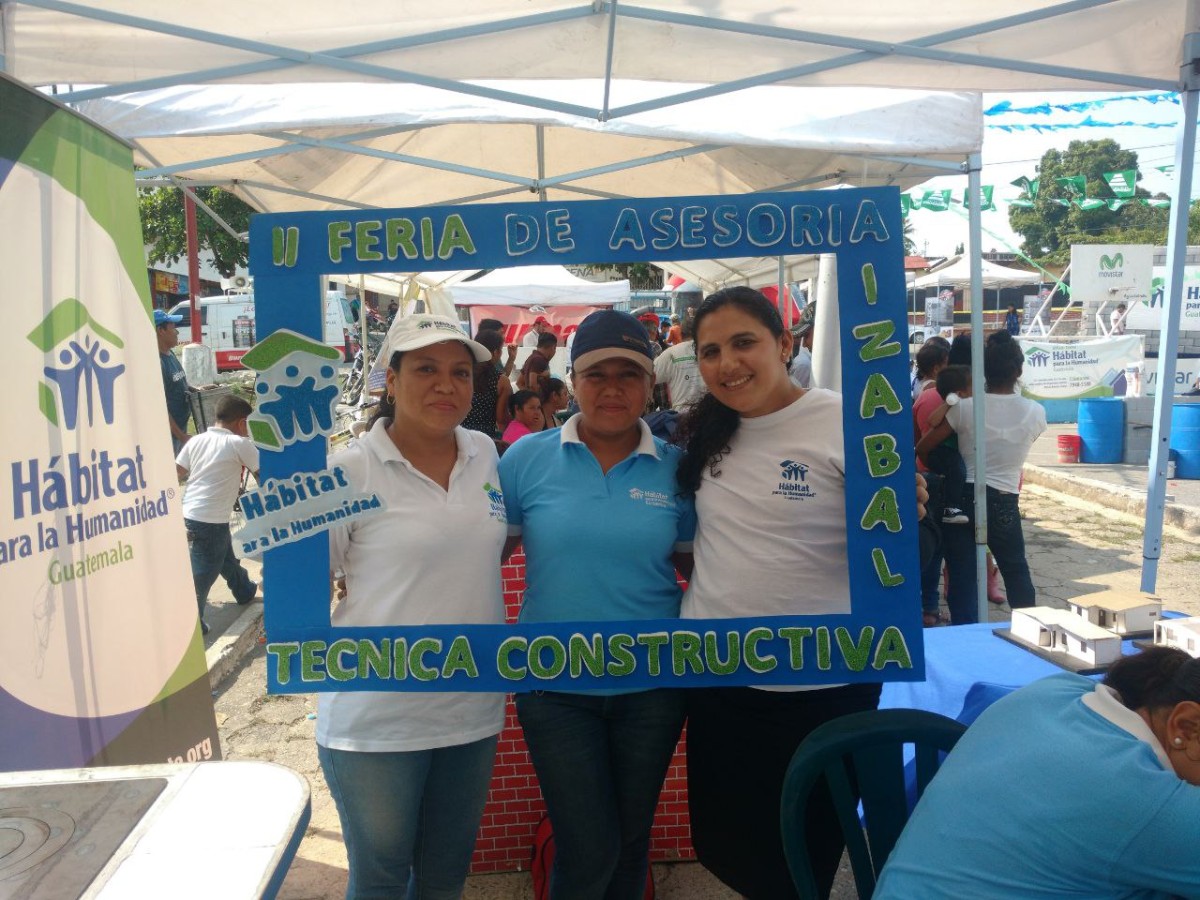
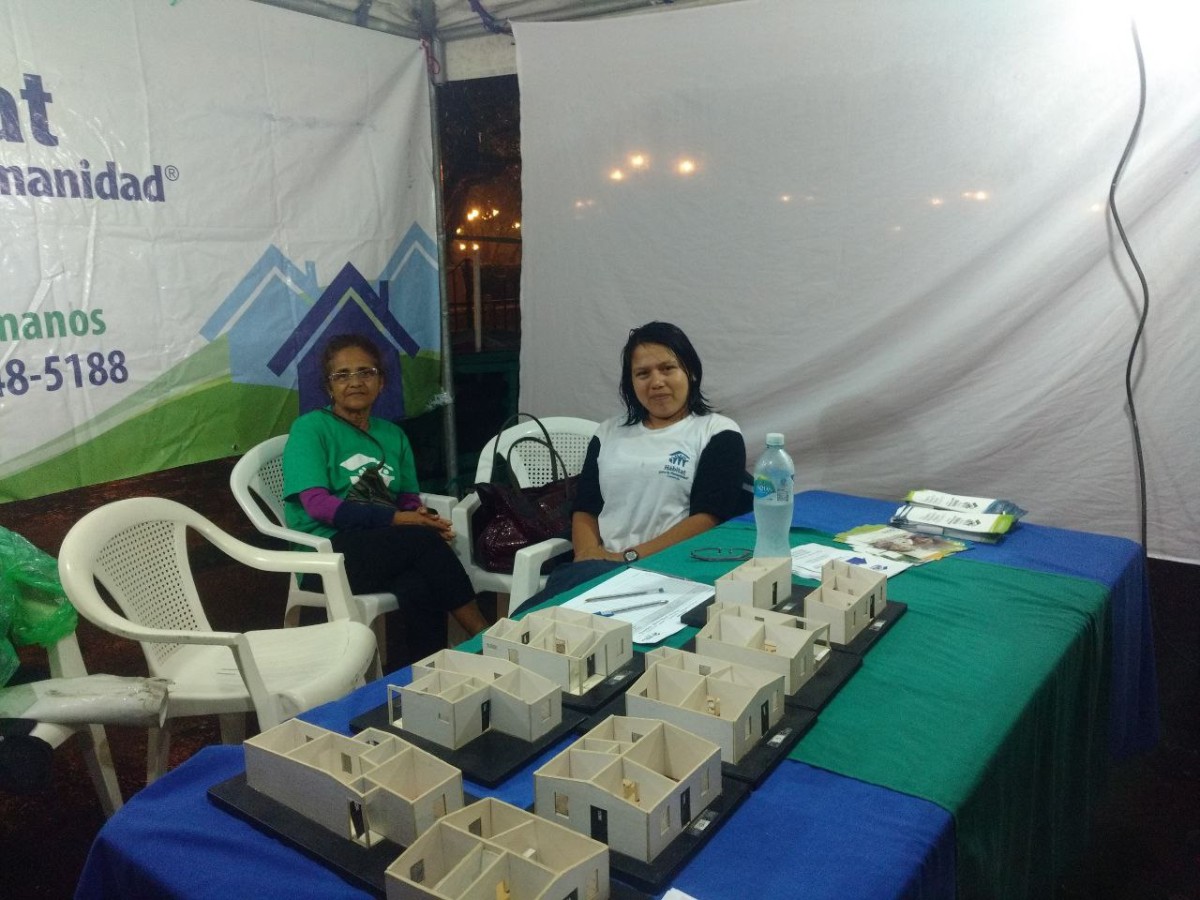
My name is Sayra Nohemi Lopez, I am 30 years old, I have a degree in Social Work, single, my residence is located in Puerto Barrios, Izabal, Guatemala, I live with my mother and my brothers I consider myself a responsible person with extensive teamwork skills, creativity and service to others, as well as the ability to learn fast. I am the Educator of the Izabal affiliate.
My work experience has been in the service of the population; which made me fall in love with my profession and allowed me to feel that I am being part of the development and wellbeing of communities and families so that they become resilient and obtain a better quality of life.
I have been volunteering for 15 years with the Red Cross movement and that experience has helped me in my work.
When researching about the Organization I was attracted by its vision and mission and some testimonials I found; I felt that it adapted to the fact that I like to support families and work with volunteers, so I applied for the position and got selected to work with Habitat Guatemala and I am sure that it was my best choice, I have put my knowledge into practice and I have learned even more.
I started working for Habitat Guatemala on March 4, 2017, I have 5 years of belonging to the Organization; where I have had contact with a large number of community families training on issues of Healthy Homes, Risk Management, Financial Education, Self-Esteem, and constructive issues, in wood-saving stoves, concrete floors, sinks, community family chicken coops which have been subsidized to families with the Program of Attention to Extreme Poverty and support for families affected in tropical storms.
I have also worked hand to hand with volunteers in following up with families who wish to improve their quality of life through social credits for the construction of housing; encouraging volunteers in the area in the commitment to serve others, thus cultivating the love of humanity and working selflessly for the development of others. Also training them in leadership, organization and community participation, principles and values, conflict management and communication. In order to strengthen the capacity and leadership of each volunteer to support the communities positively impacting their development.
I have seen firsthand the needs of the communities, as well as the transformation of the quality of life of the families through the projects and solutions provided by Habitat Guetemala, among those lives is mine, not only gave me the opportunity to grow professionally, but also in the realization of the dream that every family has, and that is to build my own home.
To help our neighbor we do not need to have goods but only our will and a spirit of service and that in our heart we never run out of humanity, I share with you this quote
atención al cliente
QUETZALTENANGO
18 avenida 5-13 zona 3.
7736-8264 / 7763-7524 / 4740-6832
atención al cliente
GUATEMALA (REGIÓN GUATE-CENTRO)
3 Av. 8-26, Zona 10. Guatemala
23392223
atencionfamilias@habitatguate.org
© 2020 Habitat para la Humanidad ® Guatemala. | Desarrollado por iGuate.com