Latest News
My latest ramblings.
Enjoy! I definitely got important things to say


On the first of October, a tragic landslide destroyed or threatened 200 homes, and left nearly 450 people without a place to stay. The disaster affected the town of El Cambray, right outside of Guatemala City, the capital. Many people were forced say a sad farewell to their family members, as nearly 300 died in the incident. How does Habitat Guatemala respond to disaster?
Part of the tragedy of the situation is that the families were warned of danger – but few heeded the warnings. Why? A major issue is at play:
That is to say, residents of El Cambray had nowhere else to go. Most residents probably could not have afforded to rent or own another home. At Habitat for Humanity, we’re working to reduce the housing deficit.
A lack of funds paired with overpopulation and a housing deficit often forces people to live in areas that are not ideal. In the area around Guatemala City, there is sparce flat land for constructing homes. It’s not very hospitable for large quantities of housing, but that doesn’t stop people from taking the risk to build their houses on the slopes of the hills, where property is cheaper. Or in the case of El Cambray, the village was located in a gulley between two steep hills, a prime spot for landslides.
 People continue flooding into Guatemala City, above, from other parts of the country in hopes that they may escape poverty – or find any job at all. Often, they end up compromising their safety for cheaper housing by living on the side of a slope.
But now that so many people from El Cambray have lost their homes and their village has officially been deemed uninhabitable, where do they go? What do they do?
Fortunately, the Guatemalan government has also responded to the situation by setting aside 20 million Quetzales, or 2.6 million US dollars.
Guatemala is considered one of the most vulnerable countries to climate change and natural disasters. Habitat for Humanity helps reduce the risks that disasters pose by using the highest grade cement block paired with earthquake-resistant designs. Learn more here.
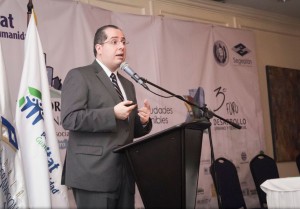 El pasado 6 y 7 de octubre del presente año, se llevó a cabo el VIII Foro Nacional de Vivienda Social y el III Foro Urbano y Territorial, «Suelo seguro en ciudades y territorios sostenibles», junto a Segeplán, contando con la participación de más de 200 representantes del sector público, privado, académico, sociedad civil y medios de comunicación.
Se contó con las disertaciones de diversos expertos nacionales e internacionales:
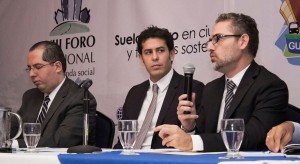 Además se lanzó la campaña y plataforma interinstitucional «El suelo bajo mis pies», la cual tiene como objetivo primordial crear incidencia sobre la necesidad de la tenencia segura de la tierra.
Otro de los logros significativos fue la formación del Clúster Nacional para la Gestión Urbana junto a diversas organizaciones y personas particulares, el cual tienen los siguientes objetivos:
Asimismo, la tragedia ocurrida en Cambray II es la expresión de los desafíos que nos plantea la gestión del suelo en las ciudades, el acceso a una vivienda adecuada y los desastres cotidianos. Es el momento de señalar caminos hacia soluciones con el compromiso de todos los sectores del país.
Mira las fotografías del evento en nuestro álbum, haz click aquí.
Descarga las presentaciones de cada una de las conferencias magistrales haciendo click aquí.
Agradecemos la participación de todos los asistentes y el apoyo de cada uno de nuestros patrocinadores.
Cementos Progreso, Megaproductos, Segeplán, Iniciativa Urbana Guatemala.

Migdalia Godinez Gómez and baby Wilson stand in front of their old house whose walls had been cracked by a 2012 earthquake.
We have an ongoing relationship with the families we work with. For example, promoters in every region are assigned to work with a family from the start of their application process until their move-in day, supporting them along the way with necessary paperwork and legal processes. As a part of that relationship, we also visit each family that has worked with a volunteer group after they’ve moved in to their new housing. We hear their about their experience from start to finish, including stories about working alongside the volunteers.
One of the most revealing questions we ask is, «Why did you decide to apply for a new home?»
We’ve compiled a list of the most common answers, in ascending order.
Over time, adobe houses become old and weak. This process is expedited when the house doesn’t get much air flow, or when the walls are consistenly exposed to rain. Many times, you can visibly see the moisture’s progress on its way from the ground on old houses. This slow structural doom creates a serious security risk.
This one is more regional. In the last few years, a number of earthquakes have rattled Guatemala, including a really strong one in 2012. Since then, families have lived in adobe homes that have severe cracks and structural damage. The majority of these cases happen around the departments of Quetzaltenango, Sololá, and especially San Marcos.
Another notable fact is that after the 2012 earthquake, Guatemala’s national government offered new housing to many people whose homes were destroyed, but their promise was unfulfilled in many cases.
The majority of roofs in Guatemalan houses is made with corrugated galvanized steel. It’s cheap, not hard to install, and you can overlap sheets easily to direct the rain away from the house. The problem is that, in time, it deteriorates with rust and holes. And it’s not fun to wake up to a roof that’s dripping on you in the middle of a night.
Families grow. And more often than not, «there was no space» also means «five of us were sharing a bedroom,» or in some cases, «five of us were sharing a bed.» And when there’s a young couple with one child and another on the way, sharing one bedroom isn’t ideal.
Overwhelmingly, families respond to this question by saying they wanted something of their own. Often times, young couples live with in-laws in an extra bedroom, and they don’t feel independent. Other times, families rent apartments but expensive monthly rent and property rules make them feel suppressed. Having the keys to a house and the liberty to come and go as you please makes all the difference. Even if they didn’t make monthly payments before, across the board, families say vale la pena. It’s worth it.
Overcoming a hurricane: The Guadalupe Ardon Family
We build much more than houses!
Be a part of the change for healthy and adequate housing!
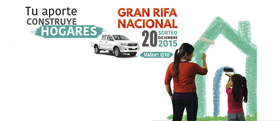
Con tu aporte seguimos construyendo hogares, sé parte de la Gran Rifa Nacional y participa en el sorteo de un pick-up Toyota Hilux 2016 y muchos premios más.
Sorteo: domingo 20 de diciembre de 2015 a las 16:00 h.
Lugar: Centro Comercial Metro Norte (Km. 5 carretera al Atlántico, zona 17, Ciudad de Guatemala).
Los ganadores serán publicados el 23 de diciembre.
![Rifa primeros lugares pagina web[1]-01](https://www.habitatguate.org/wp-content/uploads/2015/09/Rifa-primeros-lugares-pagina-web1-01-1024x512.jpg)
![Rifa primeros lugares pagina web[1]-02](https://www.habitatguate.org/wp-content/uploads/2015/09/Rifa-primeros-lugares-pagina-web1-02-1024x512.jpg)
![Rifa primeros lugares pagina web[1]-03](https://www.habitatguate.org/wp-content/uploads/2015/09/Rifa-primeros-lugares-pagina-web1-03-1024x512.jpg)
Adquiere tus boletos en nuestros puntos de venta, conoce las ubicaciones haciendo click aquí y apóyanos a seguir construyendo viviendas, comunidades y esperanza.
*Los premios están afectos al pago de ISR (10%) e impuesto de timbres (3%) por parte de los ganadores.
*Los boletos ganadores caducan el 30 de mayo de 2016.
![Arte portada facebook[2]](https://www.habitatguate.org/wp-content/uploads/2015/09/Arte-portada-facebook2-e1442847113722.jpg)
Con el apoyo de:


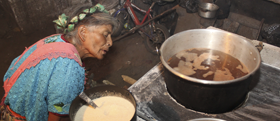

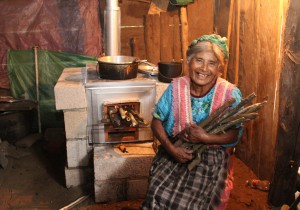 Las Majadas es una comunidad ubicada en Quetzaltenango, en la cual la mayoría de familias aún viven bajo tradiciones antiguas, una de estas tradiciones es la cocina, una práctica que se caracteriza por realizar fogones dentro de la vivienda para la cocción de los alimentos. Dicha práctica pone en riesgo la salud de las familias, en especial, la de mujeres y niños, los cuales pasan más tiempo dentro de la vivienda, los padecimientos respiratorios y la ceguera parcial, son algunos de los problemas más recurrentes entre las personas que cocinan aún a fuego abierto.
Una de las familias que aún cocinaban a fuego abierto era la de Clara Cahuix, mejor conocida como la «abuela Clarita», quien junto a su esposo Sebastián, realizaban tres viajes a la semana en busca de leña para cocinar, cada viaje duraba aproximadamente de dos a tres horas y cada uno cargaba hasta 40 libras de leña. La abuela Clarita recuerda que su madre le enseñó a fabricar un “tetunte” para cocinar los alimentos, y durante 60 años esta fue la única forma en la que cocinó.
Alrededor del 70% de los hogares en el área rural de Guatemala aún cocinan a fuego abierto, lo cual afecta directamente a mujeres y niños.
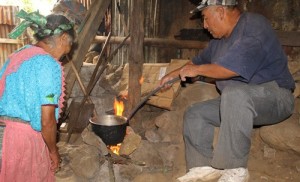 Hábitat para la Humanidad Guatemala intervino en la comunidad Las Majadas y apoyó a 27 familias por medio del Kit Saludable (Estufa mejorada, filtro de agua y letrina). Durante varios meses y con el apoyo de la comunidad, se construyeron estufas mejoradas que eliminan hasta el 99% del humo dentro de la cocina, además representa un ahorro en el consumo de leña, lo cual ha significado que la abuela Clarita y su esposo Sebastián realicen solo un viaje a la semana.
“Cambió mi vida, ya no tengo que ir tres veces por semana a traer leña, ya no me quemo las manos, mis rodillas ya no me duelen, estoy muy feliz y agradecida con esta ayuda que hemos recibido, que Dios se los pague porque nosotros no tenemos como hacerlo”, concluye Clarita.
Así como Clara Cahuix y su familia, existen miles de historias de personas que han mejorada su calidad de vida gracias a nuestros proyectos.


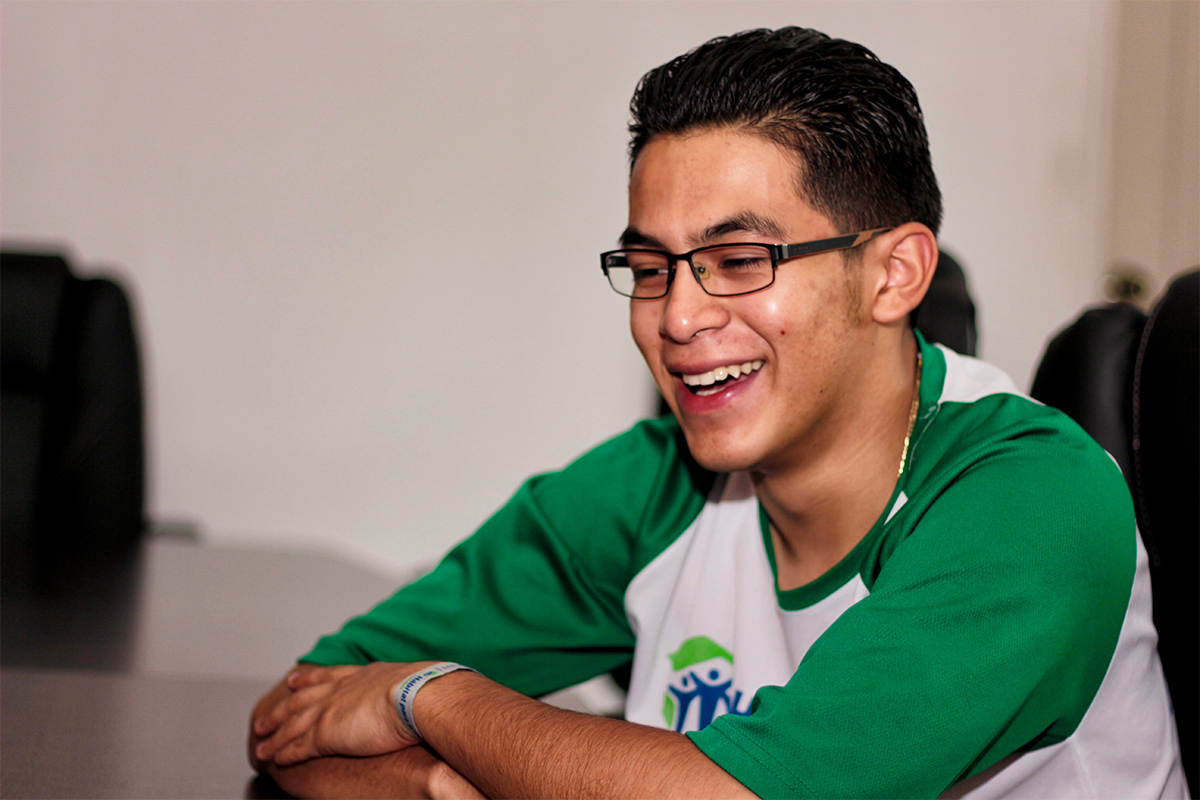
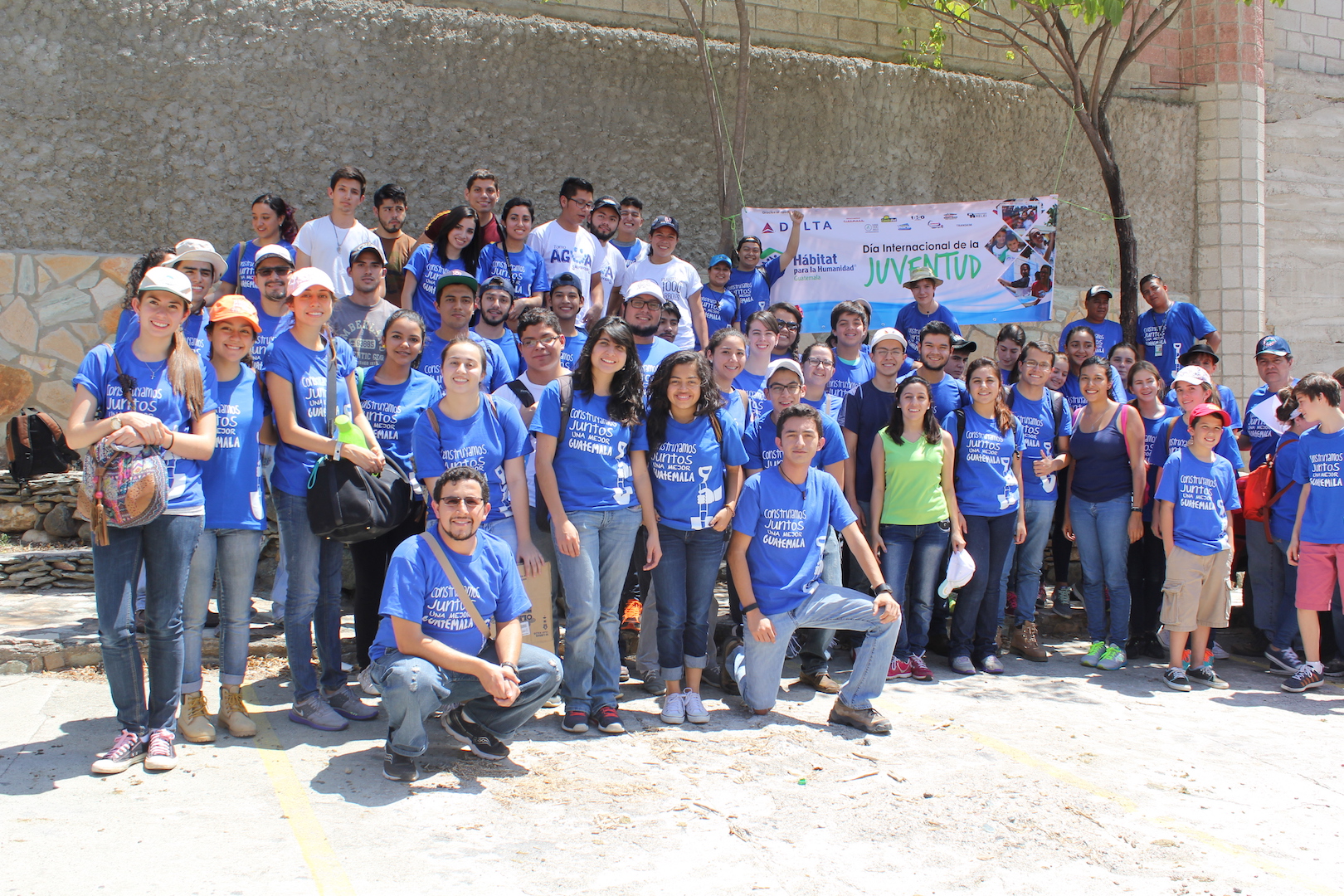
En 1999, la Asamblea General de Naciones Unidas respaldó las recomendaciones de la Conferencia Mundial de Ministros de la Juventud y aprobó que el 12 de agosto fuera declarado Día Internacional de la Juventud, con el objetivo de permitir una mayor participación de los jóvenes en la sociedad y en la toma de decisiones.
En nuestras dos celebraciones anteriores, apoyamos a la Escuela «Los Cerritos», en Sansare, Sanarate, El Progreso, con la pintura de diversas áreas, ornato y cuidado de áreas verdes. También se apoyó a diversas viviendas que se encontraban a los alrededores de la escuela, con esto se impactó a la comunidad.
El pasado 22 de agosto de 2015, realizamos nuestra celebración en el municipio de San Agustín Acasaguastlán, El Progreso. Contamos con el apoyo de más de 70 voluntarios que se movilizaron desde la capital y con más de 50 voluntarios locales, así como con el apoyo de miembros de comités locales. Junto a nuestros voluntarios apoyamos a ocho familias con la pintura de su vivienda, además mejorar las condiciones de la Escuela Oficial Rural Mixta J.M. Barrio El Tamarindo, mostrando que el trabajo voluntario de los jóvenes transforma comunidades.
La celebración del Día Internacional de la Juventud contó con el apoyo de Delta, Construred, Transportes Esperanza, Talleres Wilfredo, Distribuidora Relei, Transkim, Teletón, Plantemos 1000 Árboles, 18-50 Televisión y Nuestro Diario.
Mira las fotos del evento en nuestro álbum de fotos o en nuestra página de Facebook.
atención al cliente
QUETZALTENANGO
18 avenida 5-13 zona 3.
7736-8264 / 7763-7524 / 4740-6832
atención al cliente
GUATEMALA (REGIÓN GUATE-CENTRO)
3 Av. 8-26, Zona 10. Guatemala
23392223
atencionfamilias@habitatguate.org
© 2020 Habitat para la Humanidad ® Guatemala. | Desarrollado por iGuate.com