Latest News
My latest ramblings.
Enjoy! I definitely got important things to say


 On July 7th, 2014 at 7:23 a.m ET, a 7.1 magnitude earthquake hit the town of Puerto Madero, Mexico, near the Guatemalan border – the quake was felt through Guatemala and even places in El Salvador.
According to earthquakereport.com three days after the quake, the following instances were reported in Guatemala:
– Three deaths were reported in San Marcos.
– One death was reported in Quetzaltenango due to a cardiac arrest.
-(Unconfirmed) One death was reported in Escuintla due to a cardiac arrest.
– 35 people were injured and 135 homes were damaged in Sibinal.
– A schools was heavily damaged in Comitancillo.
– Schools were damaged in Retalhuleu.
– The cathedral of San Pedro Sacatepequez was heavily damaged. Moderate to heavy damage was seen in the mall and homes in this city, a sinkhole opened in the parking lot of a park. Water and power services were also affected.
– Both towers of a church in Ixchiguan are about to collapse, homes collapsed or suffered heavy damage in this town.
– 48 homes were heavily damaged in La Reforma.
– 8 homes in La Esperanza were damaged.
– The health center of Santa Cruz Mulua was damaged.
– Unconfirmed reports indicate that the municipal building of Tajamulco collapsed, heavy damage has been reported around the town.
– A landslide happened in El Tumbador, also buildings were heavily damaged.
– Damage reported in cemeteries of San Marcos, San Rafael Pie de la Cuesta, San Cristóbal Cucho and Feria, at least 120 graves were damaged.
– Big landslides have blocked routes in San Cristóbal Cucho. A fire station was severely damaged as well as several homes.
– Some injuries were reported in Huehuetenango including two kids that were injured by a collapsed wall; homes, municipal buildings and a school were damaged , the tribunal was flooded due to a broken pipe.
– Moderate damage can be seen in Mazatenango, schools, government buildings, churches and homes are damaged. There is an unconfirmed report of damage in the water treatment plant.
– A landslide blocked the route of Colomba.
– A landslide has blocked the routhe between Colomba and San Juan Ostuncalco.
– 26 schools were damaged in Chicacao, as well as several homes.
– 10 houses in Cajola have been damaged, 36 people have been evacuated.
-A church in Samayac suffered heavy damage.
– 14 schools were damaged in San Antonio Suchitepéquez. Structural damage has been reported around the city.
– In Totonicapan 2 homes collapsed and several more were damaged, 4 schools were also damaged.
– In San Pablo Jocopilas minor landslides were reported and there was no power in some zones.
These reports make evident how a natural disaster can affect the daily lives of several families throughout Guatemala.
Habitat for Humanity Guatemala has recognized this issue and therefore has invested in a Disaster Response and Prevention program. Not only do we support families who have been affected by quakes such as these, but we work to reduce vulnerability to the potential damage to life and property caused by natural disasters. We build on safe and suitable terrain and we provide the best practices and training for health and risk management.
You can help us in our efforts to respond to this natural disaster. Donate now.

Last year, the lives of Dora Salanic (29) and her son Luis (7) were changed. After renting a home of just two rooms, this family decided they would like to have a home of their own: their very own Habitat home. Today, this change is greatly benefitting Dora’s embroidering business as well as Luis’s upbringing.
Although the conditions of the family’s previous home weren’t unsuitable, Dora states that she has always wanted a place that she could call her own, “I wanted to have that feeling of ownership and be able to be a hostess to whomever I desired.” Their old residence consisted of one shared bedroom, and one room in which Dora did both her cooking and embroidering work.
![Dora Salanic Sacalxot (6) [Resolucion de Escritorio]](https://www.habitatguate.org/eng/wp-content/uploads/2014/07/Dora-Salanic-Sacalxot-6-Resolucion-de-Escritorio-300x198.jpg) Of the four rooms in the new home, one serves as a living room, one as bedroom, another as Dora’s embroidery workshop. The fourth room will be Luis’s own room in the future .The family has also embraced their new living situation by making numerous personal improvements to the home. Brown tiles cover the floors, wood paneled insulation keeps the family warm during the cool Xela months, a kitchen, a skylight illuminates Dora’s embroidering room, and bedroom doors help maintain privacy. Nearby there is also a garden filled with fava beans. Furthermore, Dora added a separate kitchen that allows for her to have distinct space for her culinary and artistic creations.
Of the four rooms in the new home, one serves as a living room, one as bedroom, another as Dora’s embroidery workshop. The fourth room will be Luis’s own room in the future .The family has also embraced their new living situation by making numerous personal improvements to the home. Brown tiles cover the floors, wood paneled insulation keeps the family warm during the cool Xela months, a kitchen, a skylight illuminates Dora’s embroidering room, and bedroom doors help maintain privacy. Nearby there is also a garden filled with fava beans. Furthermore, Dora added a separate kitchen that allows for her to have distinct space for her culinary and artistic creations.
This young, single-mom has already created a nurturing environment for her only son, but without a doubt, having a home that she can call her own indicates the beginning of a constructive yet successful phase in her young family’s story.
![Dora Salanic Sacalxot (13) [1024x768]](https://www.habitatguate.org/eng/wp-content/uploads/2014/07/Dora-Salanic-Sacalxot-13-1024x768.jpg)
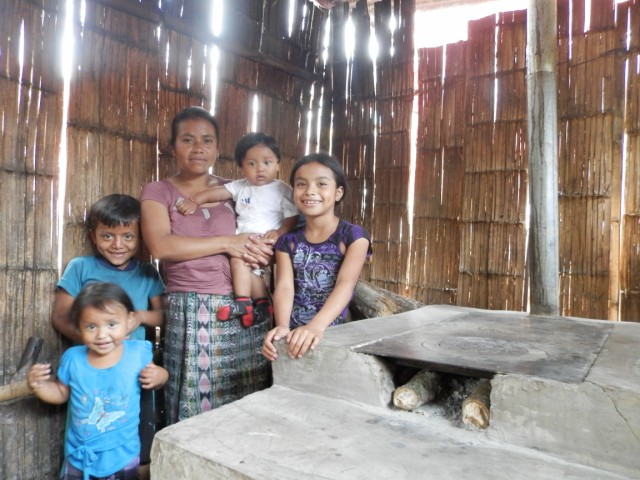
 Actualmente, Natalia y Hugo disfrutan junto a sus ocho hijos, de los beneficios de contar con una estufa mejorada. Hugo trabaja en el campo como jornalero, mientras Natalia se dedica al cuidado de sus hijos y las tareas domésticas. «Ahora puedo despertar a las 4:30 o 5:00 y comenzar a cocinar, sin molestar a mis hijos con el humo de la estufa», comenta Natalia, quien asegura que su calidad de vida ha tenido un cambio significativo.
Antes de contar con su estufa ahorradora y el filtro de agua, la familia cocinaba en una estufa fabricada con postes de bambú y bebían agua directamente del grifo, esto tenía consecuencias en la salud de la familia, «por lo general, siempre tenía una tos o un resfriado, y me molestaban lo ojos», comenta Natalia. También ella y sus hijas, generalmente sufrían quemaduras, ya que el tamaño de la estufa no era el adecuado para todos. Sin contar con la cantidad de leña que se utilizaba para cocinar. Otro de los inconvenientes, eran los problemas intestinales que sufrían los niños por el consumo de agua, con frecuencia tenían diarrea debido al agua.
Sin embargo, las cosas han cambiado mucho para la familia Ruiz Lopez, Natalia puede cocinar sin molestar a nadie y está tranquila que sus hijos beben agua potable, sin preocuparse de las enfermedades.
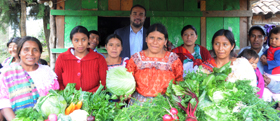
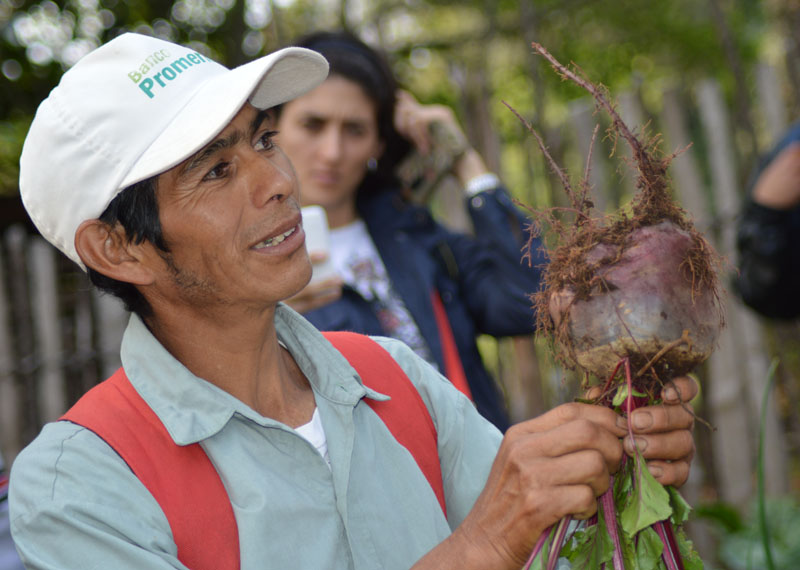 Hace un año Luis Muñoz y Viviana Muñoz, voluntarios de América Solidaria, dieron inicio con muchas expectativas e ilusión, al proyectos de Huertos Familiares y Comunitarios de Autoconsumo en la aldea de Macalajau, Municipio de Uspantán, Quiché. Con la asesoría técnica y el apoyo de las organizaciones CIASPE de México y FOSIS de Chile, se comenzó el diagnóstico psicosocial de las familias de Macalajau, lo que permitió involucrar a las familias y crear lazos con la comunidad.
De las 89 familias que constituyen la comunidad de Macalajau, 62 se involucraron en el proyecto, las cuales aprendieron e implementaron el sistema de recolección de agua, aplicaron nuevas técnicas de cultivo, construyeron cercas, fabricaron zonas de abono, construyeron invernaderos, así como lombriceras y composteras. Todo esto con el apoyo y supervisión de los voluntarios de América Solidaria, el soporte técnico de CIASPE y FOSIS, y personal de Hábitat Guatemala.
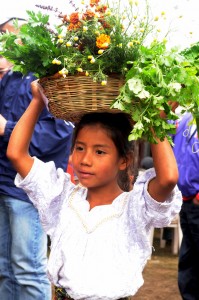
Los resultados del proyecto han sido tan exitosos, que este año ya se está replicando el proyecto con el apoyo de más voluntarios de América Solidaria, en la aldea de Canaque, San Marcos.
El pasado 7 de abril se llevó a cabo la clausura de la primera fase del proyecto, esta inició con la celebración del Primer Foro Público Internacional «Tierra y Sustentabilidad», el cual se llevó a cabo en el Gimnasio Municipal de San Miguel Uspantán, y contó con las disertaciones de María Consuelo Romano y Luis Muñoz Cabrera de América Solidaria, Martha Elizabeth Dubon de Fe y Alegría, Gabriela Lucas de CIASPE y Luis Estrada de IDESAC.
La ceremonia de cierre se realizó en la aldea de Macalajau y contó con la presencia de autoridades de América Solidaria, FOSIS, CIASPE, Fundación Fe y Alegría de Honduras, Hábitat para la Humanidad Guatemala, Representantes de Municipales de San Miguel Uspantán, representantes de la Embajada de Chile en Guatemala y las familias que han trabajado en los huertos.
 Con las emotivas palabras de Fernando Felipe López Camajá, representante de Hábitat Guatemala y guía de los voluntarios en la aldea Macalajau, se inició la ceremonia, agradeciendo el trabajo de los voluntarios Luis Muñoz y Viviana Muñoz, así como a las instituciones involucradas y a las familias beneficiadas. También se presentaron solicitudes por parte de los representantes de la comunidad de Macalajau, para solicitar apoyo a las instituciones presentes. Para terminar, las familias se hicieron presentes con canastas llenas de verduras, como muestra de agradecimiento a los representantes de las distintas comunidades.
El proyecto no ha concluido, actualmente las nuevas voluntarias se encuentran en una nueva fase, la cual incluye el seguimiento para apoyar a la familias a que aprovechen todos los nutrientes que pueden encontrar en las verduras que se cultivan en sus huertos. También la comunidad de Arena Blanca, en Honduras, inician la primera fase del proyecto de huertos, aprovechando todos los conocimientos obtenidos en Macalajau.
Gracias a América Solidaria, CIASPE y FOSIS, por apoyarnos a construir más que casas.

Sebastiana de Le’on lives with her son Luis, a teacher, and his three children outside of Santa Cruz, Quiché. Although Sebastiana was on vacation when her home was visited, Luis proudly gave us a tour of their new Habitat home.
Previously this family lived in a house made of walls of adobe bricks, a ceiling of tiles, and a floor of dirt. Luis explained that this home left them scared during earthquakes that occur on a regular basis, “Before we lived in fear, but now we feel more secure each time we feel the earth shake beneath us.”
After only 20 days of hard work provided by local masons, this family has a new home with three rooms. Two of these rooms are used as bedrooms while the other is a living room where Luis keeps all of his books and other teaching materials.
Luis explains that his family has been affected by the war and may never fully recover, but they are hopeful now that they are in their new home. “Now, we feel content. We can finally move forward.”

For many years, Guadalupe lived with her large family in a small house in Tecpán, Chimaltenango that was destroyed by Hurricane Stan in 2005. An aid organization gave them a temporary home built on a different site near a river, and the family of fifteen stayed for several years. In 2010, they were in the process of building a more permanent home nearby, when Tropical Storm Agatha struck.
Guadalupe says, “I never thought it was possible for the river to get to the height it did. We left our home running and did not have time to save anything. We spent the night at an institution close by and when we returned, it was like a lake inside our house. Everything was destroyed.” Their temporary home was destroyed and all their personal items lost. The family spent the next four months living at a school. Habitat found the family, and they immediately qualified for two separate new homes under our Disaster Response program.
 Guadalupe’s new Habitat home that she shares with her five children has two bedrooms and there is a separate kitchen outside. She feels confident that the new home will be just fine during storms. When we caught up with Guadalupe in the new house, she had this to say, “We felt so glad to find out that Habitat was going to help us build a house. Thanks to the [donors], we have our own, safe home. I am very happy with our new home. It is so secure and that makes me happy.”
atención al cliente
QUETZALTENANGO
18 avenida 5-13 zona 3.
7736-8264 / 7763-7524 / 4740-6832
atención al cliente
GUATEMALA (REGIÓN GUATE-CENTRO)
3 Av. 8-26, Zona 10. Guatemala
23392223
atencionfamilias@habitatguate.org
© 2020 Habitat para la Humanidad ® Guatemala. | Desarrollado por iGuate.com