Latest News
My latest ramblings.
Enjoy! I definitely got important things to say


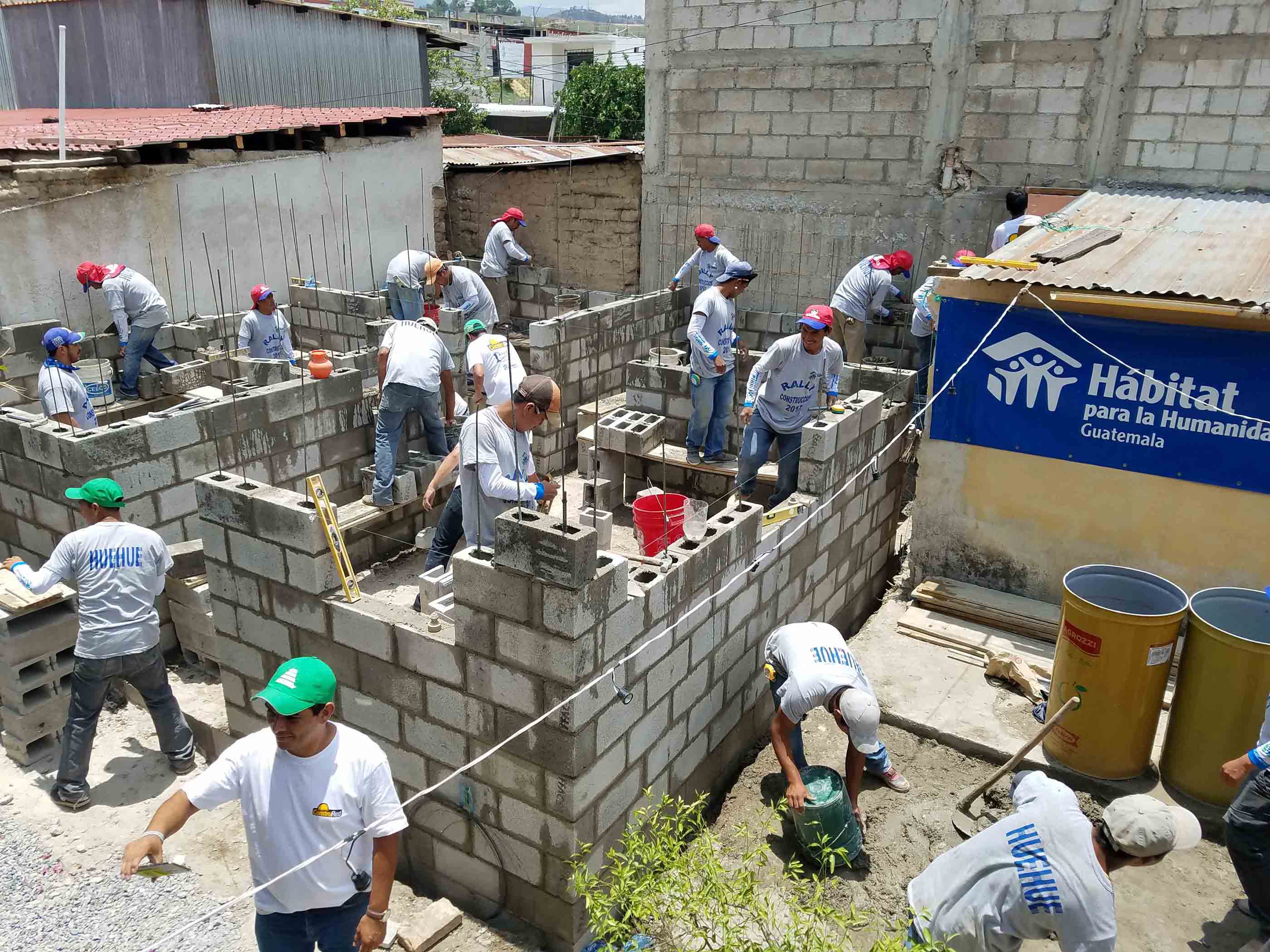
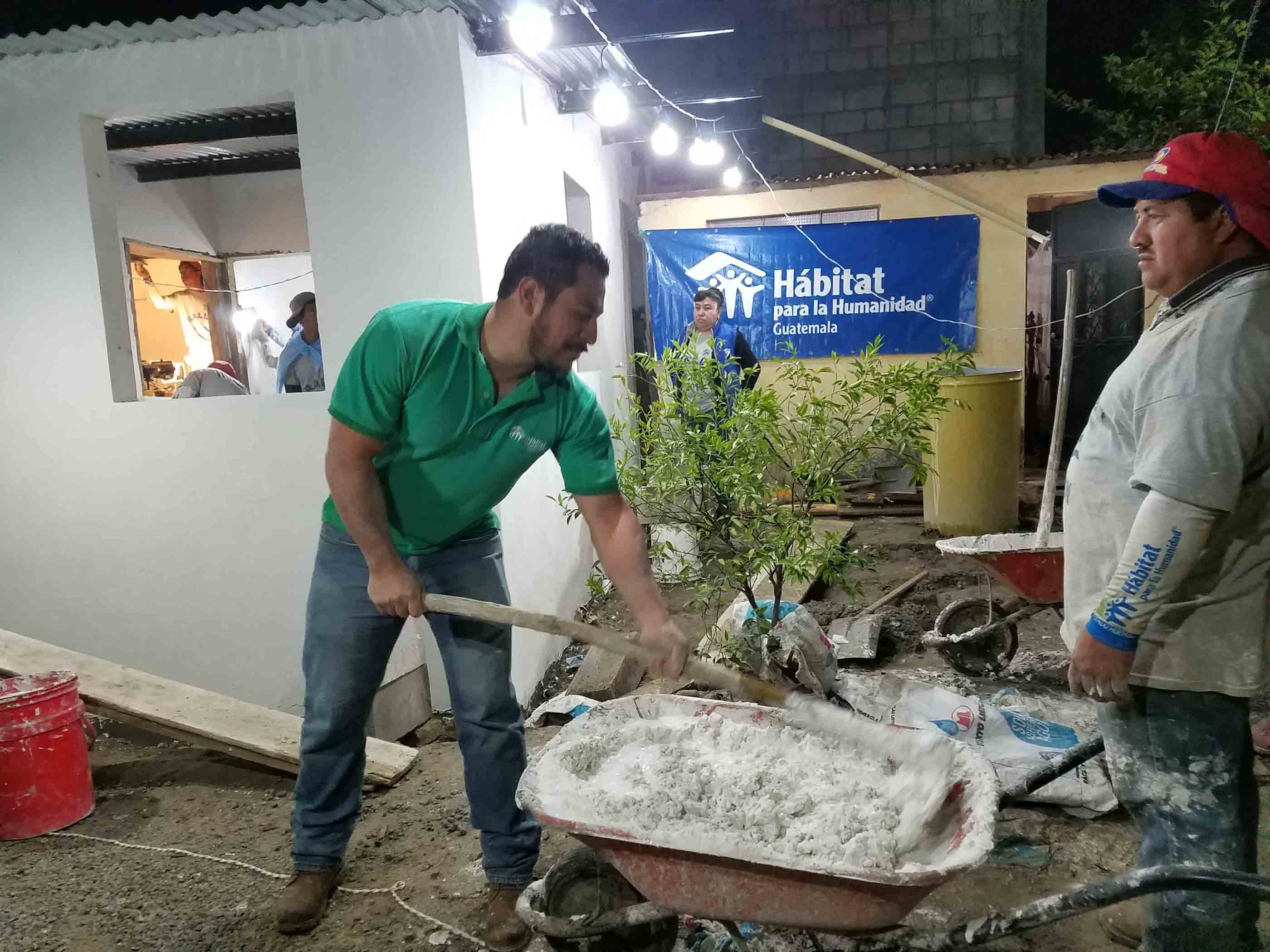
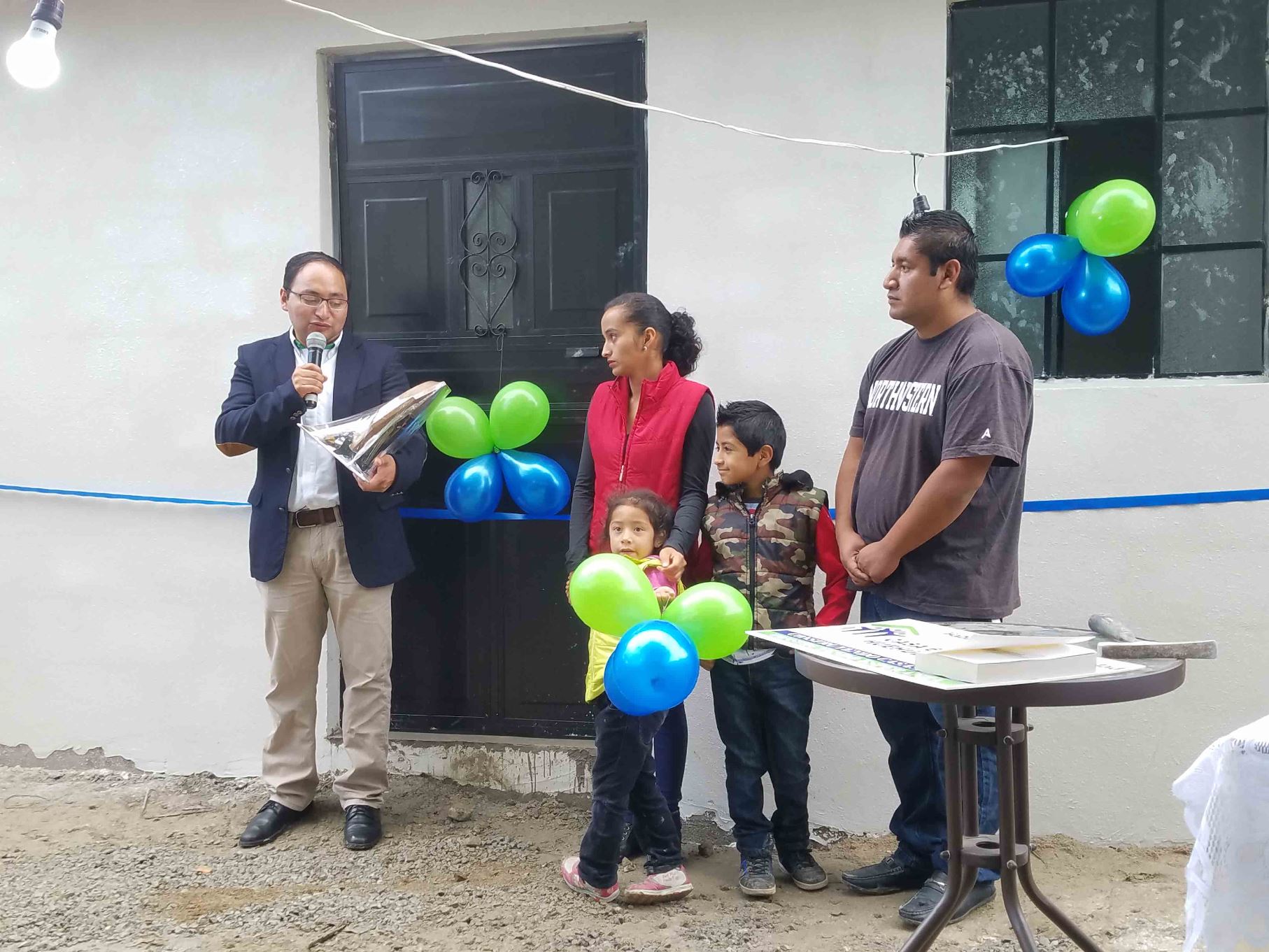
El pasado 12 de mayo se llevó a cabo el 1°. Rally de construcción en el departamento de Huehuetenango, culminando a las 20:00 horas y 5 minutos de trabajo, en el que participaron nuestros amigos de Construred y colaboradores de la oficina departamental.
Nos llena de satisfacción llevar esperanza a cada familia guatemalteca que necesita una vivienda adecuada, construyendo su sueño en 24 horas, acelerando los procesos de construcción y reduciendo el tiempo en que una familia podrá recibir su nuevo hogar.
Contactanos: www.habitatguate.org/contactenos/

On June 19, 2017, Habitat for Humanity Guatemala staff gathered from around the country to talk about their commitment to Habitat for Humanity’s newest global advocacy campaign: Solid Ground.
Solid Ground was created by Habitat for Humanity International and thirty countries to address a fundamental issue that exists across the globe: access to land for shelter. Most people around the world have no rights to land on which they live due to pre-established rules and regulations, and currently this is a reality affecting a large segment of the population in Guatemala, particularly women and underprivileged minorities.
Today in Guatemala, there is a housing deficit of over 1.6 million homes (of which need to be improved or constructed), and it is estimated that this number will increase to 2.1 million homes by 2020. During this national forum, several presenters shared their point of view, and alarming statistics, regarding the causes and effects of the problematic housing situation in Guatemala. Earthquakes, tropical storms, political turmoil, extreme poverty, difficulty to tenure land, and legal and financial aspects all play a role in this large deficit. In addition, 67.8% of the population works in the informal sector. This means that the average monthly income of 2,158 Quetzales ($294 US) is not enough to provide a family with the bare minimum essentials, which has a cost of 4,171 Quetzales ($568 US). Consequently, Guatemalans are affected socially by troubles with emotional development, lack of a sense of security, health issues, among many other effects that prohibit individuals from living a healthy lifestyle.

It is this realization that has compelled Habitat Guatemala to advocate the Social Ground campaign. Habitat Guatemala believes that by changing land policy and systems, more Guatemalan families will have access to an adequate home. This solution can be achieved by motivating policymakers to enact and implement protocols and systems that advance access to land for shelter. The team at Habitat Guatemala has already begun mobilizing new and existing allies by contacting 11 different municipalities across the nation, with the hope of working together to decrease the housing deficit.
The forum ended with a visit from two members of the local government: Mayor of Salcajá, Rolando Miguel Ovalle Barrios and Architect Dálida Ively Ramírez de León. They presented the results achieved by approving the second Territorial Ordinance Plan in the entire country. They believe that by implementing such a plan, there is a positive effect on social housing and a possibility to decrease the housing deficit.
As Habitat Guatemala continues its work with the Solid Ground campaign, it is our desire that our partners and supporters are excited about the movement as well. If you would like more information about how you can get involved with Solid Ground, please contact Steven Cook at donor@habitatguate.org.

 Maria Antonieta Chávez Saloj
Six years ago, Maria Antonieta Chávez Saloj found herself in an odd meeting. She and her neighbors gathered to listen to the story of one family who had decided to sign up for a program sponsored by Habitat for Humanity Guatemala.
“We chatted with them, asking about how they had benefitted from this programming, and how they wanted to form a group, a committee I believe, to see how other people could benefit, too,” Maria explains. Although she didn’t take action at that moment, the family would stay in her head for the next five years.
Maria never had a stove before. For her entire life, she had cooked in a hole in the ground, which was always filled with heaps of firewood. As a single mom struggling to support her daughter, Maria found odd jobs with needlework. “My old way of cooking used a lot of wood. I would go through extremes to find enough to feed the fire. For hours, every single day, I looked and looked for wood.”

Still, the stove didn’t leave her mind. Maria was especially fascinated by stories claiming that the stove improved health. She had no idea what that felt like. “I had always had a cough, a cold,” she said. “My eyes were always bothered by the smoke. I burned myself. Once in awhile, I went to the doctor, but I was always told to take expensive medicines for the cough.”
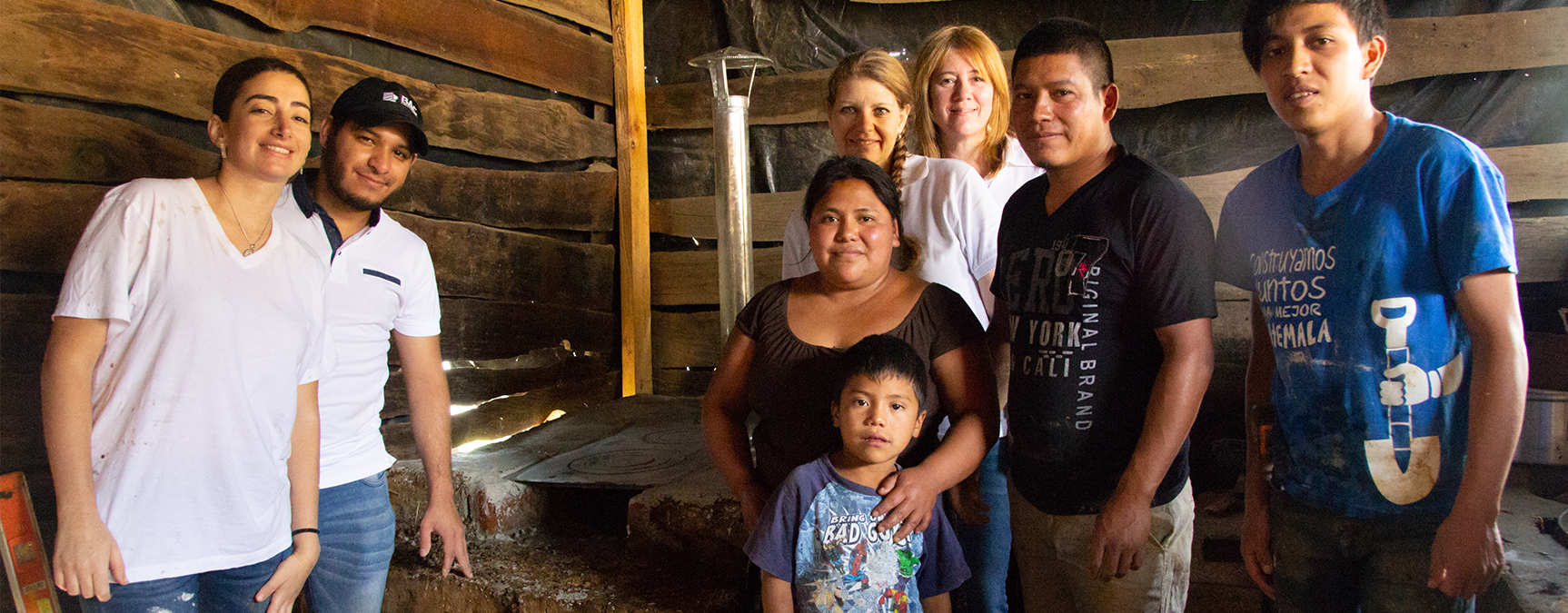
Eventually, Maria decided to take action. “My family help me cut blocks for the new stove. It took a month to cut and dry the blocks. Then, this group came to construct it one day.” For the past year that she has used the stove, Maria notes that it has made an enormous difference.
“This new stove gives me much more, just like the promoter said. Whenever people now ask me, I now say, yes! It is true! I can cook everything at the same time. And I take about two hours to look for enough wood, which lasts three days.” Because she can better prioritize her time, Maria also looks for wood to sell to her neighbors, which can help pay for her daughter’s university tuition. And a bit more food for the both of them.
To the group that made the stove possible, Maria is incredibly grateful. “Thank you for your support. I am so grateful to everything that you did.”

“I look for wood in the mountains.” Magdalena Catarina Chox Choror points outside in the distance, where purple crags rear up under a hazy gray sky. “It takes about half of a day, but because it’s just my aunt and me living here, it lasts us almost an entire month.”
Magdalena is accustomed to difficult work and also to completing it diligently. To support herself and her eighty-year-old aunt, she has two jobs as a laundry and cleaning woman in the bustling communities below her village of Paraje Tzantinamit. While she enjoys being busy, Magdalena is grateful that she no longer has to invest a staggering amount of precious hours looking for firewood.
For most of her life, Magdelana struggled daily with preparing meals for the household. “I had been cooking in the ground for twenty-five years, since I was a little girl. I had a hotplate balanced over a hole in the ground, which made it a lot more dangerous.” She explains the smoke highly affected her, and she faced multiple health problems, especially with debilitating headaches. However, she had no way to fix or alleviate them. “I couldn’t go to the doctor because it was too expensive for me. Sometimes, I took medicine, but not a lot.”

Since building a smokeless stove with Habitat for Humanity Guatemala volunteers and her extended family, Magdalena’s life has become a bit easier. She notes that her favorite things about the smokeless stove is that she can save more money. “I can buy little things. And it’s easier to make tortillas because it doesn’t take so much time.”
Thanks to the smokeless stove, Magdalena can continue to work hard and thrive. She is grateful to the support that those have given her along the way. “It is a great help that you have given me,” she says. “Thank you to the group that made this possible.”

Mercedes Guadalupe Velásquez García (29) is demure, but her happiness is unmistakable. Trotting on the tip toes of her blue sneakers, she meanders between chairs in the kitchen to point out to us her most prized possession: the sewing machine.
She pushes her glasses up her nose, a smile tugging at the sides of her mouth, and she places a hand atop of the machine. “I’ve been doing needlework for five years. I sell it down in the town below. I love sewing aprons, because you can do so many different designs with them.”
Here, home and work life seamlessly intertwine. Mercedes and her family have lived in their home for about a year, and they could not be more content. Ample space provides Mercedes with a quiet environment that she never realized that she needed. She has painted each room in her house a different color: pink, yellow, and green hues light up the house.

“Much of what I do can be completed in my house. I have more free time that way. I feel more free rather than being confined to two rooms,” Mercedes says. She also no longer feels inhibited by cramped quarters, which defined her previous living conditions. “I plan to expand this room so that it can be a bit bigger,” she reveals to us.
There is no doubt that Mercedes is eager to take advantage of her newfound freedoms that she has gained from living in her own home. “We rented my brother’s house for three years,” she remembers. That included her husband, Jhonny (29), her young daughter, Nataly (6), and her niece, Jenifer (16). “We wanted to move to have something of our own.”

Luckily, Mercedes heard about Habitat for Humanity from her neighbors. “We chatted with the local affiliate to figure out pricing, interest, mortgages, everything. It took only fifteen days for our papers to be approved.”
When asked about what she has taken away from the experience, Mercedes beams. “I like how it is good people helping other good people.” She also is grateful to the support of the international volunteers who made her home possible. “Thank you for helping us. May God bless you, and may you continue to support more people.”


Like many others living in his village of Paraje Tzantinamit, Simón Yax (40) works as a day laborer throughout the year. The mountainous community where he, his wife Juliana (39), and their three children live, heavily depends on agriculture as their livelihood. Working long hours in the field is not uncommon, and despite their greatest efforts, several families, including Simón’s, suffer.
“We’re always waiting in this community for new projects, because the poverty here is bad. We have open arms, we are waiting,” he tells us.
Simón embraces support wherever he can find it. Thanks to Habitat Guatemala’s Healthy Home Kit program, Simón used his talents to work with a volunteer group to build a new and improved latrine for his household. It would replace the old latrine, which Simón explains, was old and falling apart.

“Our other latrine didn’t have a tube,” he recollects. “It was built terribly, and was old. Also, it was made of only a few ribs of wood. It was so bad that we weren’t using it.” Rather, when his family needed to use the bathroom, they opted for the fields behind the house.
Simón says that it took him two days to dig a hole for the new latrine. Then, the volunteer group arrived to help him build the walls and roof. “They were so eager to get it done,” he laughs at the memory. “We shared lunch and snacks with them. And we took photos. May god bless them, where they may be now, I wish them success and blessing in their lives with God.”
Simón reflects positively on the experience and hopes that others will be able to benefit. “I like that Habitat Guatemala has projects, especially Healthy Home Kits,” he remarks. “With the stove, the latrine, and the filter, families can be better.”

Reina Isabel keeps track of the list on her hands. She taps each fingertip in order to count each person that is currently living in her house. A pause, then a smile. “Nine!” She confirms. “There are nine of us.”
She refers to the nine people that currently occupy the same house. Although having many people in the same space can be a daunting experience, Reina Isabel says that likes a big family. Her parents, husband, brother, and children have all lived on her mother’s land for over thirty years. She says that not much has changed, except for one major development.
“We came to know Habitat Guatemala because a few people on the committee came to see us, asking if we would be interested in a Healthy Home Kit,” Reina Isabel says. During that moment, during the committee’s visit, she thought about how nine people were all using a dilapidated structure as a latrine, which was uncomfortable and unhygienic.
“The old latrine was built five years ago, from adobe,” she describes. “There were problems with the toilet bowl part. There was no privacy. It was difficult to clean.” Reina Isabel shrugs. “Because of all the problems, we decided to go ahead and get a new one that same day.”
Thanks to the work of her father and four brothers, their family completed the new pit for the latrine in about a week. Later, a group of volunteers came to help build the new structure. “They were kind and hardworking,” she says. “And the new latrine is much better. It is a lot easier to maintain and clean. It has affected all of us in many ways for the better.”
Her message to the volunteers? “Thank you for the help that you gave us. The latrine works well, and we are grateful for it.”

Rosa Maria Chávez Velázquez de Xamíne remembers the day that volunteer came to construct her sanitary latrine. “Seven or eight Americans came to build over two days,” she says. “The first day, they were here from 1:00-3:30 and the second day, they were here all morning.”
Prior to their arrival, Rosa had been busy for several weeks with preparations. She made sure to gather the materials, including the wooden slats, nails, hammers, adobe blocks, and cement. She also took the initiative to dig the hole for the latrine pit on her own. “It took me two straight days, but I did it!” she beams with pride.
Rosa’s determination to build a new, clean latrine was not unfounded. Her family of five previously used a seven-year-old latrine that had multiple problems. She shakes her head as she describes it. “It was made of small slabs of wood and a piece of laminate sheeting, nothing more. Also, it was in poor condition because it wasn’t built well.” The interior of the structure also had problems. “There was rust. And there were problems with the toilet bowl. More than anything, it was difficult to maintain or clean.”
Luckily, Rosa found a solution right in her own community. “The municipality told us that there were latrines available as a project and that they would be constructing them soon,” she says. “All they needed were photocopies of our paperwork.” She and her husband, Victor, applied to build a new latrine. They were soon accepted.
Rosa is grateful for the new changes that the sanitary latrine has brought her. “Now, it works well, it’s cleaner and easier to clean, and it’s so comfy!” she exclaims. “We feel great to have this latrine. It’s better than the old one and it serves us well.”
To the group of volunteers that came to build her latrine, Rosa is incredibly appreciative. “Thank you; I am so grateful to you. You have supported my family with a beautiful job well done. Thank you for giving your time.”
atención al cliente
QUETZALTENANGO
18 avenida 5-13 zona 3.
7736-8264 / 7763-7524 / 4740-6832
atención al cliente
GUATEMALA (REGIÓN GUATE-CENTRO)
3 Av. 8-26, Zona 10. Guatemala
23392223
atencionfamilias@habitatguate.org
© 2020 Habitat para la Humanidad ® Guatemala. | Desarrollado por iGuate.com