Latest News
My latest ramblings.
Enjoy! I definitely got important things to say


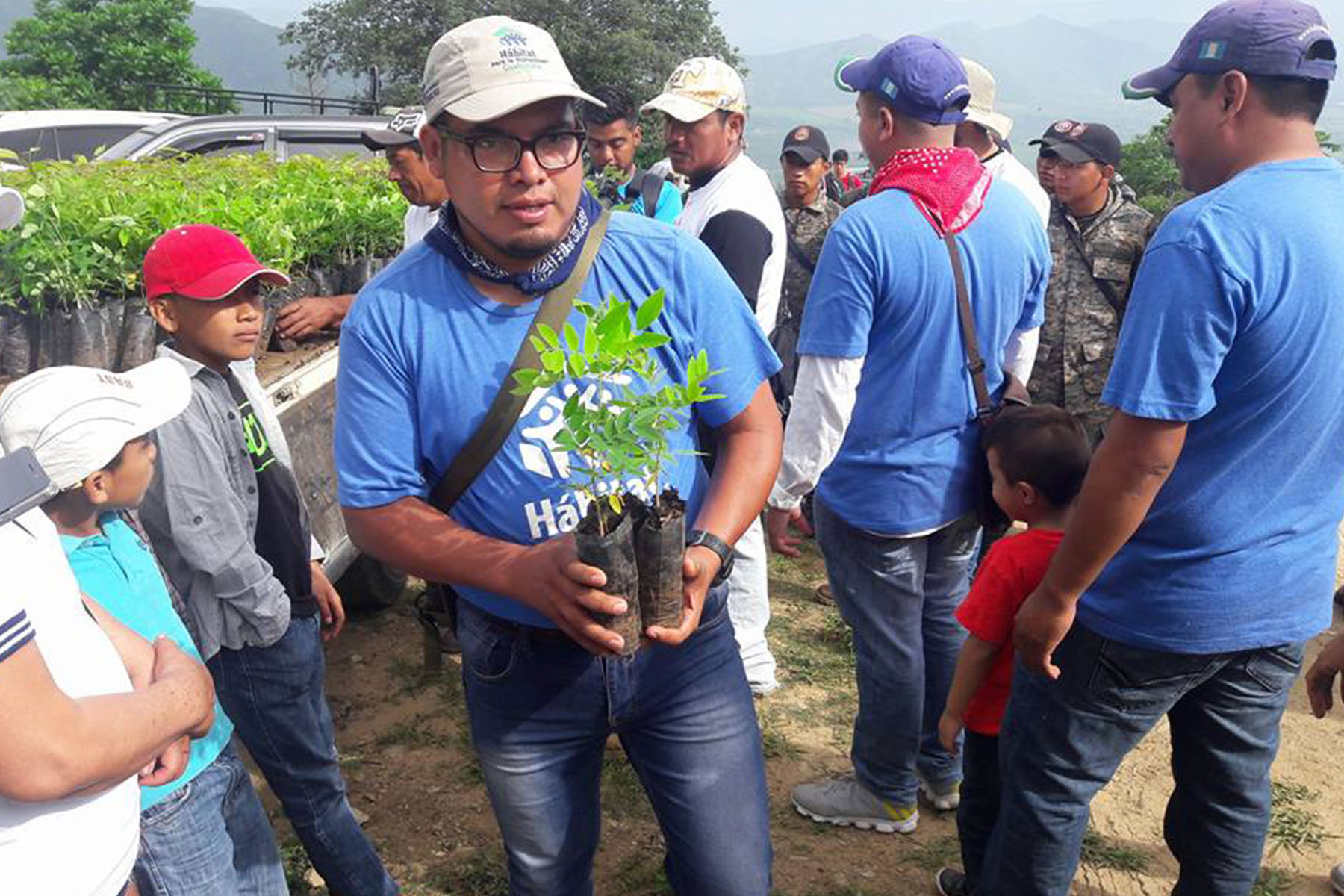
Detener la forestación también es de vital importancia para disminuir el impacto del cambio climático, por eso es importante tomar medidas para reducir la pérdida de los bosques y la biodiversidad que son parte del patrimonio de la humanidad.
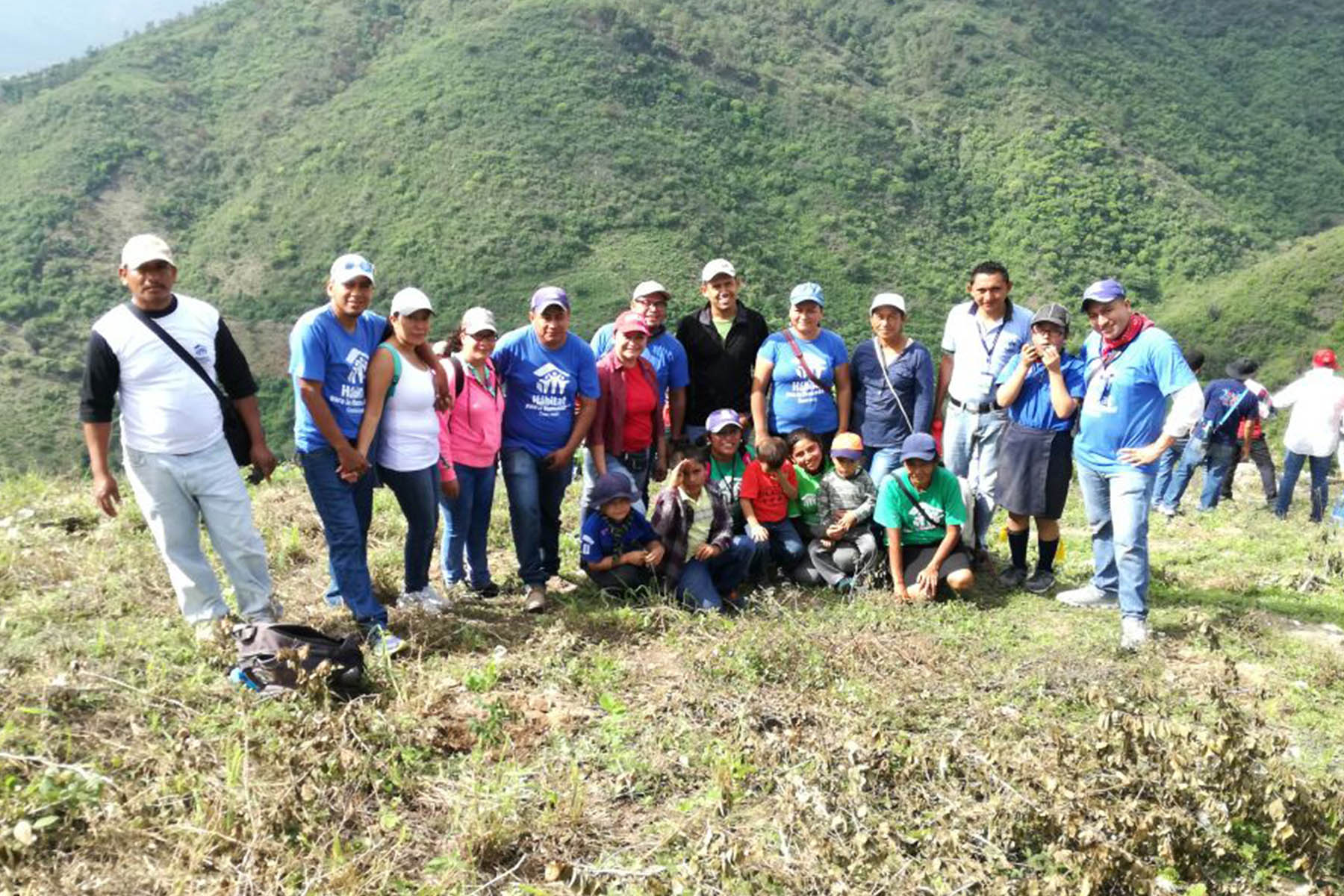
La flora provee el 80 por ciento de la alimentación humana y la agricultura, también representan un recurso económico. A su vez los bosques cubren el 30 por ciento de la superficie terrestre, proveen hábitats a millones de especies y son fuente significativa de aire y agua.
El planeta es nuestro hogar, por eso debemos protegerlo y luchar contra la desertificación, detener e invertir la degradación de las tierras y frenar la pérdida de la diversidad biológica.
En Hábitat para la Humanidad Guatemala trabajamos y apoyamos los Objetivos de Desarrollo Sostenible “Vida de Ecosistemas Terrestres” presentados por la Organización de Naciones Unidas (ONU) e inculcamos a nuestros colaboradores en el cuidado del medio ambiente.
Es así como el pasado 25 de junio colaboradores de nuestra oficina en el departamento de Baja Verapaz participaron en la iniciativa de reforestación del municipio de Salamá con el nombre de “UN MILLÓN DE ARBOLES PARA SALAMÁ”, sembramos 111 árboles, pasando la meta propuesta. Con esta actividad contribuimos en prevenir y mejorar el las condiciones de vida no solo de nuestro país, también del mundo.
Contáctanos: www.habitatguate.org/contactenos/

Source: PrensaLibre
Every year, Guatemala undergoes a momentous transition from dry to wet season. During this period, dusty expanses of land will convert into sopping roadways and flooded fields. To avoid torrential downpours, street pedestrians huddle under trash bags, sweatshirt hoods, and whatever other covering that can be scavenged. While some look forward to the rain, many others fear its impacting, if not devastating, consequences.
Regardless of the time of year, mother nature presents itself as a deadly force in Guatemala. In addition to consistent hurricanes and earthquakes, Guatemala is also one of the top ten countries in the world affected by climate change, despite accounting for less than 0.1% of total global greenhouse gas emissions. In country, major industries have negatively impacted precious environmental resources. Every day, these businesses destroy 16 square meters of forest, which as a result, leaves millions of people vulnerable to flooding and landslides.
Guatemalan families living in extreme poverty, or under $2.00 per day, are more threatened by natural disasters than any other demographic group. Most families work in agriculture and are highly dependent on the success of their crops. However, in years where extreme drought or flooding impact the year’s harvest, their very livelihood is thrown into uncertainty.

Source: Prensa Libre
Despite these uncertainties, every day, we meet determined families that strive to adapt and overcome environmental challenges. Their stories often speak of heartbreak, but above all, echo resilience and determination. Take Lorinda and Juan Sician Chuc, whose entire life has revolved around their crop, but believe that the good of Habitat Guatemala’s projects will prove beneficial on the long term. Or Lucia Tobar Santos, who depends on her five children to find work in the fields, but is leading a healthier lifestyle thanks to small changes.
As the world’s climate changes more quickly than can be reversed, Habitat Guatemala is committed to leverage the high demand and necessity for adequate and safe housing solutions. Little by little, we hope to provide long term options for some of Guatemala’s most deserving families, who shouldn’t have to worry about a place to live if misfortune befalls them.

Subsistence farming, including corn harvesting, is crucial to most families’ livelihoods.

A few concrete blocks and wooden sticks stand as walls, and a concrete cylinder makes a toilet seat. There is no roof or door.
This was what the latrine of Odilia (33) used be. Although Odilia’s husband, Sergio (29), built it 4 years ago, it is in poor condition. “He built it with what we had” she explains. Today, the dilapidated latrine remains as a ruin, nearby to the new latrine, which was built by Habitat Guatemala international volunteers. The contrast is astonishing.


Odilia stands proudly in front of the new latrine. She opens the door, and at the first sight, you can notice the perfect cleanliness. Odilia explains,“I never leave the latrine dirty. I take really good care of it.” She smiles proudly. “It is so easy to clean: a bucket of bleach and a mop, that’s it! Before it was impossible to clean the old latrine.”
Thanks to Habitat for Humanty Guatemala’s Healthy Home Kit program, Odila can provide the best hygienic environment for her two little boys, Jonathan (2) and Gierber (9). She looks with tenderness at Jonathan, who is playing on the ground, and says: “With the previous latrine, I was always afraid that something happens to my boys. It was not adapted to children. The toilet seat was too wide, I was afraid that they would fall into the hole. I felt bad about it.»
She is happy with the change to the new latrine. “Thanks to the work of the volunteers, I am not afraid anymore to let Gierber going alone to the bathroom.” She is grateful to the group who came to build the new latrine. “I don’t know where they are now, but God bless them and be with them”.

As rain falls down in sheets and lightning flashes, Carmen (74) stands in her kitchen, trying to warm up with the heat of her stove. She lives here with her son, Juan Carlos (48), who is blind. They are part of an indigenous Maya community that only speaks Kaqchikel, which is a commonly spoken local dialect in the Sololá Department of Guatemala. Carmen wears traditional clothing that her daughter made for her. These items are woven by hand and then dyed with natural colors extracted from plants. The colors, patterns, and geometric shapes of her “huipil” or blouse hold special significance in Maya culture.
This scene would have been impossible just months before. After warming herself up, Carmen reveals that she is pleased with her new smokeless stove for a multitude of reasons. She says proudly: “My new stove is bigger. I can cook several dishes at the same time.” She explains that the old stove was smaller and emitted a lot of smoke. When she prepares meals, she is no longer affected by smoke fumes, which negatively impacted her and Juan Carlos’s health.
Carmen learned about smokeless stoves as part of Habitat for Humanity Guatemala’s Healthy Home Kit program. Thanks to a promoter, who came to her community and gave a presentation to her neighbors, she found herself immediately interested. It would be an opportunity to significantly improve her family’s living conditions, despite previous attempts.
Three years ago, another nonprofit organization offered a latrine to Carmen. But soon after constructing it, the latrine quickly fell apart. The interior space became dilapidated, and the ventilation system failed. As a result, the space was dirty, and the environment, miserable. At that point, Carmen decided not to use it anymore, eliminating her access to sanitary services.
For these reasons, Carmen is glad to have a new latrine. During the construction, she specifically asked to the site manager to dig the hole wider than planned, in order to extend the use of her latrine. Her reasoning? “I wanted it to last as long as possible.” She also notes that the new latrine is much cleaner and offers her more privacy than she had before.

Carmen also uses a water filter now. Her family no longer suffers from stomach pains, which were caused by bacteria in the river water that they used to drink.
Most of all, Carmen is grateful to the group of volunteers who came to help her. “I won’t ever forget the work of the group. Every day when I use my stove, the water filter or the latrine, I remember their kindness.”

“Tortillar” (making tortillas) is a precious tradition that runs in Miriam’s family. As a child, Miriam used to prepare tortillas with her mother, whose own mother had taught her. The skill has been passed down throughout generations.
Now, Miriam lives with her mother and her two daughters, Miriam (9) and Astrid (2). She still makes tortillas, which she sells to her neighbors and at the market to earn her living. Although she makes 150 tortillas daily, Miriam only earns 30 to 35 quetzales (equivalent to $4.20 to 4.90).
To meet the demand for her tortillas, Miriam must use a stovetop surface to grill them. Before participating in Habitat for Humanity Guatemala’s Healthy Home Kit project, she used to share the stove with her mother and always needed to wait until her mother had made her own tortillas before using it. However, one day, that all changed. “When the neighborhood committee came to my door to tell me that I could have my own stove, I was so glad,” Miriam remembers.
Soon after, a volunteer group came to help with the stove’s construction. Miriam has fond memories of that day. “When the group came to build the stove, I was glad to have them in my house. They were so enthusiastic, it made me so happy. I thanked God to have sent me the international volunteers,” she exclaims. “Thanks to them I have a new a stove, latrine, and water filter.”
Miriam is proud to have her own stove and says that it is a gift from God. “I needed to wait one week after the construction of the stove to use it. It was really hard because I was so excited to try it.”

The Healthy Home Kit has also significantly improved Miriam’s economic situation. One benefit is that her new smokeless stove allows her to save money. “It only needs three pieces of wood to heat up,» she notes. «Before, we needed more wood. I used to buy some every fifteen days, but now it lasts more than a month.” By saving money from foregoing firewood purchases, Miriam and her family buy other items. “I spend it to buy some things for my daughters, to make them happy.”

In addition to her stove, the water filter has improved her family’s health. “We suffered from stomach issues because of the water, mainly because it was not clean,” Miriam says. “Now, we have pure water.” Miriam also saves some energy thanks to the water filter. “Before our water came from the village. Every two days we needed to fill our water tanks. Now, thanks to God, with the filter, all we have to do is clean it, fill it, and use it again.”
Lastly, Miriam notes, her newly built sanitary latrine creates a safe and cleaner environment for her family.
Miriam is grateful to all of those who supported her. “I thank God, and then I thank the group for their help”.

“My neighbors spoke positively of Habitat for Humanity Guatemala’s Home Healthy Kit. They were happy with their smokeless stoves and latrines. They said that it was helpful for the families in need, so I asked them to help me to get in contact with the organization.”
These are the words of Matilde Dias Sotz, who is now a proud owner of a smokeless stove, sanitary latrine, and water filter. A few months after hearing of her neighbors’ positive experiences, an enthusiastic group of international volunteers arrived at her home. Matilde remembers them fondly. “When the group came, my home was filled with joy for two days. They were kind with the children, and they played a lot with them.” Her ten-year-old son, Delbin, also remembers the event. He helps his mother list the volunteers’ names in a steady succession. “We had a great time with the group. I was mad that it lasted only two days!” she jokes.
She looks at her stove with nostalgia. “We built the stove together. It is a nice memory,” she says.
For good reason, Matilde took her neighbors’ words seriously. She tells us the problems that she faced with her previous stove. “We suffered from the smoke. My children coughed a lot, and they burned themselves all the time.” Matilde and her family spent a lot of time looking for wood as well and confronted several difficulties. She says, “The old stove consumed a lot of wood. In this area where we live, it is harder to find firewood nowadays.” Comparably to the new stove, she says that they are saving much more time and resources. “This one only needs four logs to warm up.”
She notes, “Thanks to the new stove I cook better and I save some money.” With these new savings, she is now able to buy toys for her kids, as well as more fruits and vegetables to provide them with a more balanced and healthier diet. Additionally to eating better, Matilde’s children now have access to clean drinking water, thanks to their new water filter. They no longer fall ill from waterborne illnesses.

Matilde’s new latrine has also been an improvement. She describes how her family had built their old latrine with sticks, which as a result, left it often dirty and contaminated. “The new latrine is safer,” she says. “I keep it clean to have a healthy environment for my children. I clean it, I disinfect it. It is an easy task compared to what we had to do with the old latrine.”
She says with a delighted smile, “Our everyday life has changed thanks to the Healthy Home Kit.” She is grateful to the group of volunteers. “God bless them. I thank them for their impressive work. I thank them for their efforts because they came all the way to my home to help me. Also, I know that they did it not just for the sake of completing a journey. They took the time to come here, and they left their family in order to improve my family’s life. I thank them for their generous heart.”
As she speaks, she gives a loving look to her six-month-old-baby. “When they left, I was eight months pregnant. Their kindness filled my heart with good energy and gave me strength to move forward.”

Rosario Morales Suix prepares lunch in the kitchen. Her husband, Francisco (56) is coming back from his fields, exhausted. He lifts the lid of the pot, which releases the smell of tomatoes, onion, and garlic. He smiles, satisfied with the menu for the day.
Before building their Habitat Guatemala smokeless stove, Rosario was cooking in the ground. She explains how difficult it could be. “Three concrete blocks, some logs, and that’s it. I used to have a stove offered by another NGO, but it cracked. Every time I used it, it filled the room with smoke,” she explains. The smoke affected the health of their family, especially because their old stove used to be in the same room that served as a kitchen and bedroom. “We used to cough all day,” she says. For that reason, Rosario had no choice to go back to the “old way of cooking” on the ground outside. She admits that preparing tortillas in those conditions was a laborious task and that she and her grandchildren often burned themselves from falling logs.
Francisco and Rosario came to know Habitat for Humanity Guatemala’s Home Healthy Kit program through a local neighborhood committee. “Francisco came back home and explained the project to me,” Rosario describes. “Both of us agreed immediately: it would be a great opportunity for us! We wanted to be part it.”

A few months later, Rosario is proud to say that, thanks to her new stove, she can easily prepare three dishes at the same time without burning herself. Plus, the chimney of her new stove works perfectly. “I feel much better. I don’t cough as often,» she says.
“The stove has also made my husband’s life easier,” Rosario adds. Indeed, because the stove consumes less wood, Francisco does not need to go as often into the forest for kindling. “It can be really hard to find wood, especially during the month of July. He could spend all the afternoon looking for some logs, and would come back with almost nothing. Now, with the new stove, he can rest after his work in the field.”
As a result with the Healthy Kit Program, Rosario family’s health has also improved in other ways, thanks to their new latrine and the water filter. While the new latrine fosters a cleaner and more private space, the water filter keeps the family safe from gastrointestinal diseases caused by contaminated water sources.
Rosario is grateful to the group who came to build the stove and the latrine. Thanks to Habitat for Humanity and the help of volunteers, her family’s life has become easier. Speaking of the group, she says: “I hope that they have a safe trip back home and that all of them and their families are doing well. God bless them.”

atención al cliente
QUETZALTENANGO
18 avenida 5-13 zona 3.
7736-8264 / 7763-7524 / 4740-6832
atención al cliente
GUATEMALA (REGIÓN GUATE-CENTRO)
3 Av. 8-26, Zona 10. Guatemala
23392223
atencionfamilias@habitatguate.org
© 2020 Habitat para la Humanidad ® Guatemala. | Desarrollado por iGuate.com