Salud, Saneamiento y Agua Potable

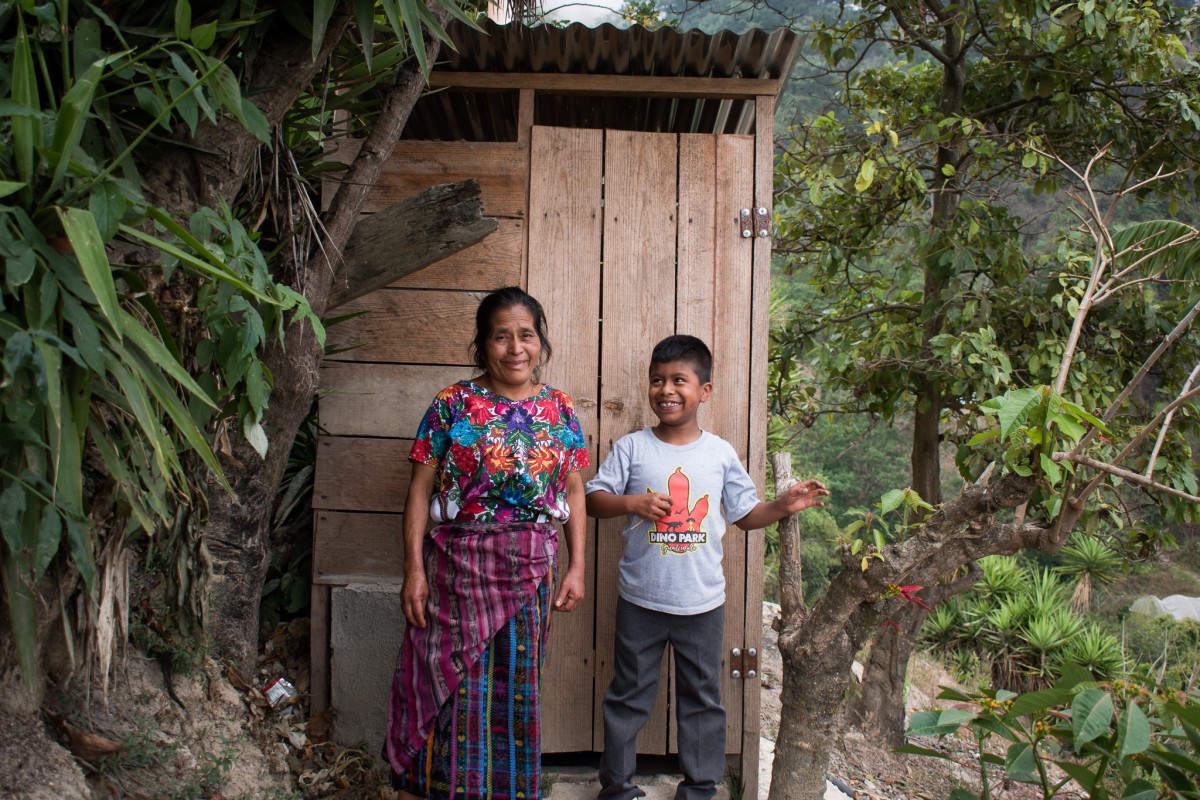
María vive con su hijo Federico y su hermana Delfina, en la comunidad de Pacaman, Santa Catarina Palopó, Sololá. Tanto María como Delfina se dedican a tejer ropa típica para vender en los mercados cercanos.
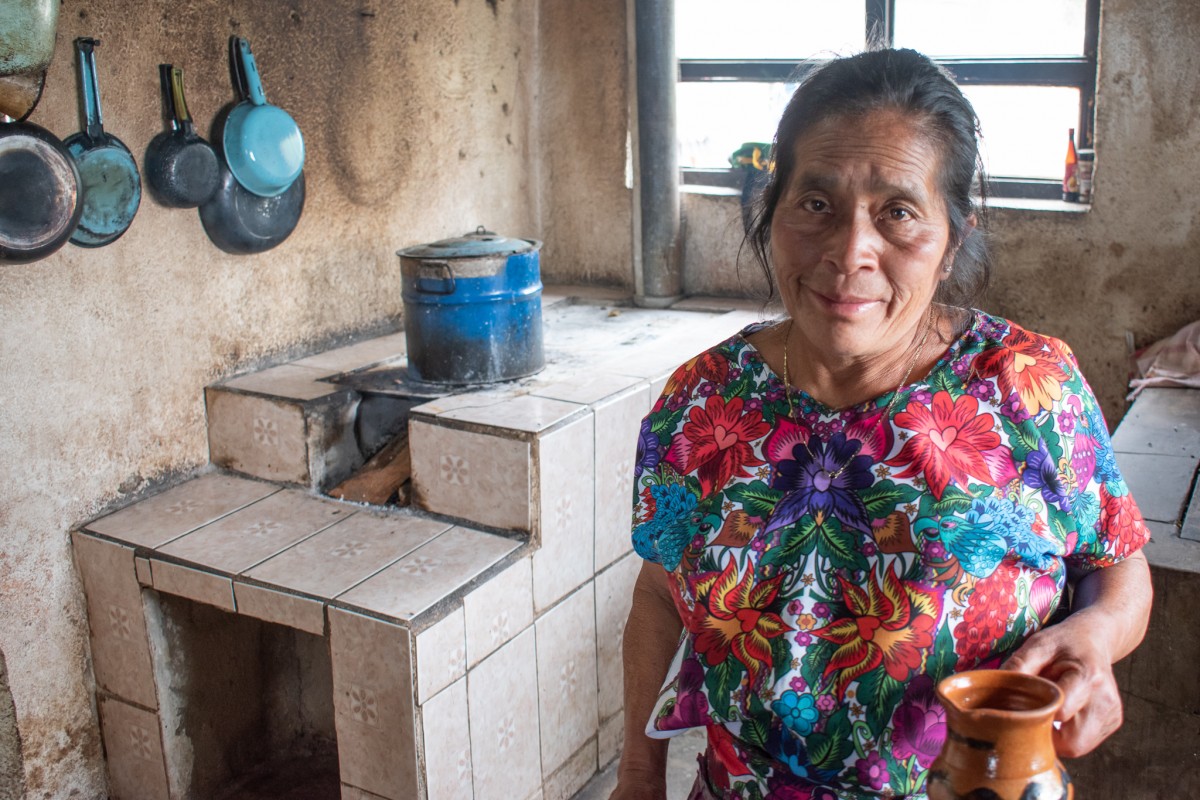
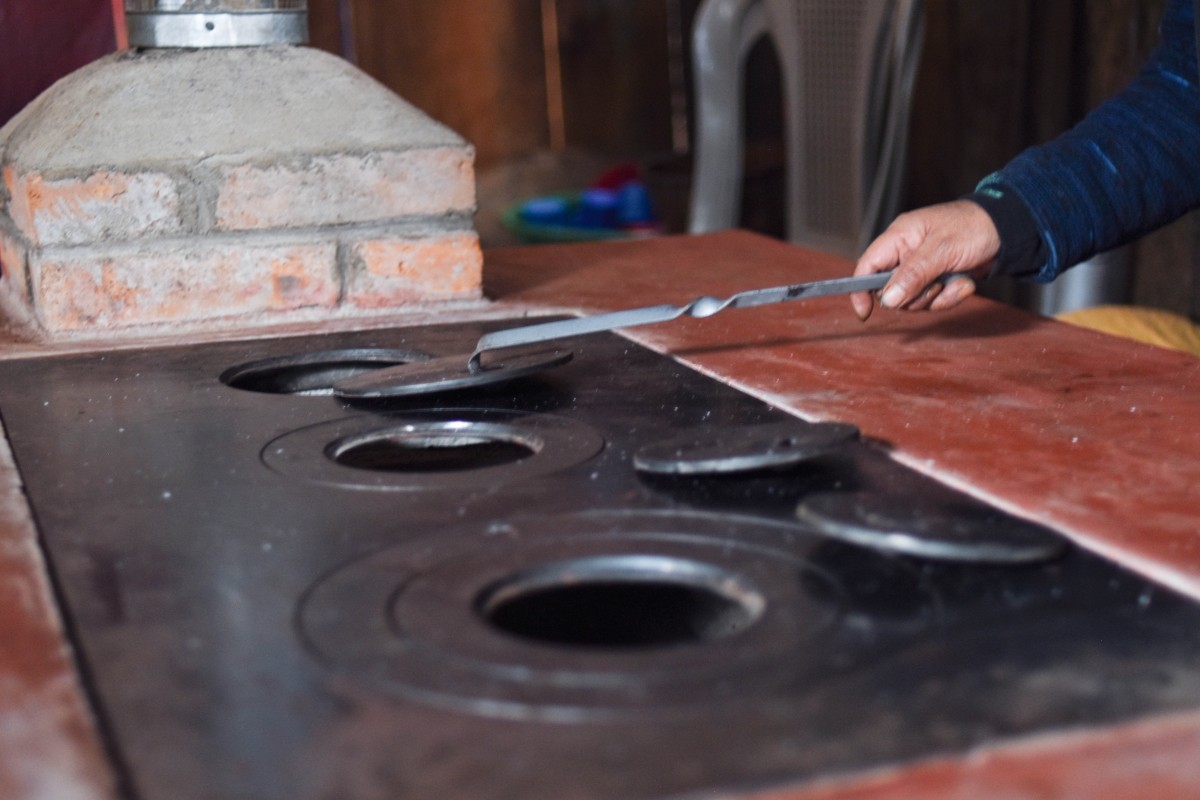
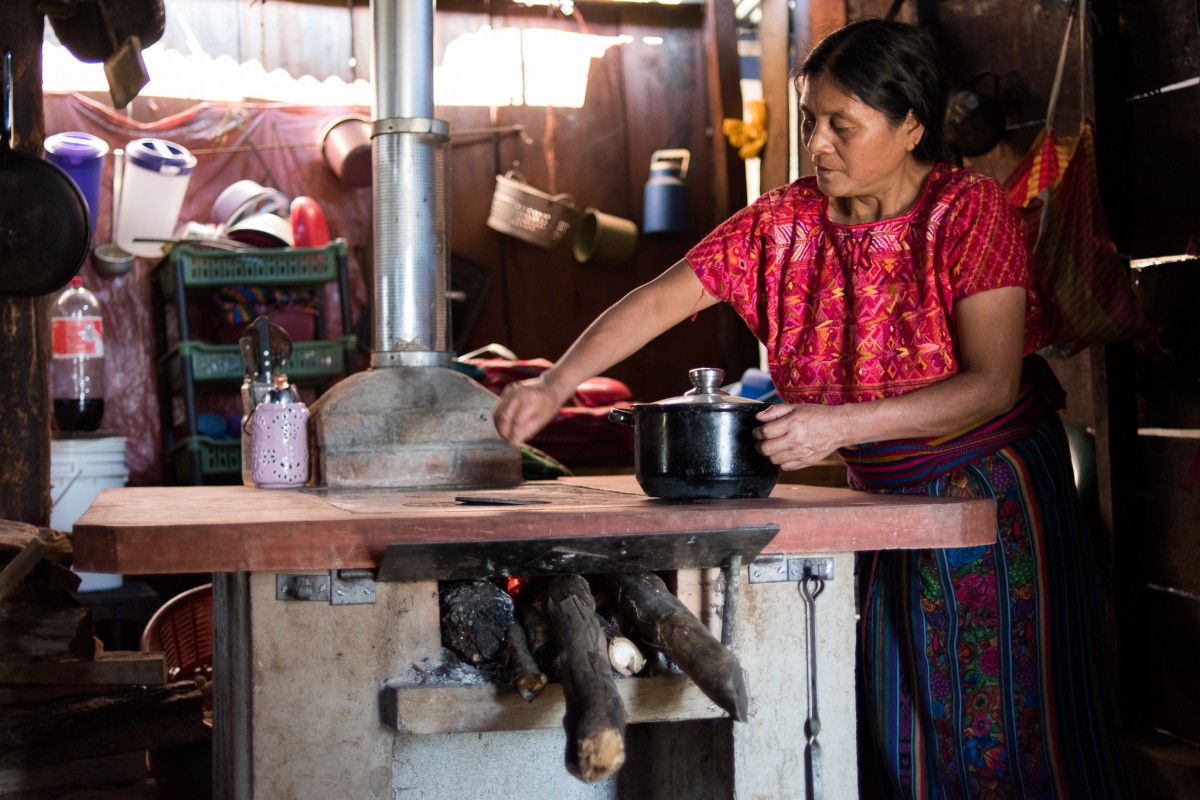
Como parte del Kit de Hogar Saludable, las familias reciben una Estufa Mejorada, una Letrina y un Filtro Purificador para Agua, lo que les ayuda a mejorar su salud brindándoles acceso a saneamiento, agua potable y un ambiente libre de humo.

“Solía ​​cocinar a fuego abierto, el humo era lo peor, porque me lloraban  los ojos y me causó enfermedades respiratorias”. “Ahora, el humo sale de nuestra cocina y ya no consumimos mucha leña. Me siento feliz con mi estufa».
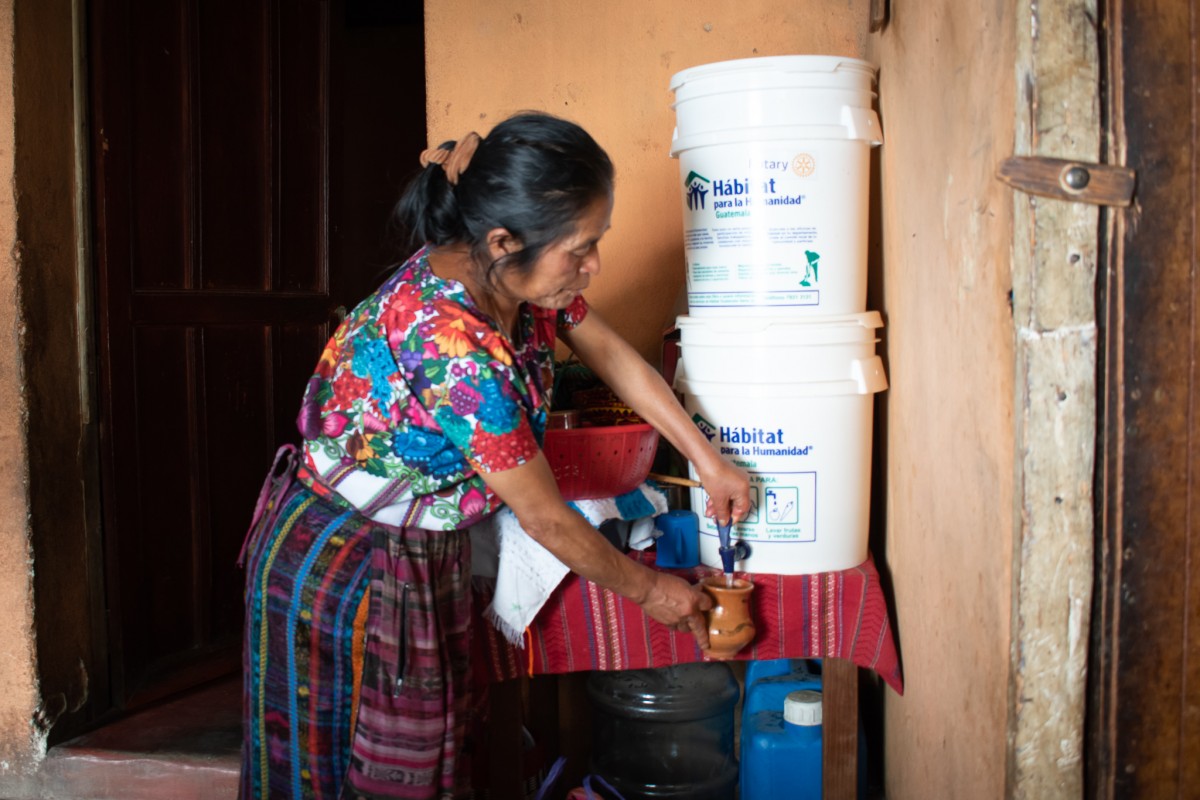
Antes de recibir su nueva letrina, explica que tenían una en malas condiciones. «Ahora, nos sentimos mejor con esta, es cómoda». La familia también ha sentido una diferencia con su Filtro Purificador para Agua. Antes tenían que hervir el agua, y en ocasiones la bebían directamente de los chorros, lo cual les provocaba  enfermedades con frecuencia. Ahora, es más fácil y seguro beber agua del Filtro. “¡Ahora bebemos del filtro y tiene un mejor sabor!  Efraín puede venir a beber agua fresca, cuando quiera, nos ha ayudado mucho este Purificador para Agua”, dice María.

También  sobre los voluntarios nos cuenta: “Me sorprendió mucho ver lo duro que trabajaron para construir mis productos, fueron muy trabajadores y buenas personas”, continúa, “Estoy muy agradecida con todos ellos, vinieron a echarme una mano cuando más lo necesitaba. Que Dios los bendiga».
 

Salud desde la Cocina

Teresa vive con su esposo Sebastián y sus tres hijos Francisco, Susana y Marta, en la comunidad de Chemal, Chajul, Nebaj, en el departamento de Quiché. Teresa se ocupa del hogar, mientras Sebastián y Francisco trabajan en el campo.

Antes de asociarse con Hábitat Guatemala para recibir una Estufa Mejorada, Teresa cocinaba sobre una llama abierta o fuego abierto. “Solía ​​cocinar en el piso, el humo me enrojecía los ojos, me lloraban mucho  y hacía que con  mis hijos nos enfermáramos más seguido y sufrimos dolores de cabeza”, explica.

Ahora, después de unos meses de usar su nueva estufa, Teresa se siente muy feliz con ella; “Estamos contentos con nuestra estufa, está funcionando bien. ¡Ya no hay humo dentro de nuestra cocina y ya no tenemos los ojos llorosos! Ahora, puedo cocinar todas mis comidas… tortillas, atol y frijoles, al mismo tiempo».


Terminan compartiendo un mensaje a los donantes: “Estamos muy agradecidos con todos ustedes por su apoyo y por brindarnos esta estufa para que con mi familia mejoremos  nuestra salud” – Teresa.


Juntos impulsando hogares saludables

Agua segura para el consumo humano llega a 455 familias en Huehuetenango como parte de una iniciativa de Club Rotario Internacional, Hábitat para la Humanidad Guatemala junto a nuestro socio Catholic Relief Services (CRS).

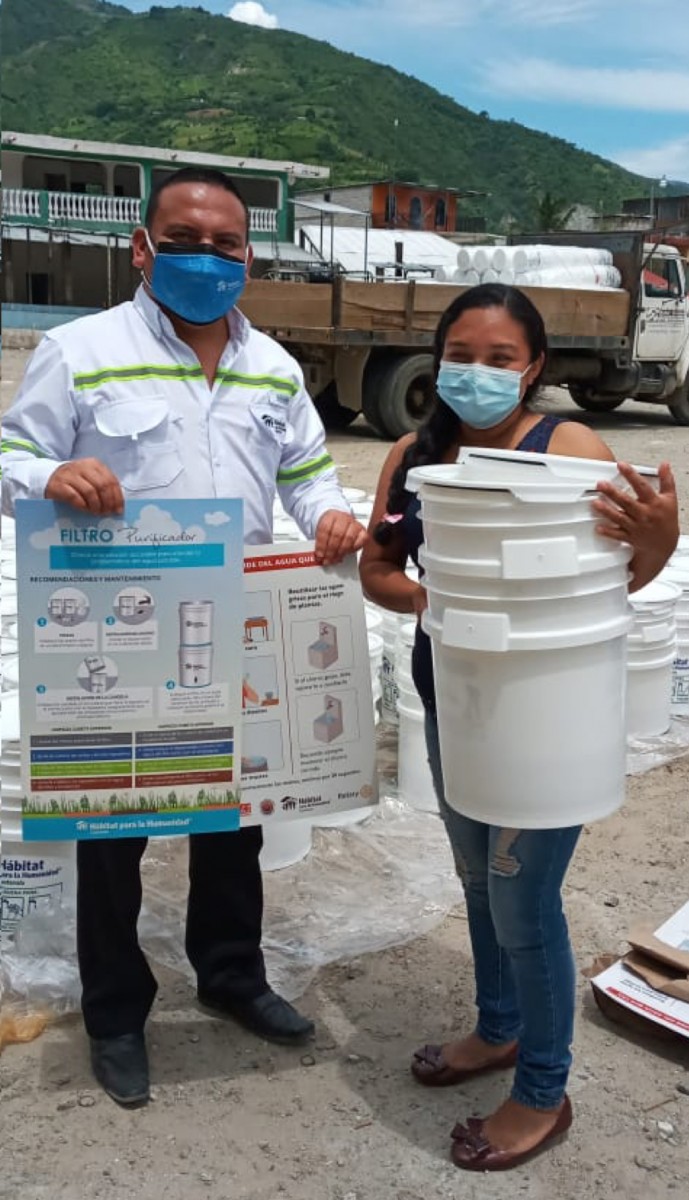
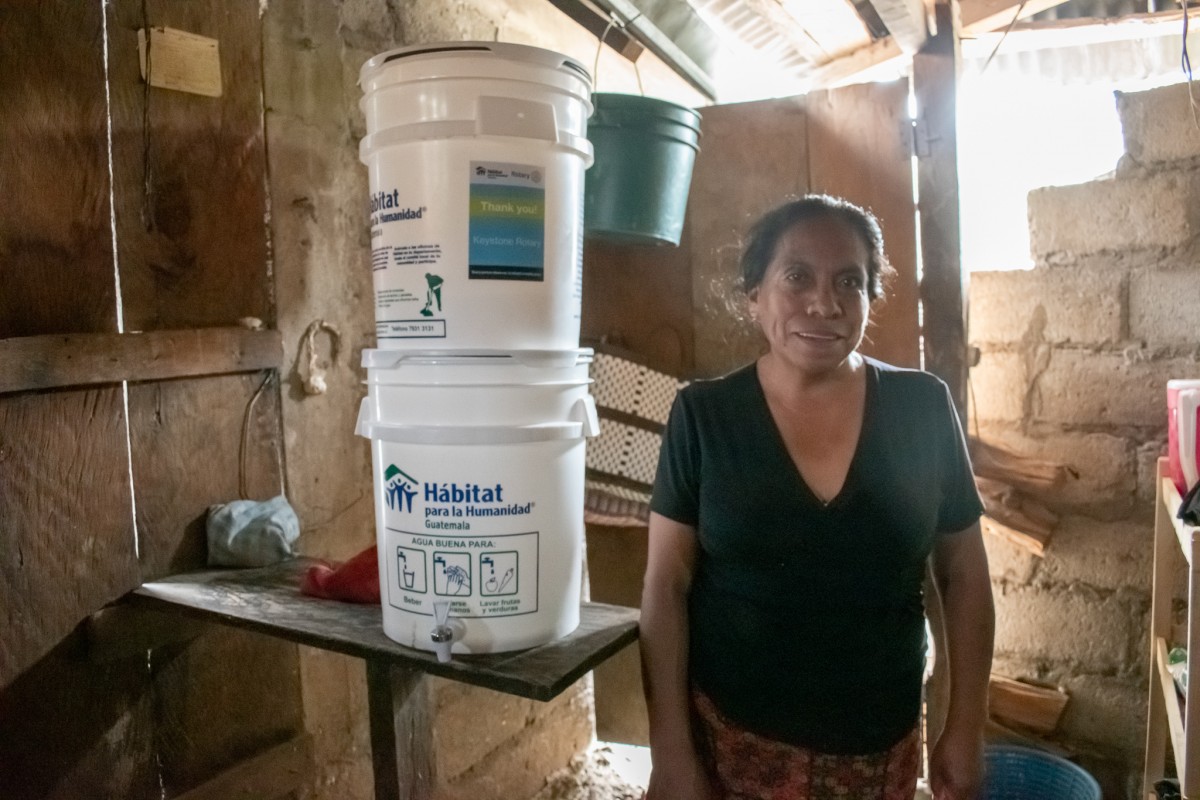
En julio, las tres organizaciones unimos esfuerzos para llevar 455 purificadores de agua a hogares que lo necesitaban en las comunidades de Chepito y Caníbal del municipio de Cuilco, y Arroyo Grande en la Democracia, Huehuetenango. Las familias ahora cuentan con un Filtro Purificador para Agua el cual les permite almacenar agua adecuadamente, purificarla y mejorar la salud e higiene familiar.

Para dicho proyecto, priorizamos las comunidades que, dentro de los Planes de Desarrollo Comunitario elaborados por la comunidad con el apoyo del Proyecto Comunidades Liderando su Desarrollo CLD, habían identificado la necesidad de asegurar la calidad de agua para consumo humano.

Con apoyo de líderes comunitarios seleccionamos a las familias, proporcionamos materiales educativos para asegurar el correcto uso del vital líquido en el hogar, capacitamos a las familias sobre buenas prácticas de higiene y sobre el uso del Filtro Purificador para Agua, distribuimos el mismo y brindamos el seguimiento a las familias, asegurándonos de esta manera que la comunidad mantenga los buenos hábitos de salud e higiene.

Cada Filtro Purificador tiene capacidad para almacenar hasta 10 litros de agua y cuenta con una unidad filtrante que puede durar un año dependiendo de la cantidad de agua filtrada, también como parte del proyecto, la comunidad comprometida se encargará  a apoyar en la gestión para que todos tenga acceso a candelas filtrantes  cada año.

Esta iniciativa evidencia el beneficio de aliarse con otras organizaciones, junto a  CRS hemos logrado desde el 2019 apoyar soluciones habitacionales para 1,486 familias vulnerables en el Altiplano Occidental como parte del Programa de Atención a Extrema Pobreza. A través de de dicho  programa, las familias obtuvieron subsidios para cubrir servicios básicos como Letrinas, Filtros Purificadores para Agua, Pisos de concreto y Sumideros. A su vez, las comunidades contribuyeron reuniendo materiales locales y aportando mano de obra.  Durante  el 2020,  construimos  1,000 estufas ahorradoras que reducen el humo, mejoran las condiciones de salud y las condiciones ambientales de las comunidades mediante el uso eficiente de leña y proporcionan un área de alimentación para la familia.

Las alianzas entre organizaciones abren la oportunidad de unir recursos, capacidades, experiencia y conocimiento para el beneficio de quienes más lo necesitan.

World Water Week 2021 – 23-27 August 2021

This past week, the annual event on global water issues was held, with a focus on developing solutions to the greatest water-related challenges worldwide (Stockholm International Water Institute, 2021). At Habitat for Humanity Guatemala (HFHG), we are compromised to bringing Water, Sanitation, and Hygiene (WASH) solutions to communities in the country. 

According to the United Nations database (2020), Guatemala has seen great improvements towards achieving the Sustainable Development Goal 6 –Ensure access to water and sanitation for all, and, in 2020, 56% of the population were using safe drinking water services and 79% were using an improved sanitation facility.  

Despite these advances, water quality is still a concern. According to Guatemala´s Ministry of Public Health (2011), more than 90% of surface water is contaminated, causing a high risk of diarrheal diseases and other health concerns, low birth weight and disproportionately affecting indigenous children. Additionally, in Guatemala most of the progress have occurred in urban areas, leaving rural areas disproportionately affected.  

As one of the solutions to improve the current WASH conditions in rural areas of Guatemala, HFHG created the Healthy Home Kits which provided three basic services to families living in poverty to improve their health and quality of life: a smokeless stove, a water filter, and a sanitary latrine. These cost-effective solutions offer families in the country improved sanitation and safe drinking water, which overall reduce the most predominant health issues seen in the communities. 

In 2019, Habitat Guatemala had delivered 3,007 Health Home kits across the 22 departments of the country, benefitting more than 300,000 people, which has allowed families and communities to improve their health and living conditions. Another compromise of HFHG is to provide access to clean water to communities in Guatemala through the supply of water filters. Since the establishment of this project, 9,300 water filters have been provided, benefiting more than 55,800 individuals living in extreme poverty. 

In the municipality of Todos Los Santos Cuchumatán, Huehuetenango, where access to water is still a concern, Habitat Guatemala developed the Rainwater Harvesting System project, which focuses on providing access to water to the families in the area. The livelihood of the community is highly dependent on potato and corn harvesting, so this project does not only guarantee access to a water source but also protects the safety of their crops. Additionally, families were provided with a water filter that ensures safe drinking water that improves their quality of life, and establishes sustainable development. 

Thanks to the collaboration of our partners and donors, other solutions have been developed to improve the WASH conditions of communities in Guatemala. Such is the case of the community San Juan in Salamá, Baja Verapaz, where families needed several improvements to their current sanitary conditions. In collaboration with Habitat for Humanity Canada and with the help of people from the community, the Integral Water and Sanitation Hygiene project was conducted, providing families with a biodigestor and porcelain toilet, a water tank, washing stations, and water filters. As a result, 56 families now have access to a consistent source of water, a sanitation facility, adequate wastewater treatment, proper space for hygiene practices, and clean water. 

The benefits of guaranteeing access to water go beyond helping the community. In Los Achiotes, Santa Rosa, people had to walk for over 40 minutes, often twice a day, to fetch water for their daily use. This area is known to be located in the Dry Extended Corridor, characterized to have a drier climate and limited water availability. Working alongside the Guatemalan NGO Agua del Pueblo, their water supply system was restored, and a Water Committee was created in the community, providing them with a sustainable and organized solution and structure. Through this project, 110 families were benefited and received different trainings on how to maintain the water supply system, water conservation, health, and hygiene. 

In celebration of World Water week, let´s be part of the conversation and provide solutions to the current water crisis and contribute to achieving access to safe water and adequate sanitation for all. 


Sources:

Ministerio de Salud Pública y Asistencia Social. (2011). Política nacional del sector de agua potable y saneamiento

https://www.mspas.gob.gt/images/files/saludabmiente/regulacionesvigentes/PolIticaNacionalAPS/PoliticaNacionalSectorAguaPotableSaneamiento.pdf

Stockholm International Water Institute. (2021). This is world water weekhttps://www.worldwaterweek.org/about/about-world-water-week

United Nations. (2020). Guatemala – SDG6 data. UN Water. https://www.sdg6data.org/country-or-area/Guatemala#

María Tzaj Family – Hybrid House Program – Home for a Home

Santos (43), his wife María (27) and their three children, Ángel (8), Rómulo (6), and Amelia (2), are the owners of a new Hybrid House in the community of Chuatzan, Santa Lucía Utatlán, Sololá. While Santos work in agriculture, María stays home taking care of the children.  

Our new Hybrid House solution is a two-room home built with a mix of traditional materials: adobe blocks, cement blocks, and wood. This solution is partially subsidized which means that beneficiary families are asked to contribute towards the cost of materials and provide labor such as preparing adobe blocks, among other tasks. 

Before partnering with Home for a Home and Habitat Guatemala, the family used to live at Santo’s brother’s house for over six years.  The family did not have their own space as the house was small. “All of us were sleeping in a small room with not enough space for our stuff and the children to play in” says Santos.  

When asked how they feel about their new home, Santos answers, “We feel calmer, we are at peace as we have our own space.” María adds, “Now, here at our house, we can plant flowers, we can buy chickens, grow fruits and our children can play anywhere they want.”  

Santos explains that their lives have improved greatly with this new home because they no longer have to share space with other people. Now, they can do what they want and they are safe. In the future, the family would like to add tile floors. 

As part of the Hybrid House Programs, families also receive a latrine, water filter and a smokeless stove. This helps them improve their health by giving them adequate access to proper sanitation and a smoke-free environment. María used to cook on a stove that was in poor conditions, causing the smoke to stay inside their house, «The old stove was in poor condition and consumed a lot of wood. With this new one, she no longer suffers fromthe smoke and we are saving money on wood,» says Santos. 

Santos finishes by sharing a message with the donors, “Thank you to all the donors! It was a big surprise for my family. Thank you for thinking about us and for giving us this big gift. May God bless you.” 


Mercedes López Family – Hybrid House Program – Home for a Home

Lucas, his wife, Mercedes and their 8 children, Gladys (21), Claraluz (19), Giovanni (6), Mynor (14), Lucrecia (12) and Lucas (8), Rosibel (5) and Marvin (2) are the owners of a new Hybrid House in the community of Chipó, San Lucas Antonio Palopó, Sololá. While Lucas works in agriculture, Mercedes sells different herbs in the market during market days.  

Our new Hybrid House solution is a two-room home built with a mix of traditional materials: adobe blocks, cement blocks, and wood. This solution is partially subsidized which means that beneficiary families are asked to contribute towards the cost of materials and provide labor such as preparing adobe blocks, among other tasks. 

As part of the Hybrid House Programs, families also receive a latrine, water filter and a smokeless stove. This helps them improve their health by giving them adequate access to proper sanitation and a smoke free environment. Mercedes used to cook over an open fire on the floor, «I used to cook on the floor, the smoke gave me headaches and red eyes. Now, it is completely different with my new stove. I no longer have to be on my knees to cook. We cook with less wood and the smoke goes outside,» says Mercedes. Previously, the family did not own a latrine and would to go to the woods. Now, that they have a safe and hygienic place for their basic needs. 

Both Lucas and Mercedes finish by sharing a message with the donors, “Receive our greetings! Many thanks! We are very happy with our house, our children have enough space to sleep and we all sleep in peace. Thank you!”  

Before partnering with Home for a Home and Habitat Guatemala, Mercedes family used to live in an old one-room house built out of adobe blocks, wood and dirt flooring. “The roof was in poor condition too. When it rained the water leaked and we had to look for things to cover the children with because they would get sick,” says Mercedes. 

When asked how they feel about their new home, both Lucas and Mercedes answer, “We feel very happy and grateful. Now, the water is no longer leaking when it rains,” and Mercedes adds, “We feel content with the house, we are no longer scared of the rain and cold. I do not worry for my children anymore.”  


Juana Sánchez family – Hybrid House Program – Home for a Home

Juana (34), her husband René (35) and their four children Smiley (12), Neidy (11), Aner (9), and Julia (7) are the proud owners of a new Hybrid House in the community of Chipó, San Lucas Antonio Palopó, Sololá. René works in agriculture, while Juana stays home taking care of the children and running a small grocery store in the front of their property.  

Our new Hybrid House solution is a two-room home built with a mix of traditional materials: adobe blocks, cement blocks, and wood. This solution is partially subsidized which means that beneficiary families are asked to contribute towards the cost of materials and provide labor such as preparing adobe blocks, among other tasks. 

Before partnering with Home for a Home and Habitat Guatemala, Juana and her family used to live in a small house built out of adobe blocks and wood, which now serves as the kitchen. It was a small room, with two beds for the entire family. “We were living in only one room; the space was very small.  It was uncomfortable, especially for my children. The house was very warm.» says Juana. 

When asked how they feel about their new home, Juana answers, “I feel happy and very content, because now we have more space! We have split our family. Also, the house is cooler so we no longer have to endure the heat!” 

Juana explains that their lives have improved greatly with this new home because they no longer suffer from the cold during rainy season and heat during the summer. They do not worry about getting respiratory diseases, or having fleas or any other bugs that bothered them because of the dirt floor.  

In the future, the family would like to add tiles floor to the house, and also are thinking about painting the wood.  

As part of the Hybrid House Programs, families also receive a latrine, water filter and a smokeless stove. This helps them improve their health by giving them adequate access to proper sanitation and a smoke-free environment. Juana used to cook on a stove that was in poor condition, causing her red eyes and respiratory diseases. “My new stove is completely different! It consumes less wood, we no longer have to buy it so often, and the best part is that there is no more smoke inside my kitchen!» says Juana. The family has also felt a difference with their water filter. Before they had to boil water and sometimes drank it directly form the sink, causing them pain from intestinal diseases. Now, it is easier and safer to drink potable water from the filter. 

When asked which is her favorite part of the house, she smiles and answers; «Everything! We enjoy resting and listening to music with the children. They now have their own space where they do their homework without fighting.  

Julia finishes by sharing a message with the donors, “Thank you to each one of you for taking a notice in us and for supporting my family. We will forever be grateful with you for this gift. I pray to God for you and wish you many blessings in your path. We might not be able to pay you back, but God will.”  


Magdalena Simaj Family – ADISA

Magdalena (45), her husband Juan (54), their six children Diego (22), Mercedes (18), Juan (16), Miguel (13), Paulina (9),María (5) and two daughters in law are the proud owners of a new Habitat home in the community of Tzanchaj, Santiago Atitlán, Sololá.  The family prepares and sells meals.

With the support of Hope and Healing, Habitat Canada, ADISA and Habitat Guatemala, the family received a new home, a smokeless stove, a bathroom and a water filter. This helps them improve their living conditions by giving them a safe home with access to proper sanitation and a smokeless free environment. These solutions have significantly improved their lives as Magdalena shares that the family used to live in a one-room house built from cornstalks, a dirt floor and a roof made from metal corrugated sheets for over 15 years. When the family found out about this project, they were motivated to participate and actively helped with the construction process for an improved quality of life.

When asked how they feel with their new house, Magdalena responds smiling, ”We feel happy and satisfied with our house! Mercedes is happy with her room. As a family we struggled a lot to get the house done, but we did it as a family. Now, the reward is great!»

Regarding their stove, Magdalena shares that she used to cook over an open flame on the floor, which caused red eyes and respiratory diseases. «Since I was born, we have been used to cooking on the floor. I have never had the opportunity to own a stove until now,» says Magdalena. The family says that with the new stove, they now have enough space to cook everything at the same time, the save money as it consumes less wood and, most importantly, there is no more smoke in their kitchen! The family has also reported life improvements with their water filter. Before they had to boil water or consume it directly from the sink, causing frequent intestinal diseases. With the filter, they have easy access to safe drinking water.

When asked which part they like the most about the house, she answers, «Everything! We enjoy every part of it; the rooms, the bathroom and the stove too!»

18 year old Mercedes receives capacity training workshops from ADISA that are designed to create economic opportunities and break barriers for people living with a disability fight barriers so that can be active individuals in their community. When asked what she wants to do, Mercedes answers: «I would like to work in an office as a an executive. I would also like to sell beauty products .» The family works together to improve women’s rights and the rights of people living with disabilities in their community.

They share this this final message with our donors, “As a family we feel very grateful for this gift. We do not have enough money to pay you back, but we pray to God that he will keep all of you safe. Thank you!»