
The Top Family

Marina and her husband, Cruz, live with their five grandchildren, Kevin (15), Jessica (12), Jayro (11) and three-year old twins Keylor (3) and Lady (3), in the community of Cerro Alto, in San Juan Sacatepéquez.   

On a daily basis, Doña Marina and Don Cruz work very hard to generate income in order to feed their family. They adopted their five grandchildren when their mother passed away. Keylor, who was born with a visual disability, requires additional care and attention.    

 The Top family home, similar to those in the area, was built in a high-risk area, with small rooms made from corrugated metal sheets and dirt floor, causing several health issues and hazards for the children. 

Thanks to the support of Byran/College Station HFH, Habitat Guatemala was able to build a new house, in order to provide Keylor and his siblings with a healthier environment. When asked how they feel about their new home, Marina responded: “We are grateful and happy my grandchildren can grow in a safe environment.” 

She sends a message for the donors: “Thank you all for caring about my family. There are not much people in this world that will help you to build a house like this one. May God bless you!” 


Juan José Crúz – Hybrid House

Don Juanito (50), was cleaning the windows of his new home in San Augustín Acasaguastlán, El Progreso when we visited him. He was happy to see us and offered us a seat on his new sun-protected porch. 

“This house has improved my quality of life a lot” he says with calm voice. The walls of my old house were made of clay and whenever it started raining, the water would leak into the house. I often got sick and couldn’t go to work. Now, I have a safe, clean and dry space! – he rejoices. 

Don Juanito works as a mason at a Habitat for Humanity Guatemala. That is how he learned about the possibility of getting his own home. Since it was not possible to improve his old house, as the walls were in danger of collapsing, we were able to build his new Hybrid Home thanks to the support of international partners.  

“I work on a construction site as a mason’s helper. With the money I earn I want to buy furniture and build a small kitchen,” don Juanito proudly tells us. “Unfortunately, my mother passed away last year and I can’t share this happiness with her.” 

Don Juanito has strength and a big heart to help others as a volunteer. “On Sundays I visit old people who have lost their relatives and talk to them.” 

“I thank you all and God very much! Now, this house allows me to live in dignity and gives me strength to help others. I am very happy to be able to live here. Now, I will go back to the construction site and continue working!” he expresses while saying goodbye with a smile. 

Zuleyka Velásquez – Thrivent – Jennifer Sperry

Zuleyca (32) and her children José Luis (6), Alexis Enrique (3) and Manuel Enrique (1) receive us smiling in their garden on the outskirts of Aldea El Xab, El Asintal, Rethaluleu. His husband, Luis Enrique,is a police officer and is currently at work.  With the support of local Habitat staff, they filled out the paperwork, applied for a bank loan and started building. . 

«We didn’t know about the installment option before.» – Zuleyca tells us – «But this was the only way we could build the house on our own. Now we have a nice house and we can pay off the installments without pressure. We also plan to enlarge the fence and build a new room. A new gate is also planned.» 

The children play serenely in the garden during our visit and bring us fruit they picked themselves. 


«We lived next door before with my mother and brother. It was very cramped. Now we have a stable house and our privacy, yet we live as a family. The children can play safely in the garden. I can take care of the chickens, cook and we also grow corn.» – Zuleyca showing  pride . 

«I almost can’t find the words, to thank all the volunteers! That someone helps us without payment is very unusual for us. We became friends and went on trips together.» – Zuleyca’s eyes light up as she tells us about her memories. 


Claudia Alvarado – Mattituck School

Claudia (43) welcomes us with a smile in her well-kept house on the outskirts of Retalhuleu . She is single and has no children of her own. As a primary school teacher, she guides many children who are on their way to adulthood. 

«In the morning I work in the elementary school, and in the afternoon I work in an office as an accountant. I am very satisfied and also proud that I have my own house. Before, I lived with my parents. Now I have my own home» – she says contentedly, while alternately petting Lassi and Chispa, her two adopted dogs.» 

She heard from friends a few years ago about Habitat for Humanity Guatemala and the possibility of paying to build a home in installments . She then contacted our offices in Retalhuleu.  


Within 7 months, she was the proud owner of a Habitat home! «It was a wonderful experience weeks with the volunteers. We had a lot of shared experiences, learning about each other’s cultures. They helped us a lot, gave a lot of strength and effort. Thank you for this experience and help! Now I have my own house!» – Claudia Alvarado.

Since she works a lot, she is happy to be able to relax in a pleasant environment in her sparse free time. 

«The material used is of the highest quality! And with the support of the volunteers, we were then able to build the house very quickly. I hope to be able to get in touch with them again. You are always welcome!» – Claudia tells us.  


Petronila Ratzan- ADISA


Domingo, her wife Petronila and their four children, Pedro (17), Gaspar (14), Domingo (9) and Josefina (3), live in the community of Tzamchaj, Santiago Atitlán, Sololá. Domingo works as a fisherman while Petronila makes handicrafts and takes care of the house chores.  

When Gaspar was born the family discover that he was born with varus clubfoot and intellectual disability. This caused several inconveniences to the family, as they suffered discrimination from the community. But they continued to stay together and united forces for Gaspar. Later, they found out about ADISA and started assisting when he was two years old and got surgery at three.  Since then, he has been attending ADISA, and now goes once a week to therapy. “We want Gaspar to have a normal life, I would like for him to continue studying and become a professional.”  mentions Domingo.  When we asked Gaspar what he wants to do when he grows up, he answers: “ I want to be a fisherman, just like my father.”  

The family used to live on a house that was in poor condition, built with corrugated metal sheets and dirt floor.  When the wind was too strong, they had to tied them with a rope. Everyone had to sleep on the floor. Also, their stove was in poor condition; causing them to suffer from respiratory diseases. 

Thanks to the support of ADISA, Habitat Guatemala has been able to build a new house for this family! Allowing them to have access to a safe, clean space, not only for the children, but for everyone. When we made the second visit, Gaspar was in school, but left his greetings with his family.  

“We are very happy and grateful with our new house; my children are safe. The house is big, and illuminated,” mentions Domingo. “Now, I have enough light and a comfortable space to make my handcrafts” adds Petronila.  

The family shares a message for the donors: “Words are not enough to give thanks to all of you, on behalf of my family. Thank you!”. 


Daniel Gómez- ADISA

Daniel, her wife Marta, and Cruz, their three-year-old child are living in Cerro de Oro, Santiago Atitlán. Daniel works in the fields nearby, while Marta stays at home with Cruz. When Cruz was born, they discovered that he had Cerebral Palsy, so they worked hard to cover his needs and provide him with proper care. 

Cruz has attended ADISA’s therapies twice a week for over a year and a half now, and they have noticed some big improvements: “Now he can stand and walk on his own, he is also starting to speak,” mentions Marta. “We want Cruz to have a normal life, first of all, trusting in God. We want him to be the same as others, that is why we are supporting him. In the future, I hope that Cruz can continue studying to be a professional and also to support children like him”.  

With regards to their old house, the family was living in a small room that was in poor condition. The family’s kitchen was built out of corrugated metal sheets, and the stove was in poor condition; these circumstances caused the family to suffer from respiratory diseases too. 

Thanks to the support of ADISA, Habitat Guatemala has built a new house for the Gómez family! And Marta shares with how they feel: “It has been of great improvement for our family. Now, the smoke no longer stays inside, we have our own bathroom and specially a safe, clean space for Cruz to play inside and continue improving. Now, he walks more and plays a lot, without any dirt!” 

The family shares a message for the donors: “We are very happy with our house. We thank everyone who has supported us. May God bless you and your families. When Cruz grows up, we will explain everything that you have done for us.”  


Vivienda Híbrida de don Juanito

“Mi nombre es Juan José Cruz y estoy muy agradecido por la ayuda”.
Vivienda Híbrida de don Juanito

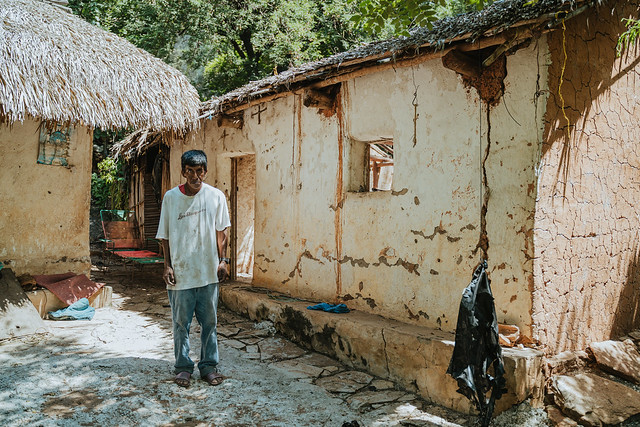
Juan José Cruz, más conocido como Don Juanito, tiene 50 años y vive en San Agustín Acasaguastlán en el Departamento de El Progreso, Guatemala. Una de las mayores necesidades que presenta es contar con una vivienda digna, la cual le permita mejorar su calidad de vida. Juanito vive en una condición precaria. Sus escasos ingresos no le permiten progresar y tener acceso a servicios básicos como lo es la vivienda, el sanitario y el acceso a agua limpia. Lamentablemente, Juanito vive solo. Hace un año falleció su mamá, quien era parte fundamental en su vida.

Don Juanito conoció a Hábitat para la Humanidad Guatemala, a través del Programa de Apoyo a la Extrema Pobreza -PAEP-. Específicamente se le apoyó con la colocación de pisos de concreto y todos los colaboradores trabajaron junto a él en la construcción de dicho proyecto. Sin embargo, las paredes de su casa corrían el riesgo de caerse, pues estaban sostenidas por unos trozos de madera. Entonces se decidió beneficiar a don Juanito con una vivienda híbrida para que tuviera un espacio digno para vivir.

“Mi casa, mi casita, era de bahareque de palma. Hubo un techo que tenía adobe y un techo de bahareque. Pero todo se me arruinó y no hallaba cómo repararla. Pero al fin de tanto Hábitat se puso a sus órdenes con esa ayuda de componerme mi hogar y hoy con la ayuda de ustedes, con la ayuda de Dios, la tengo aquí”.

Juanito se siente agradecido por la ayuda brindada en la construcción de la nueva vivienda, pero también por el apoyo durante la pérdida de su madre. Él subsiste de trabajos de agricultura principalmente, y trabajos de construcción esporádicamente. Siempre está dispuesto a apoyar en lo que se le pida.

“Estaba sufriendo por un hogar que no tenía cómo componerlo gracias a ustedes por su amistad, su cariño que me han tomado y creo que lo van a seguir teniendo conmigo. Yo también, como ustedes. Me recuerdo cuando yo tenía en mi casita de palma la de bahareque y todo eso, no hallaba cómo arreglarlo. Pero ustedes se hicieron presente en el momento difícil, no solo con mi casa, también con mi mamá”.

Desde 1979, Hábitat para la Humanidad Guatemala ha impactado a más de 143,000 familias con viviendas dignas. Se han realizado más de 22,000 mejoras constructivas y más de 66,000 familias han sido beneficiadas con el Programa de Apoyo a la Extrema Pobreza.

“Hábitat es una institución que cubre todo Guatemala, todo el mundo, a todas aquellas familias que están muy necesitadas de vivienda. Y hay familias que no tienen cómo tener una casa como la voy a tener yo. Sí, gracias a ustedes, no tengo cómo pagarles, esa ayuda que vinieron a darme, viene muy bien y espero en Dios que sigamos adelante. Y espero en Dios que los acompañe en sus caminos a ustedes también”.

Conoce  más sobre la historia de don Juanito aquí ⬇️



45% de los hogares en la región no tienen una vivienda segura

  • Casi la mitad de los hogares en América Latina y el Caribe están construidos con materiales de mala calidad, no tienen acceso a agua potable y están situados en terrenos que no le pertenece a la familia.
  • Hábitat trabaja para disminuir el déficit de vivienda en 17 países por medio de sus programas.

San José, 03 octubre, 2022. Hábitat para la Humanidad se une a las Naciones Unidas para celebrar el Día Mundial del Hábitat, con el objetivo de recordar que la vivienda digna, resiliente y segura, es un derecho humano fundamental del que no gozan 1.800 millones de personas en el mundo.

Según el Banco Interamericano de Desarrollo, el déficit cualitativo de vivienda afecta a casi la mitad de los hogares de América Latina y el Caribe; lo que se traduce a millones de casas construidas con materiales de mala calidad, sin acceso a agua potable, sin sanitarios, sin duchas, situadas en terrenos que no le pertenece a la familia y con pisos de tierra.

En Hábitat tenemos la responsabilidad de continuar creando proyectos y programas que sumen a los Objetivos de Desarrollo Sostenible y ayuden a los gobiernos a disminuir el déficit de vivienda. Queremos acercar a las familias de ingresos bajos a alcanzar la tranquilidad de tener un lugar seguro al cual llamar hogar, desde donde puedan tener un mejor futuro, calidad de vida y salud”, explica Ernesto Castro, vicepresidente de área de Hábitat para la Humanidad para América Latina y el Caribe.

Hábitat tiene presencia en 70 países en el mundo, de los cuales 17 son en América Latina y el Caribe. Entre los proyectos más novedosos de la ONG en la región se encuentra la iniciativa 100 mil pisos para jugar, la cual se desarrolla junto a la Federación Interamericana del Cemento (FICEM).

Esta forma parte del programa Pisos S3 de FICMEM, tiene como objetivo el reemplazar 100 mil pisos de tierra por concreto en viviendas vulnerables en todo América Latina y el Caribe al año 2028. Fue lanzada a finales de abril del 2022 y está dirigida a familias en condición de pobreza, que habiten viviendas con un piso en el que el material predominante sea la tierra u otro en muy mal estado; enfocándose principalmente en hogares con mujeres cabeza de familia, con niños menores de 6 años, adultos mayores, y/o con personas con alguna discapacidad.

Enfermedades. Los pisos de tierra albergan parásitos, bacterias e insectos que causan diarreas, enfermedades respiratorias, anemia, entre otros. La sustitución de un piso de tierra a concreto genera beneficios directos en la salud; así lo confirma un estudio del Banco Mundial y la Universidad de California que analizó el impacto en la salud de un programa de sustitución de pisos de tierra en México.

En los niños se registró una reducción en un 70% en las infecciones parasitarias, 49% en diarreas y 81% en anemias, además de incrementar desde un 36% el desarrollo cognitivo. Por su parte, en los adultos se evidenció un aumento del 59% en la satisfacción de la vivienda, menor depresión en un 52% y menor estrés en un 45%.

Otros proyectos. A nivel nacional, Hábitat para la Humanidad Guatemala tiene 43 años de presencia en el país, en los que ha logrado construir o mejorar la vivienda para más de 741,540 personas. Uno de los proyectos más importantes en los que la organización está trabajando actualmente es: Estufas mejoradas ahorradoras de leña Uk’ u’x Já (Corazón del Hogar) en asocio con Catholic Relief Services CRS mejorándole la calidad de vida a más de 4,000 familias en los departamentos de Quiché, Totonicapán y San Marcos desde el año 2020, con ello se mejora la economía debido a un consumo menor y adecuado de leña, se mitiga la tala de árboles, prevenimos enfermedades respiratorias y oculares principalmente en las amas de casa y niños, el diseño de la estufa mejorada, la convivencia y unidad de la familia debido a un mesón integrado que funciona como punto de reunión a la hora de la comida; todo esto acompañado de un filtro purificador de agua que asegura que las familias tendrán el vital líquido en cantidad y calidad evitando así enfermedades gastrointestinales. Transversalmente se ha proporcionado a cada familia una serie de capacitaciones que apoyan a enriquecer su conocimiento en el uso adecuado y mantenimiento de los productos proporcionados y temas que apoyan a su economía, autoestima y gestión de riesgos esto sin afectar la cultura y tradiciones de cada región.

Hábitat para la Humanidad Guatemala también apoya a familias con viviendas sociales nuevas a nivel nacional, desde el año 2020 se diseñó un nuevo modelo funcional y de bajo costo que permite el alcance de familias de bajo nivel económico denominado Vivienda Híbrida, que se añade al catálogo de nuevas viviendas y ya en el transcurso de estos años se ha logrado beneficiar a más de 25 familias en diferentes comunidades del país.