Resultados «Corre por un héroe»

El pasado 18 de octubre se llevó a cabo la carrera «Corre por un Héroe», con el apoyo de la Universidad de San Carlos de Guatemala, el objetivo principal fue recaudar los fondos necesarios para rehabilitar la vivienda de la leyenda del atletismo guatemalteco, Teodoro Palacios Flores, quien padece quebrantos de salud, lo cual lo obliga a movilizarse con el apoyo de una silla de ruedas. Por esto, se remodelará su vivienda para facilitar el acceso y la movilidad de Teddy.

web 1A pesar de la fuerte lluvia, más de 400 participantes realizaron el recorrido de 9 kilómetros en el campus central de la Universidad de San Carlos de Guatemala, sabiendo que con su apoyo mejorarían las condiciones de Teodoro Palacios, quien es recordado como uno de los deportistas que más triunfos le ha dado a Guatemala.

Ganadores:

Categoría masculina, Mario Sucup.

Categoría femenina, Kimberly Chalí.

Visita nuestro álbum de fotos, haz click aquí.

Video por Soy502.

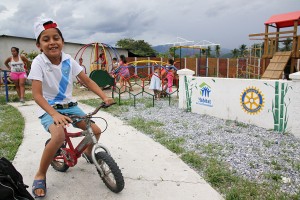
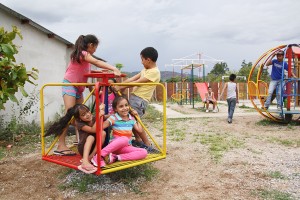
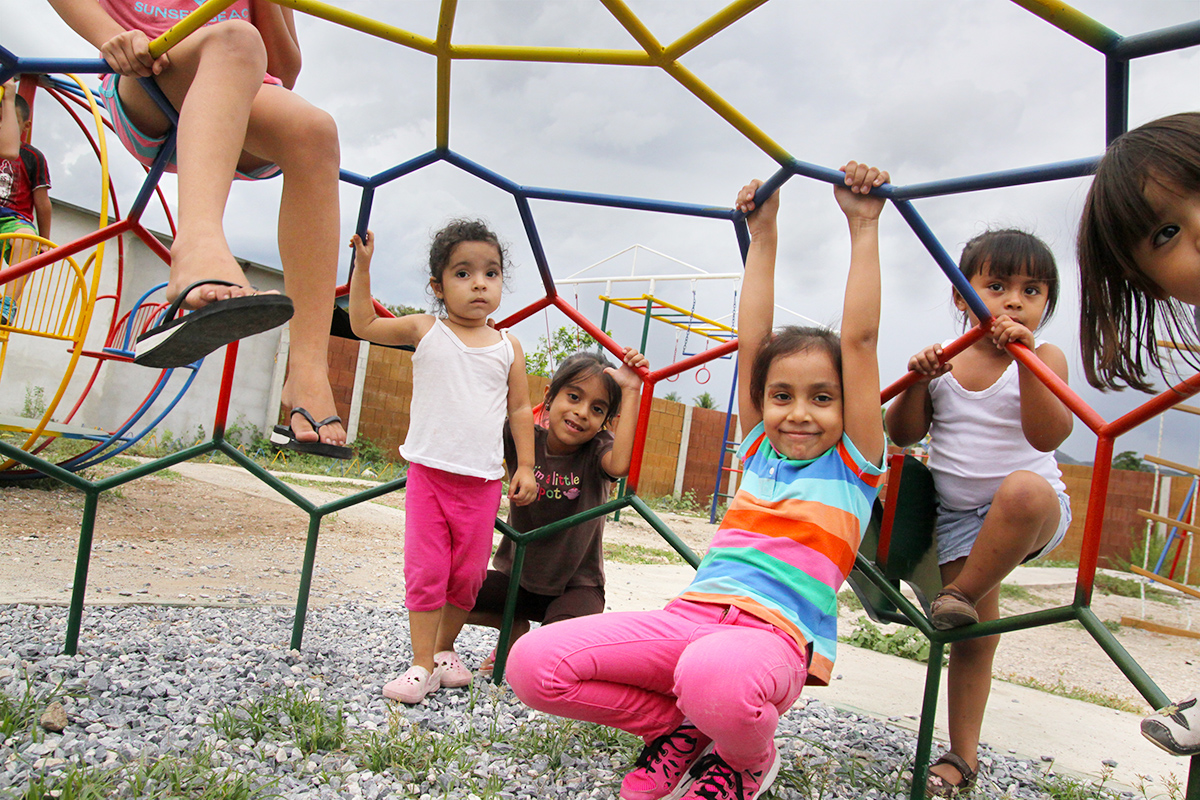
Parque infantil Usumatlán

IMG_3034 edit smallCada año recibimos la visita de uno de los grupos de voluntarios internacionales más grandes, quienes se han comprometido con la construcción de una colonia en Usumatlán, Zacapa. A pesar del clima extremo, los voluntarios trabajan con mucho entusiasmo, junto a locales y familias beneficiadas, ya que saben que su esfuerzo beneficia a muchas familias guatemaltecas.

En 2014, uno de los voluntarios observó que los niños que ahora habitaban las viviendas no contaban con espacios adecuados para la sana recreación, así que al regresar a su país, propuso a Templeton Rotary Club, la construcción de un parque infantil. Así que junto a un Club Rotario en Guatemala, realizaron la recaudación de fondos para la construcción del área recreativa.

En mayo se dio inicio a la construcción del parque infantil, con el apoyo y compromiso de voluntarios y diversas organizaciones. La construcción contó con el apoyo de varias familias, las cuales instalaron un muro prefabricado, relleno y nivelación del terreno, construcción de caminaderos, además de los juegos de madera y metal.

El parque infantil cuenta con una variedad de juegos recreativos, además verdes y agua potable. Todo lo necesario para tanto padres cómo hijos disfruten en un ambiente seguro.

Con el apoyo de nuestros voluntarios seguimos construyendo una mejor Guatemala.

IMG_3020 edit small IMG_3029 edit small


The Edín Ronaldo Marroquín Jacinto Family

Edín, his mother, and his son moved out from a wood-plank house with a palm leaf roof into a new house in town. The difference is night and day. But Edín has fixed up his house in a special way…

IMG_3103webEdín’s house isn’t like the others. Although the floor plan is the same, the rest of the house has already been fashioned with a very creative touch that makes it stand out from the others. Among Guatemalan houses, there’s a typical flooring choice: choose a ceramic tile and hire a mason to cover your floor with it. Edín opted for another way.

But first, Edín’s story starts in another house, up the mountain and away from the city. “Up the mountain, life is harder,” he said. There’s little accessibility to services, food, or household items. “It’s really far from here,” said his mother, Matilde, who was in charge of taking care of the house. “The bus only came twice a day, the last one at noon, and from then on, there was no way to get to the house.” The house was made of wooden planks, with a palm-leaf roof.

“We always put the palm leaves in place, but after a year, they would start to leak,” said Edin. “It was difficult. It was a simple house.” The word “simple” in this case also encompasses “no electricity” and “dirt floor.”

“The truth is that you want to try to live in a better way,” said Edin. “I didn’t feel uncomfortable there, because I’d lived there since growing up. But as I kept growing up, at age 15 I realized that someday I’d have to get a house. Because of my job [wage], I couldn’t really save anything, so thanks to Habitat for the opportunity.”

So when he heard about Habitat for Humanity, he jumped at the opportunity.

“This was really my chance,” he said. “We moved because it was an opportunity that Habitat gave us, an opportunity that you have to take advantage of to have a better life.”

Building his own house alongside a group of volunteers was, in Edin’s words, “really cool. They worked excellently.” Matilde added, “the girls, too! And really big men.”

Edin also had a message for all of the eFinity who helped build the house. “Thanks! Greetings to the whole group and Amway, for coming to support all of us in general. We are really thankful for the help that you all gave us. And hopefully you carry on, helping many more families that need it. Thank you.”

“Thanks to God,” said Matilde, especially happy with the location of the house. “Now we have this house. Now we have time to rest.”

“There are a lot of changes,” said Edin. “But thanks to God, many years will pass and we won’t have to replace our roof!”

Edín bedroom

Edín is the boss of his own masonry and construction company. He works for 11 days at a time all over the country (because in Usumatlán, work is scarce) and then takes a three-day break. He knows all about building homes and he has the handyman skills to be able to carry out just about any type of small construction or remodeling job. So Edín decided that, on his days off, he would continue finishing his own house with ceramic tiling.

The problem was that ceramic tiles were expensive. So Edín talked to some ceramic suppliers and asked for their “slight defect” tiles. They gave him a bunch of various tiles at a bargain price, and what Edín did with the tiles had the neighbors talking.

He sorted through the tiles and made his floor a mosaic of colors and patterns, an unconventional style for Guatemala. For his bathroom, he took the broken tiles and broke them further, in an purposeful way. He arranged the bathroom tiles in a similar artistic way. The effect of his effort?

Edin says that when people come to visit, they are astonished with the floor and inspired to do the same thing. He is proud to show the tiny imperfections that enabled him to afford the tile and gladly tells exactly how to do it.


Want to be a part of the change? Volunteer with us!


The Edelmira Lisbeth Reina de León Family


After years of renting a place with her sister under the jurisdiction of an unreasonable landlord, her own house was long overdue. Habitat for Humanity and volunteers from Global Village helped build her new place.

Edelmira living room

“Now we’re not afraid of the tremors anymore,” said Edelmira Lisbeth Reina de León, wife of Emilio Gonzalez Diaz and mother of 7-year-old Monica. Edelmira sits, sipping coffee, in a new house that’s designed to resist the force of an earthquake.

Edelmira works as a social worker at the local municipality, and her husband works at a hospital in Tajumulco, at the base of the tallest volcano in Central America. Although they both have formal and stable jobs, Edelmira says she “receives gifts from above” in lieu of any financial riches.

Their journey to their new house started when they got married 8 years ago and moved in with Edelmira’s sister and mother-in-law. There, Edelmira and her sister shared the rent, a burdensome Q/1400 per month aside from utilities (Q/200-300 just for electricity), and split the house between the families. They had space, but there were some serious problems with the owner of the house.

“The owner came and went without asking permission,” says Edelmira. “There was no privacy. Although we were paying her, she didn’t respect us. At Christmas, she told us, ‘remove all of your decorations so I can paint’ but she didn’t wait and just painted over our stuff. It’s hard to rent; it’s preferrable to have your own house.”

Aside from a problemmatic rent situation, the house had suffered from an earthquake.

“The whole part below was broken,” says Edelmira. “The owner told us she fixed it and painted it but then another earthquake came and in the exact same place the floor was cracked. The whole house was tilted forward. And the stairs to go to the second floor were smashed up against the neighbor’s house.” It also caused a pipe to leak on the first floor.

When Edelmira suggested fixing the house, the owner told her to fix it herself, on her own budget.

So, in short, Edelmira and her sister were living with no financial investment, under the jurisdiction of an owner who didn’t respect their privacy, with the fear that the house could topple with another earthquake. Edelmira and her sister applied to Habitat and within a short time they were on their way to getting two new houses. During the construction, a group from Queens University came to help out.

“They helped out so so so much,” says Edelmira. “They were directed by the masons and the Habitat technician. They placed the cement blocks with the masons. We helped out in the way that we gave them coffee and snacks, because with a gesture of food, we showed them our appreciation.”

“God bless you all, and I’ll never forget you,” she says to the group. “I’ve said that there are a lot of hands in my house that have made it a blessing. There are a lot of young people here in the world that don’t have a sense of what life is, whereas with you, how good that you see other realities, that you see other customs and other cultures here in San Marcos. We’ll always remember you. I’ve always said that my house is made by Guatemalans and by others who have come from other countries. Always, those flags that you gave us will be here with us. Thanks for your support, and we hope to see you again. Here, we need support so much. We wouldn’t haven been able to live out our dreams if you hadn’t come and helped us. May God give you a lot of happiness, a lot of health, and a lot of kids!

The new house, although it appears very simple from the front, features skylights that save Edelmira a ton on electricity costs, and a beautiful wood-paneled ceiling that had the neighborhood talking when she moved in. “Everybody thinks it’s not a Habitat house because it’s so beautiful!” said Edelmira, smiling. “The ceiling is so stylish, what a change in warmth, and it goes without using so much electricity.” As she talked, the room was well-lit, but there wasn’t a single light on in the house.

“For me it’s a great blessing from God,” says Edelmira. “Opportunities exist, and you have to take advantage of them. It’s so much more peaceful to be here. It’s something of my own.”

Edelmira is happy to be in her own house, where she says she has more liberty to come and go as she pleases without having to worry about the owner or anybody else in the house. Her money is also going toward something that she can call “hers,” and she’s paying even less than she was before. Now her rent is Q/630 per month, with a huge reduction in utilities.  And she’s proud that her daughter can play around the house without worrying about big cracks in the floor or unexpected visits from a cranky landlord.


Understanding the Struggle in the Aftermath of a Landslide

Update January 25, 2016:

We are putting together a volunteer response team to build a new house for one of the families affected by the disaster. See the event and sign up here. More details to come!

Update January 14, 2016:

As of January 2016, Habitat for Humanity Guatemala has been authorized to buy 10 plots of land for 10 families who lost their homes in the landslide. Habitat Guatemala has been working closely with families, community leaders, other non-governmental organizations, and the Guatemalan government to restore livelihoods as soon as possible. We are very eager for these families to be living in their own homes again. To find out how you can help in this process, send an email to our development team at donor@habitatguate.org.

On the first of October, a tragic landslide destroyed or threatened 200 homes, and left nearly 450 people without a place to stay. The disaster affected the town of El Cambray, right outside of Guatemala City, the capital. Many people were forced say a sad farewell to their family members, as nearly 300 died in the incident. How does Habitat Guatemala respond to disaster?

Part of the tragedy of the situation is that the families were warned of danger – but few heeded the warnings. Why? A major issue is at play:

There is an affordable housing deficit.

That is to say, residents of El Cambray had nowhere else to go. Most residents probably could not have afforded to rent or own another home. At Habitat for Humanity, we’re working to reduce the housing deficit.

A lack of funds paired with overpopulation and a housing deficit often forces people to live in areas that are not ideal. In the area around Guatemala City, there is sparce flat land for constructing homes. It’s not very hospitable for large quantities of housing, but that doesn’t stop people from taking the risk to build their houses on the slopes of the hills, where property is cheaper. Or in the case of El Cambray, the village was located in a gulley between two steep hills, a prime spot for landslides.

Guatemalan sprawlPeople continue flooding into Guatemala City, above, from other parts of the country in hopes that they may escape poverty – or find any job at all. Often, they end up compromising their safety for cheaper housing by living on the side of a slope.
But now that so many people from El Cambray have lost their homes and their village has officially been deemed uninhabitable, where do they go? What do they do?

In the aftermath of the situation, Habitat for Humanity is working together with local organizations and the Guatemalan government to help restore housing for the 450 people. As of late November, we are currently in the process of buying plots of land and equipping them with water and electricity services.

Fortunately, the Guatemalan government has also responded to the situation by setting aside 20 million Quetzales, or 2.6 million US dollars.

Guatemala is considered one of the most vulnerable countries to climate change and natural disasters. Habitat for Humanity helps reduce the risks that disasters pose by using the highest grade cement block paired with earthquake-resistant designs. Learn more here.

VIII Foro Nacional de Vivienda Social

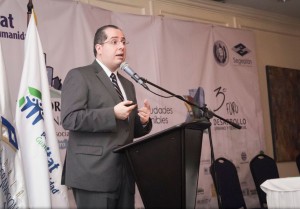
Web 1El pasado 6 y 7 de octubre del presente año, se llevó a cabo el VIII Foro Nacional de Vivienda Social y el III Foro Urbano y Territorial, «Suelo seguro en ciudades y territorios sostenibles», junto a Segeplán, contando con la participación de más de 200 representantes del sector público, privado, académico, sociedad civil y medios de comunicación.

Se contó con las disertaciones de diversos expertos nacionales e internacionales:

  1. Victor Endo de Banco Mundial – Gobernanza de la tenencia de la tierra: Benchmarking de Guatemala en AL (LGAF).
  2. Hugo Gómez de Segeplán – La gestión del suelo en la Política Nacional de Ordenamiento Territorial.
  3. Miguel Mandamiento asesor de Hábitat Perú – La gestión del suelo en Perú: experiencia y lecciones aprendidas.
  4. Raúl Maas de Proyecto PEI/IARNA – Gestión del suelo rural en entornos metropolitanos: reservas ambientales estratégicas.
  5. Carlos Soberanis de Municipalidad de Guatemala – Mercados y comercio informal en la Ciudad de Guatemala.
  6. Francois Robichon de Borealis – Empresas y territorio: hacia la Responsabilidad Territorial Empresarial.
  7. Jose Luis Acero de Banco Mundial – Revisión de la urbanización en Centroamérica – Urban Review.
  8. Albert Sole de Banco Mundial – Ciudades competitivas.
  9. Jorge Benavides de FUNDESA – Índice de competitividad local en Guatemala.
  10. Silvia Rosales de Apoyo Urbano – Dinámicas metropolitanas de la ciudad de Guatemala.
  11. Jean-Roch Lebeau de PNUD-Segeplán – Hacia una política nacional de ciudades en Guatemala en el marco del Cambio Climático.

Web 2Además se lanzó la campaña y plataforma interinstitucional «El suelo bajo mis pies», la cual tiene como objetivo primordial crear incidencia sobre la necesidad de la tenencia segura de la tierra.

Otro de los logros significativos fue la formación del Clúster Nacional para la Gestión Urbana junto a diversas organizaciones y personas particulares, el cual tienen los siguientes objetivos:

  1. Impulsar y ser parte activa del dialogo para generar políticas e instrumentos para el acceso equitativo a la ciudad, el suelo y la vivienda adecuada, como factores clave para romper el ciclo de la pobreza, crear impacto positivo en las vidas y estimular el desarrollo económico.
  2. Establecer el Comité Nacional de Hábitat para contribuir y apoyar al proceso preparatorio de la tercera Conferencia de las Naciones Unidas sobre la Vivienda y el Desarrollo Urbano Sostenible (Hábitat III), siguiendo las recomendaciones de la Asamblea General para la preparación del reporte nacional, incluyendo el impulso a la conformación de comités locales en las ciudades y las comunidades de Guatemala.
  3. Invitar  a los representantes a nivel local del sistema de las Naciones Unidas, el Banco Interamericano de Desarrollo, Banco Mundial, Comunidad Europea, bancos regionales de desarrollo y donantes en Guatemala, a sumarse al esfuerzo de preparación efectiva y eficaz del reporte nacional y a conformar la delegación nacional para participar activamente en la propia conferencia Hábitat III.

Asimismo, la tragedia ocurrida en Cambray II es la expresión de los desafíos que nos plantea la gestión del suelo en las ciudades, el acceso a una vivienda adecuada y los desastres cotidianos. Es el momento de señalar caminos hacia soluciones con el compromiso de todos los sectores del país.

Mira las fotografías del evento en nuestro álbum, haz click aquí.

Descarga las presentaciones de cada una de las conferencias magistrales haciendo click aquí.

Agradecemos la participación de todos los asistentes y el apoyo de cada uno de nuestros patrocinadores.

Cementos Progreso, Megaproductos, Segeplán, Iniciativa Urbana Guatemala.